Tee & Tempo

The Best Golf Balls for a Slow Swing Speed

A ball you cannot compress is a ball that leaves distance on the tee. Five low-compression balls ranked on what the makers actually publish - including one built to the largest legal diameter.

By Stephen V.Last updated How we pick

Buy the Callaway Supersoft Max if your swing speed is genuinely slow. It does two things at once that both point the same way: a very low compression, so the ball actually deforms at a slower clubhead speed, and a larger-than-standard diameter, which makes the middle of the face easier to find and the ball easier to spot in the rough. If money is the constraint, the TaylorMade Noodle is the budget pick— a soft, straight-flying ball from a major brand sold in 15-ball boxes, which is the lowest cost per ball here.

This is a different page from best golf balls for seniors, and deliberately so. That page is organised around a person; this one is organised around a number. Plenty of slow swingers are not seniors — juniors, smaller adults, anyone returning after a long break, anyone who has been told they do not “compress” the ball. If that is you, the ranking here is by how easy each ball is to compress and launch rather than by who is holding the club.

What you will not find on this page is a compression number. Callaway’s own golf ball buying guide explains in detail what compression is and never publishes a figure per model, and no listing for any of these five prints one either — so the mechanism is explained below and no number is invented. Our methodology page sets out why we stop where the published data stops.

How this is funded: we earn a commission if you buy through our links, at no extra cost to you. It never changes which product we recommend, and we’ll tell you when we’d skip one. Full disclosure.

Quick picks

Ranked on forgiveness, how complete the pick is, and value for a beginner. Select a row to jump to the full write-up. We have not hit these clubs on a launch monitor — here is exactly what we do instead.

#ProductBest forPrice
1
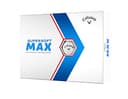
Callaway Supersoft Max Golf Balls (12-Pack)

Callaway Supersoft Max Golf Balls (12-Pack)

The Supersoft idea taken further: an oversized ball built to the largest legal diameter and a very low compression. Both changes point the same way — easier to launch, easier to hit, easier to find.

Best for the slowest swings
$24.99 · View on Amazon

$27.9911% off

Price as of November 21, 2026. #ad How we’re funded

2
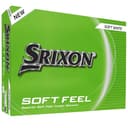
Srixon Soft Feel Golf Balls

Srixon Soft Feel Golf Balls

A perennial 'best soft ball for the money' pick. The Soft Feel launches high and flies straight, and Srixon often sells it in value packs that stretch a beginner's budget further.

Best for launch
$24.99 · View on Amazon

Price as of November 21, 2026. #ad How we’re funded

3
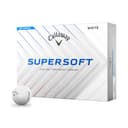
Callaway Supersoft Golf Balls

Callaway Supersoft Golf Balls

The default beginner ball, and rightly so: soft, low-spin, straight-flying and cheap enough that losing a few in the trees does not hurt. Start here.

Best all-round
$24.99 · View on Amazon

$26.997% off

Price as of November 21, 2026. #ad How we’re funded

4
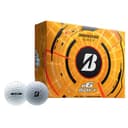
Bridgestone e6 Soft Golf Balls

Bridgestone e6 Soft Golf Balls

A straight-flying, low-side-spin ball from a serious ball maker. The e6 is designed to reduce hooks and slices, so it flatters a beginner's crooked shots while feeling a touch more premium.

Best if you slice it
$23.97 · View on Amazon

Price as of November 21, 2026. #ad How we’re funded

5
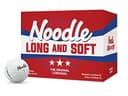
TaylorMade Noodle Long & Soft Golf Balls

TaylorMade Noodle Long & Soft Golf Balls

Sold in a 15-ball box for the price others charge for 12 — the cheapest sensible ball here from a major brand. When you are losing balls learning, the Noodle is the frugal, guilt-free choice.

Budget pick
$18.99 · View on Amazon

Price as of November 21, 2026. #ad How we’re funded

The picks in full

#1Best for the slowest swings

Callaway Supersoft Max Golf Balls (12-Pack)

The Supersoft idea taken further: an oversized ball built to the largest legal diameter and a very low compression. Both changes point the same way — easier to launch, easier to hit, easier to find.

Strengths

  • Larger diameter than a standard ball, which makes the sweet spot easier to find
  • Very low compression, designed to deform properly at slow clubhead speed
  • Sits in the value price band despite the design work

Trade-offs

  • The oversize shape is a genuinely different feel off the putter
  • Low spin means little stopping power on a firm green
What it isOversized low-compression two-piece ball, 12-pack
In the box12 balls
HandednessNot published
Shaft / flexNot published
Best forSwing speeds under about 80 mph, Golfers who struggle to launch the ball

Beginner note. The Rules of Golf set a MINIMUM ball diameter, not a maximum, so an oversized ball is entirely legal. It is one of the few genuine rule quirks manufacturers can use to help a slower swing.

Specs read from the product listing, on August 11, 2026. “Not published” means the listing does not state it.

#2Best for launch

Srixon Soft Feel Golf Balls

A perennial 'best soft ball for the money' pick. The Soft Feel launches high and flies straight, and Srixon often sells it in value packs that stretch a beginner's budget further.

Strengths

  • Soft feel with a notably high, easy launch
  • Straight, forgiving flight for developing swings
  • Frequently available in value multi-dozen packs

Trade-offs

  • Less greenside spin than a premium ball
  • Feel is a matter of taste — some prefer firmer
What it isSoft, high-launch two-piece ball
In the boxNot published
HandednessNot published
Shaft / flexNot published
Best forValue buyers, Slower swings needing launch

Beginner note. A high-launch profile helps slower swings carry the ball further in the air — useful when you are not yet compressing the ball like a low-handicapper.

Specs read from the product listing, on July 23, 2026. “Not published” means the listing does not state it.

#3Best all-round

Callaway Supersoft Golf Balls

The default beginner ball, and rightly so: soft, low-spin, straight-flying and cheap enough that losing a few in the trees does not hurt. Start here.

Strengths

  • Low-spin design flies straighter, which flatters a slice or hook
  • Very soft feel off the putter and irons
  • Inexpensive enough to lose without frustration

Trade-offs

  • Low spin means less stopping power on the green for advanced players
  • Not built for the shot-shaping a better player wants
What it isLow-compression, low-spin ball
In the boxNot published
HandednessNot published
Shaft / flexNot published
Best forMost beginners, Slower swing speeds

Beginner note. Low 'compression' means the ball deforms easily at slower swing speeds, which helps beginners get distance without swinging out of their shoes.

Specs read from the product listing, on July 23, 2026. “Not published” means the listing does not state it.

#4Best if you slice it

Bridgestone e6 Soft Golf Balls

A straight-flying, low-side-spin ball from a serious ball maker. The e6 is designed to reduce hooks and slices, so it flatters a beginner's crooked shots while feeling a touch more premium.

Strengths

  • Engineered to cut side-spin, so it flies straighter
  • Soft feel with a slightly more premium character
  • Bridgestone is a top-tier ball manufacturer

Trade-offs

  • Usually a little pricier than the softest budget balls
  • Anti-slice help fades in usefulness as you improve
What it isLow-side-spin straight-flight ball
In the boxNot published
HandednessNot published
Shaft / flexNot published
Best forSlicers and hookers, Beginners wanting straighter flight

Beginner note. Reducing side-spin is what straightens a slice or hook in the air — the e6's whole design goal, and exactly what a wayward beginner benefits from.

Specs read from the product listing, on July 23, 2026. “Not published” means the listing does not state it.

#5Budget pick

TaylorMade Noodle Long & Soft Golf Balls

Sold in a 15-ball box for the price others charge for 12 — the cheapest sensible ball here from a major brand. When you are losing balls learning, the Noodle is the frugal, guilt-free choice.

Strengths

  • 15-ball packs make it the best value per ball
  • Soft feel and straight, distance-oriented flight
  • TaylorMade name at a bargain price

Trade-offs

  • Very much a distance/feel ball — minimal spin
  • Not a ball you keep once you stop losing them
What it isSoft distance ball (15-ball pack)
In the boxNot published
HandednessNot published
Shaft / flexNot published
Best forBeginners losing lots of balls, Tight budgets

Beginner note. The 15-ball box is the point: while you are learning and losing balls, cost per ball matters more than marginal spin numbers.

Specs read from the product listing, on July 23, 2026. “Not published” means the listing does not state it.

What compression actually is, in the maker’s own words

The word is on every box and almost nobody explains it. Callaway does, and its wording is the cleanest version available.

“The compression rate refers to how much the golf ball compresses upon impact”, and “the lower the compression rate, the easier to compress”. That is the whole argument. A golf ball stores energy by being squashed and gives it back as it recovers its shape. If your clubhead speed is not high enough to squash a firm ball properly, some of your swing simply does not convert into ball speed, and a softer ball recovers more of it.

Callaway ties compression to construction in the same guide: “the more pieces a golf ball has, the higher the compression. Higher compression golf balls are designed for players with faster swing speeds.” Which is why every ball on this page is a two-piece. The premium tour ball in the expensive box is a multi-layer, higher-compression design built for a swing that can compress it, and buying one with a slow swing is paying more for less distance.

It is worth being honest about the size of the effect. Nobody publishes a figure for how many yards a softer ball is worth at a given speed, so we do not quote one. What is reliably true is the direction of the trade and the second benefit, which is feel — a low-compression ball feels softer off the putter and the irons, and feel is the thing you notice on every hole rather than on the odd drive. Our soft versus distance golf balls page takes the whole trade apart.

The oversized ball, and why it is legal

The top pick is bigger than a normal golf ball. This surprises people and it is entirely within the Rules.

The Rules of Golf set a minimumball diameter, not a maximum. That means a manufacturer can build a larger ball and it still conforms, and the Supersoft Max is exactly that: built to a larger diameter than a standard ball. A bigger ball presents more of itself to the clubface and sits up more in the grass, so the middle of the face is easier to find — and it is genuinely easier to see, which saves you time and lost balls.

Two honest costs. It is a different feel off the putter, and some golfers never settle into it; and like every ball here it has little greenside spin, so it will not check up on a firm green. Rule 4.2a(1) requires only that each stroke is made with a conforming ball, so the oversize design raises no Rules issue in a casual round or a competition.

It is one of very few genuine quirks in the equipment rules that a maker can use to help a slower swing, which is why it leads this page. If the feel puts you off, the standard Callaway Supersoft is the same low-compression idea in a conventional size, and it is the third pick here for that reason.

Launch is the other half of the problem

Compression gets the ball off the face faster. Launch gets it into the air at all, and a slow swing usually needs help with both.

A high-launch ball carries further in the air for the same speed, which matters most for exactly the golfer this page is for. The Srixon Soft Feel is the pick here on that basis: a soft two-piece ball with a notably high, easy launch and a straight flight, frequently sold in value multi-dozen packs. If your complaint is that your drives come off low and run out rather than carrying, that is the ball to try.

Worth knowing: the ball is the cheaper half of a launch problem and the club is the expensive half. Driver loft does more for launch than any ball does, and a slow swing is usually under-lofted — our what loft driver should a beginner use page explains why 12 degrees beats 9 for most readers of this site, and best golf drivers under $200 includes a 12.5-degree high-launch driver that costs less than four dozen premium balls. Same for irons: hybrid iron sets exist because hybrid heads launch higher than the long irons they replace.

If your real problem is the slice, pick differently

A slow swing and a slice usually travel together, and the ball that helps one is not always the ball that helps the other.

Side-spin is what curves a golf ball, and a ball designed to reduce side-spin curves less. The Bridgestone e6 is engineered for exactly that — lower side-spin and a straighter flight — which flatters a crooked shot while still feeling soft. It typically costs a little more than the softest budget balls, and the help it gives fades as you improve, which is the honest caveat on any anti-slice product.

Callaway’s own cover explanation is the mechanism behind this whole group: “Surlyn covers are durable and cut-resistant, typically made from an ionomer resin... They offer low spin rates to produce extra distance”, while urethane covers “are softer than Surlyn, offering a better feel and more control”. Less spin means less curve. For a slower, wayward swing the cheap ionomer ball is not a compromise — it is actively the right ball, and the premium urethane tier would make your misses curve more.

The swing side of the same problem is at how to fix a slice, and best clubs for a slice covers the equipment angle properly.

Cost per ball, and the Rule that stops you swapping

One practical point that decides more purchases than compression does.

If you are still losing balls, cost per ball beats every other spec. The Noodle is sold in 15-ball boxes for roughly what rivals charge for 12, which makes it the cheapest sensible major-brand ball on this page. There is no virtue in playing a better ball you are frightened of losing — a golfer protecting an expensive ball plays a worse, more careful shot.

The Rules are relevant here in a way most people do not expect. Rule 4.2c(2) lets you substitute a ball mid-hole only if “it can be clearly seen that the original ball is cut or cracked and this damage happened during the hole being played — but not if it is only scratched or scraped or its paint is only damaged or discoloured”. So a scuffed ball is a ball you keep playing, and a durable cover is worth real money. If a ball breaks into pieces after a stroke, Rule 4.2b gives you no penalty and the stroke does not count.

What you cando freely: Rule 4.2a(1) says a player “may get a conforming ball to play from anyone else, including another player on the course”, so there is no one-ball condition in a casual round. Carry two models and use whichever suits the hole. What you must not do is alter a ball’s performance deliberately — scuffing, heating or applying any substance other than in cleaning it — which Rule 4.2a(2) penalises with disqualification.

Our best golf balls under $25 page is the same shopping decision with a price ceiling instead of a swing-speed filter.

How to actually choose, in one range session

Callaway’s guide gives the method and it is better than any ranking, including this one: “you should always test a golf ball by starting from the green and working your way back to the tee.”

That is the right order because you will hit thirty-odd putts and chips in a round and a handful of drives. A ball that feels wrong on the green will annoy you on every hole; a ball that is half a degree lower off the tee will not. Buy one dozen, putt with them, chip with them, then hit the driver — and if the Supersoft Max’s oversize feel is wrong on the green, you have your answer before you have spent anything else.

And if you do not know your swing speed at all, that is worth fixing cheaply before you buy balls by the case. Every unit on our launch monitorpage measures clubhead speed — it is the one figure a cheap radar measures rather than estimates — and the cheapest of them costs less than a season of premium balls. Then start at what golf ball should I use for the whole ladder.
Frequently asked questions

What is the best golf ball for a slow swing speed?

The Callaway Supersoft Max. It pairs a very low compression - so the ball deforms properly at a slower clubhead speed - with a larger-than-standard diameter that makes the middle of the clubface easier to find. The standard Supersoft is the pick if the oversize feel puts you off on the green.

What does low compression mean on a golf ball?

In Callaway's own words, the compression rate refers to how much the ball compresses on impact, and the lower the rate, the easier it is to compress. A ball stores energy by being squashed and returns it as it recovers shape - so if your swing speed cannot squash a firm ball, a softer one converts more of your swing into ball speed.

Is an oversized golf ball legal?

Yes. The Rules of Golf specify a minimum ball diameter and no maximum, so a larger-than-standard ball conforms and raises no issue in a casual round or a competition. It is one of the few genuine quirks in the equipment rules a maker can use to help a slower swing.

Should a slow swinger use a premium tour golf ball?

Generally no, and it is a real downgrade rather than a neutral choice. Callaway's own guide notes that more pieces means higher compression and that higher-compression balls are designed for faster swing speeds. A premium urethane ball also spins more, which makes a slice curve more rather than less.

How many compression points do these balls have?

Nobody publishes the figure. Callaway's golf ball buying guide explains compression in detail and prints no number per model, and no listing for any of the five balls here states one - so we do not quote one. What is published is the principle and the relative softness, which is what this page ranks on.

Will a softer golf ball give me more distance?

If your swing speed is low enough that you cannot compress a firm ball, it will help - but no maker publishes a yardage figure for the effect, so we will not invent one. The reliable gains are direction, not magnitude, plus a softer feel on every putt and chip, which you notice far more often than the odd drive.

Do I have to play the same ball all round?

Not in a casual round. Rule 4.2a(1) requires only a conforming ball on each stroke and explicitly allows you to get one from anyone else, including another player on the course. What you may not do is swap mid-hole for a merely scratched or scuffed ball - Rule 4.2c(2) permits substitution only when a ball is clearly cut or cracked during that hole.

Sources

  • Callaway -- Golf Ball Buying Guide — The maker's own buying guide, which is the rare manufacturer page that defines the terms rather than only selling against them. On compression: 'The compression rate refers to how much the golf ball compresses upon impact', 'The lower the compression rate, the easier to compress', and 'the more pieces a golf ball has, the higher the compression. Higher compression golf balls are designed for players with faster swing speeds.' On construction: '2 piece limited performance' versus 'Multi-layer for performance from tee to green', and 'Multi-layer golf balls are often preferred by low handicap players looking for specific flight characteristics off the tee.' On covers: 'Surlyn covers are durable and cut-resistant, typically made from an ionomer resin...often found on 2 piece golf balls. They offer low spin rates to produce extra distance', while 'Urethane covers are softer than Surlyn, offering a better feel and more control.' On method: 'you should always test a golf ball by starting from the green and working your way back to the tee.' The guide publishes NO per-model compression numbers (accessed October 13, 2026)
  • R&A -- Rule 4.2: Balls (Rules of Golf) — Rule 4.2 in full, read from the R&A's own Rules page. The purpose statement for Rule 4 says the player 'Must use conforming clubs and balls'. Rule 4.2a(1), verbatim: 'In making each stroke, a player must use a ball that conforms to the requirements in the Equipment Rules. A player may get a conforming ball to play from anyone else, including another player on the course.' Rule 4.2a(2): 'A player must not make a stroke at a ball whose performance characteristics have been deliberately altered, such as by scuffing or heating the ball or by applying any substance (other than in cleaning it)', with the penalty for a breach of 4.2a given as Disqualification. Rule 4.2c(2) governs mid-hole swaps: a player 'may substitute another ball only if it can be clearly seen that the original ball is cut or cracked and this damage happened during the hole being played -- but not if it is only scratched or scraped or its paint is only damaged or discoloured.' Rule 4.2b adds that if a ball breaks into pieces after a stroke there is no penalty and the stroke does not count. The Rule itself publishes NO distance, size or weight figure; it defers all of those to the Equipment Rules (accessed November 18, 2026)
  • USGA — Rule 4: The Player's Equipment — The official Rule limiting a player to 14 clubs and governing conforming equipment (accessed July 23, 2026)

Keep reading