Tee & Tempo

The Best Golf Wedges for Beginners

The wedges that stop the chunked chip — wide soles, forgiving faces, and the loft your package set forgot to include.

By Stephen V.Last updated How we pick

Here is the honest reason most beginners should buy a wedge before they buy anything else: your package set almost certainly did not include one. Nearly every complete beginner set ships with a pitching wedge and then stops, which leaves you with no club at all for a bunker, and a thirty-yard hole in your distances between the pitching wedge and nothing.

The second reason is that the shots you hit with a wedge are the shots you currently hit worst. Chunking a chip — hitting the ground first and moving the ball four feet — is the single most demoralizing thing that happens to a new golfer, and it happens because a narrow-soled club digs into the turf. A wedge built with a wide sole is designed to skid along the ground instead of burying itself, so a slightly fat strike still gets the ball out. That one design feature matters more than the brand on the back.

Below are five wedges we would actually recommend, chosen on sole width, useful loft and honest value rather than tour pedigree. If you buy one thing here, buy the Cleveland Smart Sole Full-Face. If you want to spend as little as possible and still own a real sand wedge, buy the Wilson Harmonized 56°.

How this is funded:we earn a commission if you buy through our links, at no extra cost to you. It never changes which product we recommend, and we’ll tell you when we’d skip one. Full disclosure.

Quick picks

Ranked on forgiveness, how complete the pick is, and value for a beginner. Select a row to jump to the full write-up. We have not hit these clubs on a launch monitor — here is exactly what we do instead.

#ProductBest forPrice
1
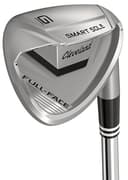
Cleveland Smart Sole Full-Face Wedge (50°)

Cleveland Smart Sole Full-Face Wedge (50°)

The wedge built for people who chunk and thin wedges, which is every beginner. The extra-wide sole is designed to skid along the turf instead of digging in, so a slightly fat strike still gets the ball out. If you buy one wedge to stop the short-game disasters, buy a Smart Sole.

Best overall
$145.71 · View on Amazon

Price as of September 6, 2026. #ad How we’re funded

2
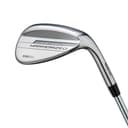
Wilson Harmonized Golf Wedge (56°)

Wilson Harmonized Golf Wedge (56°)

The sensible first sand wedge. It is a brand-name club at an off-brand price, it comes in the lofts a beginner actually needs, and it does the job of getting out of a bunker without asking you to make a tour swing. Buy it, learn on it, replace it in three years if you still care.

Best budget sand wedge
$69.99 · View on Amazon

Price as of September 6, 2026. #ad How we’re funded

3
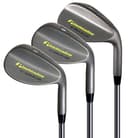
Pinemeadow 3-Wedge Set (52°/56°/60°)

Pinemeadow 3-Wedge Set (52°/56°/60°)

Three wedges for roughly the price of one branded wedge. If you want to learn the difference between a gap, sand and lob wedge without spending several hundred dollars finding out, this is how you do it honestly.

Best value: all three at once
$108.92 · View on Amazon

$128.1415% off

Price as of September 6, 2026. #ad How we’re funded

4
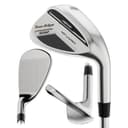
Tour Edge Hot Launch E525 VibRCor Gap Wedge (52°)

Tour Edge Hot Launch E525 VibRCor Gap Wedge (52°)

The single most under-bought club in beginner golf. Package sets jump straight from a pitching wedge to nothing, which leaves a 30-yard hole in your distances. A 52-degree gap wedge fills it, and Tour Edge's version is cheap and genuinely well made.

Best gap wedge
$39.99 · View on Amazon

$54.9927% off

Price as of September 6, 2026. #ad How we’re funded

5
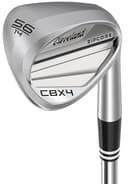
Cleveland CBX4 ZipCore Wedge (58°)

Cleveland CBX4 ZipCore Wedge (58°)

The step-up wedge for a golfer who has stopped topping it. The CBX line is Cleveland's cavity-back wedge — a real tour-brand short game with game-improvement forgiveness built in, which is a genuinely unusual combination. Buy this when your ball-striking has caught up with your ambition.

Best step-up
$84.99 · View on Amazon

Price as of September 6, 2026. #ad How we’re funded

The picks in full

#1Best overall

Cleveland Smart Sole Full-Face Wedge (50°)

The wedge built for people who chunk and thin wedges, which is every beginner. The extra-wide sole is designed to skid along the turf instead of digging in, so a slightly fat strike still gets the ball out. If you buy one wedge to stop the short-game disasters, buy a Smart Sole.

Strengths

  • Very wide sole is built to glide rather than dig — the fat-shot insurance a beginner needs
  • Full-face grooves mean an off-center, toe-side strike still gets grip on the ball
  • Cleveland is a wedge specialist, so you are not buying an off-brand short game

Trade-offs

  • The wide sole makes it clumsy from tight, bare lies and hardpan
  • It is a one-job club — you will not shape or spin shots with it
  • Costs more than a plain budget wedge that would also work while you learn
What it is50-degree wedge, graphite shaft, extra-wide Smart Sole base
In the boxNot published
HandednessRight (a left-handed version is listed separately)
Shaft / flexNot published
Best forBeginners who chunk chip shots, Anyone adding one wedge to a package set

Beginner note. The listing specifies a 50-degree loft, a graphite shaft and a full-face groove pattern. Fifty degrees sits between a pitching and a sand wedge, which makes it the single most useful in-between loft for a beginner whose set already has a pitching wedge.

Specs read from the product listing, on August 28, 2026. “Not published” means the listing does not state it.

#2Best budget sand wedge

Wilson Harmonized Golf Wedge (56°)

The sensible first sand wedge. It is a brand-name club at an off-brand price, it comes in the lofts a beginner actually needs, and it does the job of getting out of a bunker without asking you to make a tour swing. Buy it, learn on it, replace it in three years if you still care.

Strengths

  • Costs a fraction of a premium wedge while still being a real Wilson club
  • Fifty-six degrees is the classic all-purpose sand wedge loft for a beginner
  • Sold in matching 52, 56 and 60 degree lofts, so you can build a set gradually

Trade-offs

  • Basic stock grip — most people re-grip it eventually
  • Softer face metal wears faster than a premium wedge if you practice a lot
  • No fitting options: it is one shaft, one length, take it or leave it
What it is56-degree sand wedge, steel shaft
In the boxNot published
HandednessRight (a left-handed version is listed separately)
Shaft / flexNot published
Best forBeginners filling the gap in a package set, Anyone on a tight budget

Beginner note. The listing describes a unisex 56-degree steel-shafted wedge. Fifty-six degrees is the standard sand-wedge loft and the one that most package sets leave out, which is why it is usually a beginner's first add-on club.

Specs read from the product listing, on August 11, 2026. “Not published” means the listing does not state it.

#3Best value: all three at once

Pinemeadow 3-Wedge Set (52°/56°/60°)

Three wedges for roughly the price of one branded wedge. If you want to learn the difference between a gap, sand and lob wedge without spending several hundred dollars finding out, this is how you do it honestly.

Strengths

  • Gap, sand and lob wedge in one purchase — fills every short-game hole a package set leaves
  • Matching heads and shafts, so the three feel like one family rather than three strangers
  • Cheap enough that practicing in a bunker does not feel like damaging an investment

Trade-offs

  • Pinemeadow is a direct-to-consumer brand, so there is no resale value at all
  • A raw beginner does not need a 60-degree lob wedge and will probably misuse it
  • Grooves and finish will not last as long as a premium forged wedge
What it isThree-wedge set: 52, 56 and 60 degrees, steel shafts, regular
In the box52-degree gap wedge, 56-degree sand wedge and 60-degree lob wedge
HandednessRight (a left-handed single wedge is listed separately)
Shaft / flexRegular
Best forBeginners who want the whole short game covered, Value hunters

Beginner note. The listing states a 52/56/60 configuration with regular-flex steel shafts. That spread is the standard modern wedge ladder: gap for full shots, sand for bunkers and short pitches, lob for the rare high shot you should probably not attempt yet.

Specs read from the product listing, on August 11, 2026. “Not published” means the listing does not state it.

#4Best gap wedge

Tour Edge Hot Launch E525 VibRCor Gap Wedge (52°)

The single most under-bought club in beginner golf. Package sets jump straight from a pitching wedge to nothing, which leaves a 30-yard hole in your distances. A 52-degree gap wedge fills it, and Tour Edge's version is cheap and genuinely well made.

Strengths

  • Fills the distance gap between a pitching wedge and a sand wedge, which most package sets ignore
  • Priced like a budget club but built by a company that makes proper game-improvement gear
  • Wide, forgiving sole in keeping with the rest of the Hot Launch line

Trade-offs

  • Least glamorous club you will ever buy — nobody is impressed by a gap wedge
  • Only worth it once you can reliably make contact with a full pitching wedge
  • Tour Edge resale is weak compared with the big brands
What it is52-degree gap wedge, True Temper MPH 95 steel shaft
In the boxNot published
HandednessRight
Shaft / flexNot published
Best forBeginners with a package set, Anyone with a big gap in their short irons

Beginner note. The listing names a True Temper MPH 95 steel shaft in the 52-degree head. A 52-degree wedge typically flies about 10 to 15 yards shorter than a modern pitching wedge — precisely the yardage most beginners have no club for.

Specs read from the product listing, on August 11, 2026. “Not published” means the listing does not state it.

#5Best step-up

Cleveland CBX4 ZipCore Wedge (58°)

The step-up wedge for a golfer who has stopped topping it. The CBX line is Cleveland's cavity-back wedge — a real tour-brand short game with game-improvement forgiveness built in, which is a genuinely unusual combination. Buy this when your ball-striking has caught up with your ambition.

Strengths

  • Cavity-back construction makes it far more forgiving than a traditional blade wedge
  • Cleveland's wedge grooves are the real thing, so you get actual spin on a clean strike
  • Graphite shaft option is lighter and easier to swing than the usual heavy wedge steel

Trade-offs

  • Overkill for a first-season golfer — you will not feel the difference yet
  • Fifty-eight degrees is a lot of loft to control if your contact is still patchy
  • Meaningfully more expensive than the budget wedges above
What it is58-degree cavity-back wedge, graphite shaft, tour satin finish
In the boxNot published
HandednessRight (a left-handed version is listed separately)
Shaft / flexNot published
Best forSecond-season golfers, Beginners upgrading one club at a time

Beginner note. The listing specifies a 58-degree head with a graphite shaft in a tour satin finish. A cavity-back wedge moves weight to the perimeter of the head — the same forgiveness idea as a game-improvement iron, applied to a club that usually gets none.

Specs read from the product listing, on August 11, 2026. “Not published” means the listing does not state it.

How we picked these wedges

We do not hit clubs on a launch monitor and we do not own test units, so we are not going to pretend a wedge produced a particular spin number for us. What we do instead is compare the published specification of each listing against what a beginner’s short game actually needs, and then say plainly where a club is more than you need. Three criteria drove every pick on this page.

1. Sole width, because that is what stops the chunk

The soleis the bottom of the club, the bit that meets the ground. A thin sole with a sharp leading edge digs; a wide sole with the leading edge lifted slightly off the turf skids. That skidding action — the technical term is bounce— is what saves a shot where you have hit an inch behind the ball. The Cleveland Smart Sole exists entirely because of this idea, which is why it leads the page even though it is not the most sophisticated club here.

2. A loft you will actually use

Wedge lofts run from about 46 degrees (a modern pitching wedge) to 60 degrees or more (a lob wedge). The higher the number, the higher and shorter the shot. A beginner needs a sand wedge around 54 to 56 degrees for bunkers and short pitches, and benefits enormously from a gap wedge around 50 to 52 degrees to fill the distance hole their set leaves. A 60-degree lob wedge is a specialist club that punishes poor contact, and we would not buy one in your first season.

3. Value proportionate to your golf

A premium forged wedge is a wonderful object and completely wasted on a swing that is still finding the middle of the face. We have included one step-up option for golfers who have improved, and said clearly who it is not for.

Our Cleveland Smart Sole Full-Face review takes the top pick apart in full — what the wide sole is doing, and the one lie where it stops being an advantage.

Which wedges should a beginner actually carry?

The short answer is one, then two. Start with a single 56-degree sand wedge. It will get you out of bunkers, handle short pitches around the green, and cover the shot from about 60 to 80 yards for most beginners. That one club fixes the biggest hole in a package set.

When you are comfortable with it, add a 52-degree gap wedge. Modern pitching wedges are much stronger-lofted than they used to be — often 44 or 45 degrees — which means the jump from pitching wedge to sand wedge is a huge distance gap. The gap wedge closes it. That is the entire reason the club exists, and it is why the Tour Edge gap wedge is on this page despite being the least exciting club we have ever recommended.

The lob wedge comes third, if at all. Remember that the Rules of Golf cap you at 14 clubs, so every wedge you add is a club you take out somewhere else. A beginner is almost always better served carrying an extra hybrid than a third wedge.

Steel or graphite, and does the shaft matter?

Wedge shafts are mostly steel, and that is fine: wedge swings are short and controlled, so the shaft does far less work than it does in a driver. Steel gives more feedback about where on the face you struck it, which is genuinely useful information when you are learning. The graphite option on the Cleveland CBX4 is lighter and easier to swing, which suits a slower tempo — the same logic that drives our senior set recommendations.

What matters much more than shaft material is the grip. Every budget wedge on this page ships with a basic stock grip, and a worn or slippery grip makes you hold the club too tightly, which ruins the feel in exactly the shots where feel counts. Re-gripping a wedge costs very little and is the best small upgrade available to a beginner.

The bunker shot nobody explains

The reason a sand wedge feels impossible at first is that the technique is the opposite of every other shot in golf: in a greenside bunker you are trying to hit the sand about an inch or two behind the ball, not the ball itself. The wide sole then bounces the club through the sand and the ball rides out on the cushion. Beginners who try to pick the ball cleanly off the sand either blade it over the green or bury the club and leave it in the bunker.

You do not need a lesson to understand that, but you do need a wedge with enough bounce to make it work, which brings us back to sole width. Any of the 56-degree options here will do it. If you want to understand the rest of the jargon on a wedge listing, our golf terms glossary defines bounce, loft, cavity-back and the rest in one sentence each.

Frequently asked questions

What wedges do beginners need?

Start with one sand wedge around 54 to 56 degrees — it handles bunkers, short pitches and the 60-to-80-yard shot. Add a gap wedge around 50 to 52 degrees next, because modern pitching wedges are strong-lofted and leave a large distance gap. A 60-degree lob wedge is a specialist club that punishes poor contact and can wait until you are consistently striking the ball well.

Why do I keep chunking my chip shots?

Usually because the club is digging into the turf instead of sliding across it. A wedge with a wide sole and generous bounce — like the Cleveland Smart Sole — is specifically designed to skid rather than dig, so a strike an inch behind the ball still gets it out. Technique matters too, but equipment genuinely helps here in a way it does not with most shots.

What is bounce on a golf wedge?

Bounce is the angle between the leading edge of the club and the lowest point of the sole. More bounce lifts the leading edge off the ground so the club skids through turf and sand rather than digging in. High bounce suits soft sand, fluffy lies and steep swings — which describes most beginners. Low bounce suits firm ground and shallow swings.

Do I need an expensive wedge as a beginner?

No. The Wilson Harmonized costs a fraction of a premium wedge and does the same job while you learn. Premium wedges offer better grooves, better feel and more spin, but you need consistent contact before any of that becomes measurable. Buy the cheap wedge, spend the difference on green fees, and upgrade once your strike is reliable.

How many wedges can I carry?

As many as you like within the 14-club limit set by the Rules of Golf. In practice, most beginners carry two — a pitching wedge from their set and one sand wedge — because a third wedge means giving up a hybrid or fairway wood that would be more useful. Wedge collections make sense once your short game is a strength rather than a problem.

Sources

Keep reading