What Loft Driver Should a Beginner Use?
More than you think. Ten and a half degrees is the floor, twelve is often the better answer, and nine is a number that belongs to somebody else's swing. Here is why — and what to buy.
How this is funded: we earn a commission if you buy through our links, at no extra cost to you. It never changes which product we recommend, and we’ll tell you when we’d skip one. Full disclosure.
Short answer, because it saves you the rest of the page: buy 10.5 degrees. Buy 12 if you cannot get the ball in the air or your swing is on the slower side. Do not buy 9. Nine degrees is a fitted number for a fast swing and a centered strike, and a new golfer has neither yet.
That is the opposite of how loft gets talked about on a driving range, where less loft is treated as the grown-up choice and more loft as the training-wheels choice. It is backwards. Loft is not a difficulty setting. It is the number that decides whether your ball gets high enough to stay in the air, and a ball that stays in the air goes further than one that does not.
1. Why more loft usually means more distance for you
Driver distance is carry plus roll, and carry is almost entirely a function of how high and how fast the ball leaves the face. A tour professional swinging well over a hundred miles an hour generates enough ball speed and enough spin that a 9-degree head launches plenty high. At beginner clubhead speeds, the same head produces a low, flat shot that runs out of air early.
There is a second thing working against a new golfer, and it is the one nobody mentions: where you hit the face. A strike low on the face launches lower than a centered one, and low strikes are the single most common driver miss among people who have been playing for under two years. Extra static loft on the sole is partly there to buy back the launch your strike pattern is giving away.
Manufacturers treat loft as a fitting variable rather than a skill grade, which is the clearest evidence of all. Cleveland publishes a hosel on its Launcher XL driver that lets you “adjust your loft from 9 to 12 degrees to optimize your launch angle, distance, and shot shape” in half-degree increments across 12 positions. The whole range exists because different swings need different numbers, not because 9 is better than 12.
2. Loft and the slice: real help, not a cure
Nearly every beginner’s driver miss curves right (for a right-hander). The cause is the clubface and the path it travels on, so that is where the fix lives. But loft does change how badly the same mistake punishes you.
The reasoning is geometric rather than magical. When you strike the ball, the spin it carries is tilted — part of it is backspin holding the ball up, part of it is sidespin curving it. More loft puts more of the total spin into the backspin component, so the proportion doing the curving is smaller and the shot bends less for the same face error. That is why anti-slice drivers almost always pair a higher loft with an offset hosel and heel weighting.
Treat it as damage limitation that buys you playable tee shots while you work on the swing. The actual repair is in how to fix a slice, and it is worth doing — a club can soften a slice, it cannot straighten one.
3. The number on the sole is not the loft you deliver
Two golfers with identical 10.5-degree drivers can deliver completely different lofts to the ball, because what matters is the loft of the face at the moment of impact and the direction the clubhead is traveling.
Three things move it:
Angle of attack. Hitting slightly up on the ball — which is what you want with a driver, and only a driver — adds effective launch without adding spin. Hitting down on it, the way you should with an iron, takes launch away. Ball position forward in your stance and a higher tee are the levers, and how to hit a driver walks through both.
Shaft flex and how the shaft loads. A shaft too stiff for your swing tends to deliver less loft and a lower flight. This is why loft and flex are one conversation, not two — see regular vs stiff shaft before you decide either.
Where on the face you hit it. High on the face launches higher and spins less; low on the face does the reverse. A larger, higher-MOI head makes those misses behave more like center strikes, which is why forgiveness and loft tend to be mentioned together.
4. Adjustable hosels: set it in the car park, not on the 7th tee
An adjustable hosel is a sleeve that lets you rotate the shaft into a different position in the head, changing loft and sometimes lie. Cleveland’s published settings are a useful example of the range on offer: primary marks at 9.0, 10.5, 12.0 and a 10.5 Flat position, with half-degree steps in between across the 9-to-12 span, on a 460cc head.
One rule you need to know before you use it. Under Rule 4.1a(2) a player must not make a stroke with a club whose playing characteristics they have deliberately changed during the round by using an adjustable feature — and the penalty for a breach of Rule 4.1a is disqualification, not two strokes. There is an exception if you put it back exactly as it was before you use the club again. Practically: set the loft before you tee off, or on the range, and leave it alone.
The same Rule is where the 14-club limit lives, in 4.1b(1) — worth a glance if you have never counted what is in your bag. We cover the practicalities in how many clubs in a bag.
Three drivers for the three loft answers
One driver per answer, all from our best drivers for beginners roundup. Prices are live and carry the date they were checked; the specs in each row come from that product’s own listing, read on the date shown.
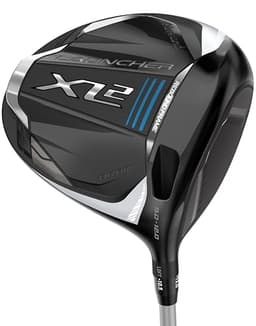
Cleveland Launcher XL 2 Driver
A big, stable, forgiving head from a respected brand — the pick if you want something a step above a package-set driver without paying flagship-tour prices.
- What it is
- 460cc high-MOI head, 10.5 degrees on this listing
- Who it’s for
- Most beginners — the 10.5-degree default, in a big forgiving head
Price as of October 7, 2026. #ad How we’re funded
Specs read from the product listing, on July 23, 2026.
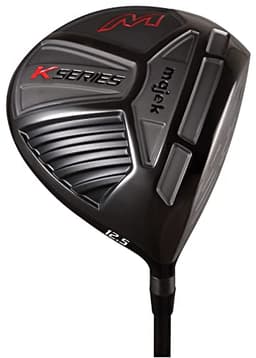
Majek High Launch K Series 460cc Driver (12.5°, Senior)
The budget high-launch option, and the loft is the point: 12.5 degrees is far more than most drivers offer, and extra loft is the cheapest way to get a slow swing's ball into the air.
- What it is
- 12.5 degrees with a senior-flex graphite shaft
- Who it’s for
- Slower swings and anyone whose drives never climb
Price as of October 7, 2026. #ad How we’re funded
Specs read from the product listing, on August 11, 2026.
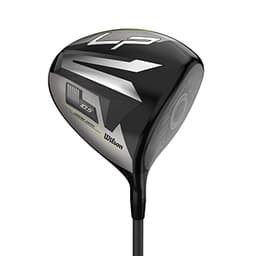
Wilson Launch Pad 2 Driver
Built for exactly one job: helping a beginner get the ball airborne and stop slicing it. The Launch Pad is offset and light, which is unglamorous and genuinely useful when you are new.
- What it is
- Offset, lightweight anti-slice head
- Who it’s for
- Golfers whose problem is the curve, not the height
Price as of October 7, 2026. #ad How we’re funded
Specs read from the product listing, on July 23, 2026.
| Pick | What it is | Who it’s for |
|---|---|---|
| Cleveland Launcher XL 2 Driver | 460cc high-MOI head, 10.5 degrees on this listing | Most beginners — the 10.5-degree default, in a big forgiving head |
| Majek High Launch K Series 460cc Driver (12.5°, Senior) | 12.5 degrees with a senior-flex graphite shaft | Slower swings and anyone whose drives never climb |
| Wilson Launch Pad 2 Driver | Offset, lightweight anti-slice head | Golfers whose problem is the curve, not the height |
5. How to tell your current driver has the wrong loft
You do not need a launch monitor to read this. The ball flight tells you, and the two failure modes look nothing like each other.
Too little loft looks like a drive that never really climbs: it leaves low, flattens out, lands early and runs. Into a breeze it gets knocked down almost immediately. Off a wet fairway in spring you lose the roll that was hiding the problem, and suddenly your driver goes no further than your 3-wood.
Too much loft looks like a drive that climbs steeply, hangs, and drops nearly vertically with no run — and that gets eaten alive by any headwind. If that is your flight, go down rather than up.
If neither description fits and the real problem is that the driver is simply hard to hit at all, the honest answer may be a different club off the tee for now: driver vs hybrid for beginners makes that case, and the easiest golf clubs to hit covers what “easy” actually means in a clubhead.
6. Buying used: the loft the market is full of
Used driver listings skew low-loft, and it is worth knowing why before you bargain-hunt. The heads that come up for sale cheapest are the ones better players bought, used for a season and replaced — and better players buy 9 and 9.5 degrees. The 10.5 and 12-degree heads get bought by people who keep them, so there are fewer of them second-hand and they hold their price better.
That is how a beginner ends up with a 9-degree driver they never consciously chose. The club was a bargain, it was the only one in the budget, and the number on the sole never came up in the conversation.
Two ways through it. Buy used but insist on the loft — wait for a 10.5 or 12 rather than taking the first cheap head, because a mis-lofted bargain is not a bargain. Or buy a used adjustable driver, where a 9-degree listing can often be set to 10.5 or 12 by rotating the sleeve, which turns the market’s low-loft bias into a non-issue. Check that the sleeve, the wrench and the original shaft are all present; a mismatched aftermarket shaft makes the stated loft meaningless anyway.
Our guide to used vs new golf clubs covers the rest of the second-hand checklist, and how much golf clubs cost sets out what each route realistically runs to.
7. If you already own a set, do this first
Most beginners come to this question holding a driver that came in a boxed set, and you do not have to replace it to get more launch out of it.
Tee it higher. Half the ball above the crown is the standard reference point, and it is the single cheapest way to raise your launch.
Move the ball forward. Inside your lead heel, so the clubhead is already traveling upward when it arrives.
Check whether the hosel adjusts. If there is a screw in the heel, you may already own the 12-degree driver you were about to buy.
Do all three before you spend anything. Then, if the flight is still low and running, the loft on the sole is the thing to change — and the clubs above are where we would start. If you are shopping the broader bag at the same time, how to choose clubs puts loft in the order it matters next to everything else.
Frequently asked questions
What loft driver should a beginner use?
Start at 10.5 degrees, and choose 12 if you struggle to get the ball in the air or your swing is on the slower side. Nine degrees is a fitted number for a player with a fast swing and a good strike; on a new swing it produces a low, hard-to-launch ball flight that loses carry rather than gaining it.
Does more driver loft mean less distance?
Not for most new golfers. Distance off a tee comes from launching the ball high enough to stay in the air, and a beginner's strike is usually low on the face with a downward or level angle of attack, which already reduces launch. Adding loft puts the ball in the air; taking loft away mostly produces a flatter shot that lands sooner.
Does driver loft help with a slice?
It helps, but it is not the cure. Extra loft increases the amount of backspin relative to the sideways tilt on the ball, so the same mishit curves less severely. The slice itself comes from the clubface and path, so pair the loft with an offset or draw-biased head and work on the path — our how to fix a slice guide covers the swing side.
What does an adjustable driver hosel actually do?
It changes the loft, and on some models the lie, in small steps. Cleveland publishes a sleeve on its Launcher XL driver that adjusts loft from 9 to 12 degrees in half-degree increments across 12 positions, with 9.0, 10.5, 12.0 and 10.5 Flat marked as the primary settings. Set it before you tee off: Rule 4.1a(2) makes deliberately changing a club's playing characteristics during a round a disqualification offence.
Is 12 degrees too much loft for a driver?
Not if you need it. A 12-degree head is a standard retail option precisely because plenty of golfers launch the ball too low, and the symptom is easy to read: drives that never climb, that dive on landing and that run out instead of carrying. If your drives balloon high and come up short in any breeze, that is the opposite problem and 10.5 or less is the fix.
Should I buy an adjustable driver as a beginner?
It is a nice-to-have, not a requirement. Adjustability is genuinely useful because your swing will change over your first two seasons and the club can follow it, but a fixed 10.5-degree head that is forgiving and easy to launch beats an adjustable one you never adjust. Buy the head you can hit; treat the hosel as a bonus.
Sources
- Cleveland Golf -- Launcher XL Driver (product specification) — The maker's published detail for the driver family: 'Adjust your loft from 9 to 12 degrees to optimize your launch angle, distance, and shot shape. Loft can be adjusted at 0.5 deg increments with 12 positions in all', with the sleeve's primary settings marked at 9.0, 10.5, 12.0 and 10.5 Flat; a 460cc head; a 45.75 in standard build length; and a published MOI of 5,200 g-cm2, which the page calls 'our most ever in a Cleveland Golf driver'. The page publishes no spin-rate or ball-speed figures (accessed October 6, 2026)
- R&A -- Rule 4: The Player's Equipment — Rule 4.1a(2) on adjustable clubs: a player 'must not make a stroke with a club when they have deliberately changed that club's playing characteristics during the round ... by using an adjustable feature or physically changing the club', with an exception where the club is restored to its original setting before being used; the penalty for making a stroke in breach of Rule 4.1a is disqualification. Rule 4.1b(1) sets the limit: a player must not start a round with more than 14 clubs or have more than 14 clubs during the round (accessed October 6, 2026)
Keep reading
Best Drivers for Beginners
The full roundup with live prices — forgiving heads, launch-friendly lofts and honest cons on every pick.
See the driversRegular vs Stiff Shaft
The other number on the spec sheet that decides your launch. Loft and flex are the same conversation.
Read the comparisonHow to Hit a Driver
Ball position, tee height and the upward strike that makes any loft work better.
Read the guideHow to Fix a Slice
Loft softens the curve; this fixes the cause. The face-and-path side of the problem.
Read the guideDriver vs Hybrid for Beginners
The honest question before loft: should you be hitting a driver off the tee at all yet?
Read the comparisonGolf Club Numbers Explained
What every number and letter on a clubhead means, loft included, in plain English.
Read the guide