How we picked these balls
We have not tested these on a launch monitor and we are not going to attribute a spin rate or a carry number to any of them. What we did is compare each ball’s published construction and compression positioning against what a slower swing actually needs, and note where the trade-offs bite. Three criteria drove the picks.
1. Low compression, genuinely
Compression is a number describing how easily a ball deforms — lower means softer. The rough brackets are low (about 30 to 60), mid (60 to 90) and high (90 and above, typically premium tour balls). For a driver swing speed under about 85 mph, low compression is the right bracket. Every ball here sits in it.
2. Two-piece construction
A two-piece ball is a large solid core wrapped in a durable cover. It spins less on full shots, flies straighter, costs less and lasts longer. Multi-layer balls add a mantle and a soft urethane cover to spin more on wedges — a genuine benefit that requires consistent strikes to exploit. For most golfers reading this, two-piece is both cheaper and better.
3. Cost per ball, honestly assessed
If you lose two or three balls a round, the difference between a value ball and a premium one is a real annual number. We have ranked with that in mind, and the price band of each pick is stated in its write-up.
The “lady” ball question
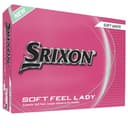
One of our picks is marketed to women, and we want to be direct about why it is on a page about senior golf. Golf balls are not gendered products. What a manufacturer does when it makes a women’s ball is lower the compression, because the average woman golfer swings slower than the average man.
If your swing speed is now in that same range — and for a great many golfers over seventy it is — then that ball is engineered for your swing. A 60-compression men’s ball and a 60-compression women’s ball behave identically. Playing the one with the better specification for your speed is simply correct, and the only cost is a word on the box.
How much distance can a ball actually give back?
Less than the marketing implies, and more than nothing. Here is the honest shape of it.
If you are currently playing a firm premium tour ball with a slow swing — which a surprising number of golfers do, because they bought a box years ago or were given one — then switching to a low-compression ball is a genuine improvement. You are currently under-compressing a ball designed for 110 mph.
If you are already playing a soft two-piece ball, changing to a different soft two-piece ball will change very little. The differences between the five balls on this page are small, and mostly about feel.
And in every case, the ball matters far less than the strike. The gap between your best drive and your average drive dwarfs the gap between any two reasonable golf balls. Our soft versus distance guide works through the physics in more detail.
What about the equipment side?
Ball choice is the cheapest lever, which is why it is worth pulling first. But it is not the biggest one.
If your swing has slowed, the two changes with the most effect are a lighter, higher-lofted driver and senior-flex iron shafts. The same logic applies as with the ball: the equipment has to match the speed you have now, not the speed you had at forty. A soft ball in a bag full of stiff shafts is solving one tenth of the problem.
If the whole bag is due, the senior complete sets page covers sets that arrive correctly specified throughout.
A note on color
Every ball here is available in white and most in yellow or another high-visibility color. This is not a performance question — a colored ball flies identically to a white one — but it is a genuinely useful one.
Eyesight changes, and tracking a white ball against a bright sky gets harder. Yellow is measurably easier for most people to follow in flight and to find in light rough. If you spend more time looking for balls than you used to, buy yellow. It is the cheapest improvement on this page and it speeds your group up as well.