Tee & Tempo

The Best Golf Balls for Beginners

Soft, low-spin, budget-friendly balls that fly straighter for a developing swing — plus why a beginner shouldn't pay for a premium tour ball yet.

By Stephen V.Last updated How we pick

Of all the gear decisions in golf, the ball is the one where beginners most often overspend for no benefit. The pro-shop wall is stacked with premium “tour” balls that cost three or four times what a starter ball does, and every one of them is built for a skill you do not have yet. As a new golfer you will lose a sleeve in the trees on a bad afternoon — and a lost premium ball stings far more than a lost cheap one. Start soft, start inexpensive, and save the fancy balls for the day you can actually tell the difference.

Two words explain almost everything: compression and spin. Low compression means the ball squashes more easily at slower swing speeds, so you get distance without swinging out of your shoes. Low spin means the ball curves less in the air, which quietly straightens the slice or hook nearly every beginner fights. Put those together and a soft, low-spin ball flies straighter and flatter for a developing swing than a tour ball ever would. Below are the balls we would actually hand a beginner, ranked for straight flight, soft feel and honest value — with the Callaway Supersoft as the safe default if you would rather not read the whole list.

How this is funded:we earn a commission if you buy through our links, at no extra cost to you. It never changes which product we recommend, and we’ll tell you when we’d skip one. Full disclosure.

Quick picks

Ranked on forgiveness, how complete the pick is, and value for a beginner. Select a row to jump to the full write-up. We have not hit these clubs on a launch monitor — here is exactly what we do instead.

#ProductBest forPrice
1
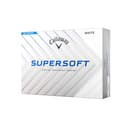
Callaway Supersoft Golf Balls

Callaway Supersoft Golf Balls

The default beginner ball, and rightly so: soft, low-spin, straight-flying and cheap enough that losing a few in the trees does not hurt. Start here.

Best overall
$26.97 · View on Amazon

Price as of July 23, 2026. #ad How we’re funded

2
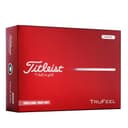
Titleist TruFeel Golf Balls

Titleist TruFeel Golf Balls

Titleist's softest, most affordable ball — the way to play the sport's most trusted brand without paying Pro V1 prices. A great confidence buy for a new golfer.

Best trusted brand
$24.97 · View on Amazon

Price as of July 23, 2026. #ad How we’re funded

3
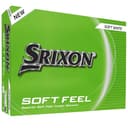
Srixon Soft Feel Golf Balls

Srixon Soft Feel Golf Balls

A perennial 'best soft ball for the money' pick. The Soft Feel launches high and flies straight, and Srixon often sells it in value packs that stretch a beginner's budget further.

Best high-launch value
$24.97 · View on Amazon

Price as of July 23, 2026. #ad How we’re funded

4
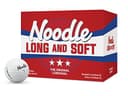
TaylorMade Noodle Long & Soft Golf Balls

TaylorMade Noodle Long & Soft Golf Balls

Sold in a 15-ball box for the price others charge for 12 — the cheapest sensible ball here from a major brand. When you are losing balls learning, the Noodle is the frugal, guilt-free choice.

Best value / cheapest
$18.99 · View on Amazon

Price as of July 23, 2026. #ad How we’re funded

5
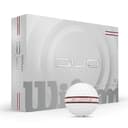
Wilson DUO Soft Golf Balls

Wilson DUO Soft Golf Balls

Marketed as one of the softest balls in golf, and it feels it. If you like a pillowy feel off the face and want straight, forgiving flight, the DUO Soft is a low-cost way to get both.

Softest feel
$24.99 · View on Amazon

Price as of July 23, 2026. #ad How we’re funded

6
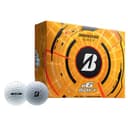
Bridgestone e6 Soft Golf Balls

Bridgestone e6 Soft Golf Balls

A straight-flying, low-side-spin ball from a serious ball maker. The e6 is designed to reduce hooks and slices, so it flatters a beginner's crooked shots while feeling a touch more premium.

Straightest for slicers
$23.97 · View on Amazon

Price as of July 23, 2026. #ad How we’re funded

The picks in full

#1Best overall

Callaway Supersoft Golf Balls

The default beginner ball, and rightly so: soft, low-spin, straight-flying and cheap enough that losing a few in the trees does not hurt. Start here.

Strengths

  • Low-spin design flies straighter, which flatters a slice or hook
  • Very soft feel off the putter and irons
  • Inexpensive enough to lose without frustration

Trade-offs

  • Low spin means less stopping power on the green for advanced players
  • Not built for the shot-shaping a better player wants
What it isLow-compression, low-spin ball
In the boxNot published
HandednessNot published
Shaft / flexNot published
Best forMost beginners, Slower swing speeds

Beginner note. Low 'compression' means the ball deforms easily at slower swing speeds, which helps beginners get distance without swinging out of their shoes.

Specs read from the product listing, on July 23, 2026. “Not published” means the listing does not state it.

#2Best trusted brand

Titleist TruFeel Golf Balls

Titleist's softest, most affordable ball — the way to play the sport's most trusted brand without paying Pro V1 prices. A great confidence buy for a new golfer.

Strengths

  • Titleist quality control at an entry price
  • Soft feel with straight, forgiving flight
  • The brand-name reassurance a lot of beginners want

Trade-offs

  • Costs a little more than the cheapest soft balls
  • Still a distance/feel ball, not a spin-and-stop ball
What it isSoft, low-compression two-piece ball
In the boxNot published
HandednessNot published
Shaft / flexNot published
Best forBrand-conscious beginners, Average swing speeds

Beginner note. The TruFeel is Titleist's soft, straight-flying value model — the same brand as the tour ball, built for feel and distance rather than spin.

Specs read from the product listing, on July 23, 2026. “Not published” means the listing does not state it.

#3Best high-launch value

Srixon Soft Feel Golf Balls

A perennial 'best soft ball for the money' pick. The Soft Feel launches high and flies straight, and Srixon often sells it in value packs that stretch a beginner's budget further.

Strengths

  • Soft feel with a notably high, easy launch
  • Straight, forgiving flight for developing swings
  • Frequently available in value multi-dozen packs

Trade-offs

  • Less greenside spin than a premium ball
  • Feel is a matter of taste — some prefer firmer
What it isSoft, high-launch two-piece ball
In the boxNot published
HandednessNot published
Shaft / flexNot published
Best forValue buyers, Slower swings needing launch

Beginner note. A high-launch profile helps slower swings carry the ball further in the air — useful when you are not yet compressing the ball like a low-handicapper.

Specs read from the product listing, on July 23, 2026. “Not published” means the listing does not state it.

#4Best value / cheapest

TaylorMade Noodle Long & Soft Golf Balls

Sold in a 15-ball box for the price others charge for 12 — the cheapest sensible ball here from a major brand. When you are losing balls learning, the Noodle is the frugal, guilt-free choice.

Strengths

  • 15-ball packs make it the best value per ball
  • Soft feel and straight, distance-oriented flight
  • TaylorMade name at a bargain price

Trade-offs

  • Very much a distance/feel ball — minimal spin
  • Not a ball you keep once you stop losing them
What it isSoft distance ball (15-ball pack)
In the boxNot published
HandednessNot published
Shaft / flexNot published
Best forBeginners losing lots of balls, Tight budgets

Beginner note. The 15-ball box is the point: while you are learning and losing balls, cost per ball matters more than marginal spin numbers.

Specs read from the product listing, on July 23, 2026. “Not published” means the listing does not state it.

#5Softest feel

Wilson DUO Soft Golf Balls

Marketed as one of the softest balls in golf, and it feels it. If you like a pillowy feel off the face and want straight, forgiving flight, the DUO Soft is a low-cost way to get both.

Strengths

  • Extremely soft, low-compression feel
  • Straight flight that suits a developing swing
  • Budget-friendly by the dozen

Trade-offs

  • Very soft feel is polarizing — not everyone likes it
  • Low spin limits greenside control
What it isUltra-low-compression soft ball
In the boxNot published
HandednessNot published
Shaft / flexNot published
Best forSoft-feel preferers, Slower swing speeds

Beginner note. One of the lowest-compression balls widely sold, which is why it feels so soft and helps slower swings — the same reason it spins less around the green.

Specs read from the product listing, on July 23, 2026. “Not published” means the listing does not state it.

#6Straightest for slicers

Bridgestone e6 Soft Golf Balls

A straight-flying, low-side-spin ball from a serious ball maker. The e6 is designed to reduce hooks and slices, so it flatters a beginner's crooked shots while feeling a touch more premium.

Strengths

  • Engineered to cut side-spin, so it flies straighter
  • Soft feel with a slightly more premium character
  • Bridgestone is a top-tier ball manufacturer

Trade-offs

  • Usually a little pricier than the softest budget balls
  • Anti-slice help fades in usefulness as you improve
What it isLow-side-spin straight-flight ball
In the boxNot published
HandednessNot published
Shaft / flexNot published
Best forSlicers and hookers, Beginners wanting straighter flight

Beginner note. Reducing side-spin is what straightens a slice or hook in the air — the e6's whole design goal, and exactly what a wayward beginner benefits from.

Specs read from the product listing, on July 23, 2026. “Not published” means the listing does not state it.

How to choose a beginner golf ball

The good news is that this is a low-stakes decision. Any ball on this list will help more than it hurts, and none of them costs enough to lose sleep over. The trick is matching the ball to where your game actually is right now — which, if you are reading this, means soft, straight and inexpensive.

Skip the premium tour ball

Tour balls like the ones the pros play are engineered to spin hard around the greens so a skilled player can stop the ball on a dime. That extra greenside spin is the same spin that exaggerates a slice off the tee, so on a beginner’s swing a tour ball can actually fly more crooked, not less — while costing several times more. You are paying a premium for a feature that works against you. Come back to them once you are breaking 90 and can shape a shot on purpose.

Soft feel and low spin, explained

Every ball here is a “soft” two-piece ball, and that is deliberate. A soft, low-compression core rewards the slower swing speeds most beginners have, giving you respectable distance without a perfect strike. The low-spin cover then keeps sidespin down, so your misses curve less and your good shots run out further. The Bridgestone e6 leans hardest into straight flight if a slice is your main enemy, while the Wilson DUO Softchases the softest feel of the group — but honestly, the differences between them are small, and any of them beats a tour ball for a new player.

What about the brand on the box?

Brand does not change the physics, but it does change confidence, and confidence matters when you are new. If seeing a name you trust makes you swing freer, the Titleist TruFeelgets you the sport’s most respected brand at a starter price, and the Srixon Soft Feelis a long-time favorite that launches high and often comes in value packs. None of these will out-perform the others in a way you can feel yet — so buy the one that makes you happy to tee it up.

Cost per ball is the real spec

Here is the unglamorous truth of your first season: you will lose balls, and lots of them. That makes cost-per-ball the number that matters most, which is why the TaylorMade Noodle— sold in a fifteen-ball box — earns its place, and why the Callaway Supersoft is such a comfortable default. Buy a couple of dozen, expect to donate some to the woods, and do not think twice about it. Once your set and your ball are sorted, the next things worth reading are the best beginner club sets and, if you are truly starting from scratch, how to start playing golf.

Frequently asked questions

Do beginners really need expensive golf balls?

No — a beginner gets no real benefit from a premium tour ball, and often plays worse with one. Tour balls are built for high greenside spin and a fast, repeatable swing; on a developing swing that spin can worsen a slice. A soft, low-spin ball flies straighter and costs a fraction as much, which is exactly what you want while you are still losing a few every round.

What does compression mean on a golf ball?

Compression is a rough measure of how much the ball squashes at impact. Low-compression balls — the soft ones on this list — deform more easily, so slower swing speeds still get good distance out of them. Higher-compression balls need a faster swing to perform, which is one more reason beginners are better off starting soft.

Are more expensive golf balls easier to hit straight?

Usually the opposite for a beginner. Straight flight comes from low spin, and the priciest tour balls are designed to spin more, not less. Balls engineered to cut sidespin, like the Bridgestone e6, help a wayward swing far more than an expensive tour ball will. Spend the money you save on lessons or range time instead.

How many golf balls should a beginner buy?

More than you think — at least a dozen, ideally two. New golfers lose balls regularly to water, trees and long grass, and running out mid-round is a hassle. Cheap soft balls like the TaylorMade Noodle or Callaway Supersoft make stocking up painless, so keep a healthy supply in your bag and do not agonize over the ones you lose.

When should I move up to a better golf ball?

A good rule of thumb is to upgrade when you stop losing balls and start wishing you could stop them faster on the green. Once you are consistently breaking 90 and can control your ball flight, a mid-tier or tour ball's extra greenside spin becomes useful. Until then, the money is better spent playing more golf.

Sources

Keep reading