How to choose beginner irons
You will see a lot of jargon shopping for irons. Almost all of it comes down to a few plain ideas that decide whether a club is easy or hard for a beginner to hit.
Cavity-back vs blades, in plain English
Irons come in two broad shapes. A blade is a thin, solid iron with the weight packed behind a small sweet spot — better players like the control, but it punishes anything off-center, which is most of a beginner’s shots. A cavity-back hollows out the back of the head and pushes that weight out to the edges, which enlarges the forgiving zone and makes off-center hits fly straighter and truer. Every iron on this list is a cavity-back — often called a game-improvement iron — because that is exactly the help a new golfer needs. Blades can wait until you are a much better player, if ever.
Wide soles and hybrid-style long irons
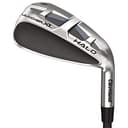
Two more features make a real difference. A wide sole — the flat bottom of the club — lowers the weight in the head and glides across the turf rather than digging in, so a slightly fat strike still comes off cleanly. And because the long irons (the 4- and 5-iron) are the hardest clubs in any set to hit, the best beginner sets shape them almost like little hybrids: hollow, wider heads that launch far more easily than a traditional long iron. The Cleveland Launcher XL Halo takes that idea furthest, which is why it is the pick if the long clubs scare you.
Graphite vs steel, and when to upgrade
Shafts come in graphite or steel. Graphite is lighter, which helps a slower swing generate speed and get the ball up, and it soaks up some of the sting from a mishit — a sensible default for most beginners. Steel is heavier and a touch more consistent, and better, faster swings often prefer it. Neither is “better”; it is a match to your swing speed. As for timing: there is no rush to leave a package set, but the moment to upgrade is when you are playing regularly, your scores are coming down, and the stock irons start to feel like the thing holding you back rather than your swing. If you are still weighing a full set against single clubs, the beginner sets roundup and golf clubs explained both help you decide where your money goes furthest.
If forgiveness is the only thing you care about
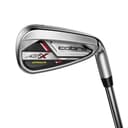
Our cross-category guide to the easiest golf clubs to hit picks one club per type on that single criterion, and it explains the four design features — high MOI, a cavity back, offset and a wide sole — that make any club more forgiving. Our best-overall set here is covered on its own in the Cobra Air-X irons review.