Tee & Tempo

The Best Golf Clubs for a Slice

A slice is a swing problem that equipment can lean against. These are the offset drivers, the anti-slice irons and the one ball built to fly straight - and the honest limit of what any of them will do for you.

By Stephen V.Last updated How we pick

Buy the Pinemeadow PGX Offset driver. It is an offset, anti-slice driver at the lowest price anyone sells one for, which makes it the right first move for a beginner whose ball starts left and finishes well right. If you would rather buy the better-known offset club, the Wilson Launch Pad 2 is the strongest anti-slice design here — check its delivery date before you order, because the remaining listings quote long ship times. If you do not want to look down at an offset head at all, the Cleveland Launcher XL is the forgiving non-offset route.

Here is the part most slice pages skip. A slice happens because the clubface is open relative to the path the club is travelling on, and no purchase changes that relationship. What offset equipment does is buy your hands a fraction more time to square the face before impact, which turns a slice into a fade and a fade into something playable. That is a real, Rules-conforming help — it is not a cure, and we are not going to sell it as one.

So this page ranks the clubs that lean hardest against the miss, in the order a beginner should spend money, and it is explicit about the one club in your bag that does the most slice damage: the driver, because it is the longest club with the least loft. Prices below are live and carry the date they were checked, and every spec comes from the product’s own listing — our methodology explains what we do and do not claim.

How this is funded: we earn a commission if you buy through our links, at no extra cost to you. It never changes which product we recommend, and we’ll tell you when we’d skip one. Full disclosure.

Quick picks

Ranked on forgiveness, how complete the pick is, and value for a beginner. Select a row to jump to the full write-up. We have not hit these clubs on a launch monitor — here is exactly what we do instead.

#ProductBest forPrice
1
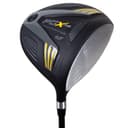
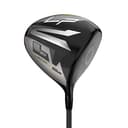
Pinemeadow PGX Offset Driver

Pinemeadow PGX Offset Driver

The budget anti-slice driver. Like the Wilson Launch Pad, it is offset to fight a slice, but it costs a fraction of the price — the value pick if a slice is your problem and money is tight.

Best anti-slice driver
$99.95 · View on Amazon

Price as of October 16, 2026. #ad How we’re funded

2
Wilson Launch Pad 2 Driver

Wilson Launch Pad 2 Driver

Built for exactly one job: helping a beginner get the ball airborne and stop slicing it. The Launch Pad is offset and light, which is unglamorous and genuinely useful when you are new.

Strongest offset design
$243.52 · View on Amazon

Price as of October 16, 2026. #ad How we’re funded

3
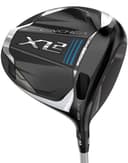
Cleveland Launcher XL 2 Driver

Cleveland Launcher XL 2 Driver

A big, stable, forgiving head from a respected brand — the pick if you want something a step above a package-set driver without paying flagship-tour prices.

Best without offset
$299.99 · View on Amazon

Price as of October 16, 2026. #ad How we’re funded

4
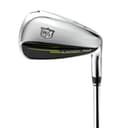
Wilson Staff Launch Pad 2 Iron Set (5-PW, GW)

Wilson Staff Launch Pad 2 Iron Set (5-PW, GW)

The iron set built around one job, and Wilson says so on the box: neutralize a slice. Every head carries offset, the sole is shaped to skid rather than dig, and the whole thing is light. If your ball starts left and curves hard right, this is the set here aimed at that miss.

Best anti-slice irons
$659.99 · View on Amazon

Price as of October 16, 2026. #ad How we’re funded

5
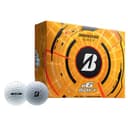
Bridgestone e6 Soft Golf Balls

Bridgestone e6 Soft Golf Balls

A straight-flying, low-side-spin ball from a serious ball maker. The e6 is designed to reduce hooks and slices, so it flatters a beginner's crooked shots while feeling a touch more premium.

Best ball for a slicer
$23.97 · View on Amazon

Price as of October 16, 2026. #ad How we’re funded

The picks in full

#1Best anti-slice driver

Pinemeadow PGX Offset Driver

The budget anti-slice driver. Like the Wilson Launch Pad, it is offset to fight a slice, but it costs a fraction of the price — the value pick if a slice is your problem and money is tight.

Strengths

  • Offset design targets the beginner's slice at a low price
  • Lightweight and easy to launch
  • Long-running budget favorite with lots of buyer feedback

Trade-offs

  • Off-brand components and finish
  • The offset look is not for everyone
What it isOffset budget anti-slice driver
In the boxNot published
HandednessRight
Shaft / flexRegular/Graphite
Best forBudget slicers, Value hunters

Beginner note. Same offset anti-slice idea as pricier drivers, at a budget price — the trade-off is brand feel and finish, not the core forgiveness feature.

Specs read from the product listing, on July 23, 2026. “Not published” means the listing does not state it.

#2Strongest offset design

Wilson Launch Pad 2 Driver

Built for exactly one job: helping a beginner get the ball airborne and stop slicing it. The Launch Pad is offset and light, which is unglamorous and genuinely useful when you are new.

Strengths

  • Offset hosel is designed to reduce a slice — the beginner's most common miss
  • Lightweight build helps a slower swing generate speed
  • Higher-launching by design, so the ball gets up without a perfect strike

Trade-offs

  • Wilson has moved on to the DYNAPWR line, and every remaining Launch Pad driver listing quotes a months-long ship time — check the delivery date before you order
  • The anti-slice bias can feel like too much once your swing straightens out
  • Not a driver you keep after you break 100 consistently
What it isOffset, lightweight anti-slice driver
In the boxNot published
HandednessRight & Left
Shaft / flexRegular, and lighter senior/ladies options
Best forSlicers, Slower swing speeds

Beginner note. Offset means the face sits slightly behind the hosel, giving your hands a fraction more time to square it — a legitimate, Rules-conforming way to fight a slice.

Specs read from the product listing, on July 23, 2026. “Not published” means the listing does not state it.

#3Best without offset

Cleveland Launcher XL 2 Driver

A big, stable, forgiving head from a respected brand — the pick if you want something a step above a package-set driver without paying flagship-tour prices.

Strengths

  • Large, high-MOI head that stays stable on mishits
  • Comes in a standard 10.5° loft with regular flex — a sensible beginner spec
  • Cleveland is a serious golf name, so it holds value better than no-name drivers

Trade-offs

  • Pricier than a budget titanium driver for a first club
  • Fewer built-in anti-slice aids than the Launch Pad
What it is460cc high-MOI 10.5° driver
In the boxNot published
HandednessRight
Shaft / flexRegular
Best forBeginners wanting a keeper, Faster learners

Beginner note. 'High MOI' means the head resists twisting on off-center hits, so a slightly toe- or heel-struck drive still flies reasonably straight — the single most useful trait in a beginner driver.

Specs read from the product listing, on July 23, 2026. “Not published” means the listing does not state it.

#4Best anti-slice irons

Wilson Staff Launch Pad 2 Iron Set (5-PW, GW)

The iron set built around one job, and Wilson says so on the box: neutralize a slice. Every head carries offset, the sole is shaped to skid rather than dig, and the whole thing is light. If your ball starts left and curves hard right, this is the set here aimed at that miss.

Strengths

  • Offset through the whole set — Wilson's stated aim is to neutralize a slice
  • Graphite shafts in regular flex, the lighter of the two shaft choices
  • Seven clubs — 5-iron through pitching wedge plus a gap wedge

Trade-offs

  • Anti-slice help can over-correct once your ball flight straightens out
  • Super game-improvement shaping is help a fast-improving player will outgrow
What it isOffset anti-slice game-improvement irons (5-PW, GW)
In the box5-iron through pitching wedge plus a gap wedge (7 clubs)
HandednessRight
Shaft / flexGraphite regular
Best forSlicers, Higher-handicap beginners

Beginner note. Wilson publishes 0.12–0.15in of hosel offset across the set: the face sits slightly behind the shaft, giving your hands a fraction longer to square it — the same anti-slice trick as the Launch Pad driver.

Specs read from the product listing, on September 25, 2026. “Not published” means the listing does not state it.

#5Best ball for a slicer

Bridgestone e6 Soft Golf Balls

A straight-flying, low-side-spin ball from a serious ball maker. The e6 is designed to reduce hooks and slices, so it flatters a beginner's crooked shots while feeling a touch more premium.

Strengths

  • Engineered to cut side-spin, so it flies straighter
  • Soft feel with a slightly more premium character
  • Bridgestone is a top-tier ball manufacturer

Trade-offs

  • Usually a little pricier than the softest budget balls
  • Anti-slice help fades in usefulness as you improve
What it isLow-side-spin straight-flight ball
In the boxNot published
HandednessNot published
Shaft / flexNot published
Best forSlicers and hookers, Beginners wanting straighter flight

Beginner note. Reducing side-spin is what straightens a slice or hook in the air — the e6's whole design goal, and exactly what a wayward beginner benefits from.

Specs read from the product listing, on July 23, 2026. “Not published” means the listing does not state it.

What offset actually does

Offset means the clubface is set slightly behind the hosel — the part that joins the head to the shaft — rather than flush with it. Two things follow from that geometry. Your hands arrive marginally ahead of the face, so the face has a fraction longer to rotate toward square, and the extra mass sits further back and lower, which helps the ball climb. Both effects point the same direction for a slicer: straighter and higher.

Offset is legal. Rule 4.1a governs what makes a club conforming, and offset heads have been standard in game-improvement clubs for decades — the Rules care about adjustable features being changed mid-round, not about a head shape designed to flatter a weak strike. Nothing on this page would raise an eyebrow in a club competition.

The trade-off is cosmetic rather than technical. An offset head looks different at address and some golfers never settle over it. If that is you, the Cleveland Launcher XL is here for exactly that reason: a 460cc head with a published MOI of 5,200 g-cm2 — Cleveland calls it their most ever in a driver — and loft adjustable from 9 to 12 degrees in half-degree steps. More loft raises backspin relative to sidespin, so the same mis-strike curves less. A slicer who sets that sleeve toward the high end is helping themselves without ever playing an offset head.

Spend in this order

The driver first, and by a wide margin. It is the longest club in the bag with the least loft, which is exactly the recipe for turning a slightly open face into forty yards of curve. Fix the driver and most of your lost balls come back. A driver that arrived free in a box with eleven other clubs is usually the worst offender you own.

Then the ball, because it is the cheapest change available. The Bridgestone e6 is built around straight flight rather than spin, and a lower-spinning ball curves less for the same strike. You will not notice it on a good swing. You will notice it on the one that leaks right.

Irons last, and only if the slice follows you down the bag. Plenty of beginners slice the driver and hit reasonable irons, because a 7-iron is shorter, more lofted and far more forgiving of an open face. If your irons also start left and finish right, the Wilson Launch Pad irons apply the same offset idea across the set.

What equipment will not do

Anti-slice clubs are a bridge, not a destination. They put the ball in more fairways while your swing is still forming, and the day your swing straightens out the same offset can start producing a pull or a hook — which is why the listings and our own notes say plainly that these are not clubs you keep forever.

The free fixes are worth running first, in this order. Check your grip, because a weak grip — hands rotated too far toward the target — is the most common cause of an open face at impact and costs nothing to change. Check your alignment, because aiming left and swinging across the ball produces the classic slice shape. Then check your setup and ball position. Our guide to fixing a slice walks through all three with the diagnosis before the drill, and how to grip a golf club covers the change that solves more slices than anything on this page.

One more honest note: if the grip, the alignment and the setup are all sound and the ball still leaks right, the next conversation is about shaft flex rather than head shape. A shaft too stiff for your swing speed is hard to square. Our regular vs stiff shaft guide is the honest version of that decision, and for most beginners the answer is the softer one.

How this page differs from our driver roundup

Three of the five picks here also appear on our beginner driver roundup, which ranks them for all-round forgiveness. This page re-ranks the same shortlist on one criterion only — how hard each club fights a left-to-right ball flight — which is why the budget offset driver leads here and the general-purpose pick does not. If you are not certain a slice is your miss, the hook guide describes the opposite pattern, and buying anti-slice clubs for a hook makes things worse rather than better.

If you are still building a first bag rather than replacing one club, start there instead: the best golf clubs for beginners covers that decision and the easiest clubs to hit ranks forgiveness across every club type. Buying a specialist anti-slice driver into a bag you have not bought yet is the wrong order of operations.
Frequently asked questions

What is the best driver for a slice?

The Pinemeadow PGX Offset is our pick on value: it is an offset, anti-slice head at a fraction of the price of the branded alternatives, and offset is the feature that matters. The Wilson Launch Pad 2 is the stronger anti-slice design of the two, but the remaining listings quote long ship times, so check the delivery date before you order.

Do anti-slice drivers actually work?

They help, within limits. An offset head sets the face behind the hosel, which gives your hands slightly longer to square the face, and it moves mass low and back to raise launch. That turns a slice into a fade for a lot of beginners. It does not change the face-to-path relationship causing the slice, so it reduces the curve rather than removing it.

Is an offset driver legal in competition?

Yes. Rule 4.1a sets out what makes a club conforming and offset heads have been standard game-improvement design for decades. The restriction people confuse this with is about deliberately changing an adjustable club's playing characteristics during a round, which is a different matter entirely.

Should I buy a new driver or fix my swing first?

Check your grip and alignment first, because both are free and a weak grip is the most common cause of an open clubface. If the ball still leaks right after that, an offset driver is a sensible purchase - and a slicer whose current driver came free inside a complete set has the most to gain from changing it.

Does more loft help a slice?

It helps. More loft means more backspin relative to sidespin, so the same mis-strike curves less. Cleveland's own published spec for the Launcher XL says loft adjusts from 9 to 12 degrees in half-degree steps across twelve positions, which means a slicer can set it toward the high end and get some of that benefit without playing an offset head.

What golf ball is best if I slice?

A low-spinning, straight-flight ball. The Bridgestone e6 is built around exactly that, which is why it is the slicer's pick in our beginner ball roundup. The effect is modest and the ball is inexpensive, which makes it the best-value change on this page.

Will I need to replace anti-slice clubs later?

Probably, and that is a sign of progress rather than a waste. Offset is a bias, and once your swing stops leaving the face open the same bias can start producing a pull or a hook. Treat an anti-slice driver as a club that keeps you in play for a season or two, not one you keep for a decade.

Sources

  • Cleveland Golf -- Launcher XL Driver (product specification) — The maker's published detail for the driver family: 'Adjust your loft from 9 to 12 degrees to optimize your launch angle, distance, and shot shape. Loft can be adjusted at 0.5 deg increments with 12 positions in all', with the sleeve's primary settings marked at 9.0, 10.5, 12.0 and 10.5 Flat; a 460cc head; a 45.75 in standard build length; and a published MOI of 5,200 g-cm2, which the page calls 'our most ever in a Cleveland Golf driver'. The page publishes no spin-rate or ball-speed figures (accessed October 6, 2026)
  • R&A -- Rule 4: The Player's Equipment — Rule 4.1a(2) on adjustable clubs: a player 'must not make a stroke with a club when they have deliberately changed that club's playing characteristics during the round ... by using an adjustable feature or physically changing the club', with an exception where the club is restored to its original setting before being used; the penalty for making a stroke in breach of Rule 4.1a is disqualification. Rule 4.1b(1) sets the limit: a player must not start a round with more than 14 clubs or have more than 14 clubs during the round (accessed October 6, 2026)

Keep reading