Tee & Tempo

The Best Golf Travel Bags Under $200

One club breaks in transit more often than all the others, and it is the one at the top of the bag. Three travel bags that clear $200 at live prices with the date checked - and how to pack them.

By Stephen V.Last updated How we pick

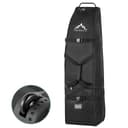
Buy the CaddyDaddy Enforcer if you want the best golf travel bag under $200. It is a hybrid: a rigid hard top over the club heads, where almost all transit damage actually happens, with a soft body everywhere else so it still folds down for storage at home. That is most of the protection of a full hard case without the garage problem or the weight. If you fly once a year and want the cheapest thing that will genuinely get your clubs there, the Himal soft-sided cover is the budget pick— heavy 600D Oxford fabric with wheels, and the cheapest way in our registry to get a set of clubs onto a plane at all.

All 3 picks below carried a live price under $200 as of November 21, 2026, read from the price layer that refreshes daily rather than typed into this page. That is also why there are three picks and not five: these are the only travel bags in our registry clearing $200with a live price right now. The two we rank first and second overall — the Sun Mountain ClubGlider Meridian and the Samsonite Tour Classic hardside — both sit above this line, and both are discussed below instead of being squeezed under a headline they do not fit.

The thing to understand before you choose is where the damage happens. The club that breaks is nearly always the driver, and it breaks at the head. It is the longest club in the bag, so its head sits nearest the top of the cover, which is the part that gets dropped, stacked on and thrown. Protect the top eighteen inches and you have solved most of the problem — which is exactly what the top pick here does, and exactly what a cheap unpadded sleeve does not. Our methodology page states what we do and do not claim about gear we have not owned.

How this is funded: we earn a commission if you buy through our links, at no extra cost to you. It never changes which product we recommend, and we’ll tell you when we’d skip one. Full disclosure.

Quick picks

Ranked on forgiveness, how complete the pick is, and value for a beginner. Select a row to jump to the full write-up. We have not hit these clubs on a launch monitor — here is exactly what we do instead.

#ProductBest forPrice
1
CaddyDaddy Enforcer Hard Top Travel Bag Cover

CaddyDaddy Enforcer Hard Top Travel Bag Cover

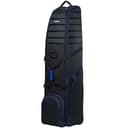
The sensible compromise. A hard top over the club heads where the damage happens, and soft sides everywhere else so the bag still folds away when you get home.

Best travel bag under $200
$199.95 · View on Amazon

Price as of November 21, 2026. #ad How we’re funded

2
Bag Boy T-660 Golf Travel Cover

Bag Boy T-660 Golf Travel Cover

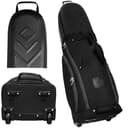
The value pick with the details that matter: a padded top, a lockable wrap-around zipper and an internal compression strap so the bag cannot rattle around inside the cover.

Best value
$84.95 · View on Amazon

Price as of November 21, 2026. #ad How we’re funded

3
Himal Outdoors Soft-Sided Golf Travel Bag with Wheels

Himal Outdoors Soft-Sided Golf Travel Bag with Wheels

About the price of two sleeves of balls, and honest about what it is: a tough fabric sleeve with wheels. It will not save a driver from a serious impact, but it will stop the scuffs and keep the bag dry.

Budget pick
$37.99 · View on Amazon

$47.4920% off

Price as of November 21, 2026. #ad How we’re funded

The picks in full

#1Best travel bag under $200

CaddyDaddy Enforcer Hard Top Travel Bag Cover

The sensible compromise. A hard top over the club heads where the damage happens, and soft sides everywhere else so the bag still folds away when you get home.

Strengths

  • Rigid top protects the club heads, which is where breakages occur
  • Soft body packs down far smaller than a full hard case
  • Lighter than a hardside case, which helps against airline weight limits

Trade-offs

  • Sides offer less protection than a full hard shell
  • Wheels are smaller than the spinner wheels on the Samsonite
What it isHybrid hard-top, soft-body travel cover
In the boxNot published
HandednessNot published
Shaft / flexNot published
Best forOccasional flyers, Golfers with no garage space for a hard case

Beginner note. Most travel damage happens to the heads of the longest clubs. Protecting the top eighteen inches gets you most of the benefit of a hard case at a fraction of the storage problem.

Specs read from the product listing, on August 11, 2026. “Not published” means the listing does not state it.

#2Best value

Bag Boy T-660 Golf Travel Cover

The value pick with the details that matter: a padded top, a lockable wrap-around zipper and an internal compression strap so the bag cannot rattle around inside the cover.

Strengths

  • Internal compression strap stops the clubs shifting in transit
  • Lockable full wrap-around zipper for peace of mind at check-in
  • Quilted padded top over the club heads at a fraction of a hard case's price

Trade-offs

  • In-line skate wheels need the bag tilted and dragged rather than pushed
  • Soft-sided, so genuinely rough handling still risks a shaft
What it isPadded soft travel cover, lockable zipper
In the boxInternal compression strap
HandednessNot published
Shaft / flexNot published
Best forOne or two trips a year, Golfers who mostly drive but occasionally fly

Beginner note. The compression strap is the underrated feature. Clubs that can slide inside the cover hit each other for the whole flight, which is how shafts get scratched even when nothing dramatic happens.

Specs read from the product listing, on August 11, 2026. “Not published” means the listing does not state it.

#3Budget pick

Himal Outdoors Soft-Sided Golf Travel Bag with Wheels

About the price of two sleeves of balls, and honest about what it is: a tough fabric sleeve with wheels. It will not save a driver from a serious impact, but it will stop the scuffs and keep the bag dry.

Strengths

  • Cheapest way to get your clubs on a plane at all
  • Heavy 600D Oxford fabric resists tearing better than thin nylon
  • Folds to almost nothing for storage

Trade-offs

  • Minimal padding — pack towels around the club heads
  • Universal sizing means a large staff bag is a tight fit
What it isSoft-sided wheeled travel bag, 600D Oxford
In the boxNot published
HandednessNot published
Shaft / flexNot published
Best forA first trip with clubs, Road trips and car travel

Beginner note. The standard trick with an unpadded cover is a stiff support rod or a rolled towel above the driver head, so nothing lands directly on the longest shaft.

Specs read from the product listing, on August 11, 2026. “Not published” means the listing does not state it.

Hard, soft, or hard-topped?

Three formats, and the right one depends almost entirely on how often you fly and whether you have anywhere to put the thing between trips.

A full hard caseis the only honest answer if you want certainty. A rigid shell is the only thing that actually stops a baggage handler’s throw rather than merely cushioning it. The cost is twofold and both parts are real: it does not fold away, so it occupies serious garage space for fifty weeks of the year, and it is heavier empty than any soft bag, which eats into your airline weight allowance before a single club goes in. The Samsonite Tour Classic above this page’s ceiling is that option, with spinner wheels that roll in any direction rather than needing to be tilted and dragged.

A soft cover is a padded fabric sleeve. It stops scuffs, keeps the rain out, folds to almost nothing and costs the least. It reduces the risk of a broken shaft; it does not remove it. Both cheaper picks here are soft covers, and the Bag Boy T-660 is the better of the two because of what it adds rather than what it is made of.

A hard-topped hybridis the compromise, and for most golfers it is the right one. A rigid top over the heads of the longest clubs, soft sides for everything else. You get the protection where the breakages occur, a bag that packs down, and a lower weight than a hard case. Its sides genuinely offer less protection than a full shell — that is the trade, and it is a sensible one to take if you fly once or twice a year.

Our best golf travel bags page ranks all five with no price ceiling, including the two above this line.

The two features worth paying for under $200

At this price you cannot buy a rigid shell all round. You can buy two specific things that matter more than the fabric weight.

An internal compression strap. This is the most underrated feature on any travel cover and the Bag Boy T-660 has one. Clubs that can slide inside a cover hit each other for the entire flight, which is how shafts come out scratched and crowns come out chipped even when nothing dramatic happened to the bag. A strap that pins the clubs against the bag means they arrive in the same arrangement they left in.

A lockable wrap-around zipper. Also on the T-660. A full wrap-around zipper makes loading easy and a lockable one means the cover cannot simply fall open on a carousel. Note what a lock does and does not do: it is a deterrent and a closure, not security against a determined thief, and some airlines require locks that security can open.

Wheels are where the money shows at this level. The T-660 and the Himal use in-line skate-style wheels, which need the bag tilted and dragged. The Samsonite above this line uses spinners, which you push upright. Dragging a loaded golf bag through a terminal with one arm is the single most tiring part of travelling with clubs, which is precisely the problem the Sun Mountain ClubGlider solves with retractable legs that take the load onto four wheels. If you fly several times a year, that is the feature to save for.

How to pack a cheap travel bag so it works like an expensive one

Four habits, and they are worth more than the difference in price between these three.

1. Put something stiff above the driver head. A purpose-made support rod, a broom handle cut to length, or a tightly rolled towel standing on the heads so nothing lands directly on the longest shaft. This is the standard trick with an unpadded cover and it addresses the exact failure mode described above.

2. Turn the heads inward and strap them. Heads toward the centre of the bag, not against the sides. Then use the compression strap if you have one, or a luggage strap if you do not.

3. Pack soft things, not heavy ones. Golf shoes, rain gear, towels and polosare free padding, and they also save weight in your main suitcase. Do not pack anything hard or heavy next to a shaft, and remember that airline golf allowances are usually a weight limit rather than a size limit — a heavier bag means fewer clubs or less padding, not more.

4. Take the putter out of the bag if it has a nice headcover. It costs nothing and the putter is the club you would most notice missing.

And one thing to check before you order: “universal” sizing is not actually universal. A large staff bag is a tight fit in the Himal, and a cart bag with a big base can be a struggle in any soft cover. If you are buying both at once, read how to choose a golf bag and stand bag versus cart bagfirst — a lightweight stand bag is much easier to travel with than a cart bag, and that choice constrains this one.

The Rule that explains why none of this is recoverable

Worth knowing because it changes how seriously you should take the packing above.

A club damaged before you tee off is simply a club you do not have. The Rules allow you to replace a club that is damaged duringthe round in limited circumstances, but a shaft snapped in an aircraft hold is not that — it happened before the round started, and you begin with whatever is intact. Rule 4.1b(1) then sets the hard limit from the other direction: you must not start a round with more than 14 clubs or have more than 14 during it. So a broken driver means fourteen clubs minus one, with no remedy, on the first morning of a trip you have paid for.

There is also no Rules objection to borrowing a club from the pro shop, and that is usually the actual fix on holiday. But it is a rental fee and a strange club on a course you do not know. Thirty dollars of padding is cheaper. Our how many clubs in a bag page covers the limit in full, and golf rules for beginners covers the rest of what applies to a casual round.

Who should spend nothing

If you only ever drive to the course, you do not need a travel bag. A rain hood and the boot of a car do the whole job, and the money is better spent on something you use every round — a rangefinder, a push cart or a fresh dozen balls.

If you are flying once, ever, borrow one. Travel covers sit unused in a lot of garages and most golf friends own one. And if you are flying regularly, buy the best one you can afford rather than the cheapest that fits — the Sun Mountain above this line exists because dragging a loaded bag through three terminals is a genuinely miserable way to start a golf trip. For everyone in between, the CaddyDaddy Enforcer is the pick on this page and a hard top over the heads is the feature to insist on.
Frequently asked questions

What is the best golf travel bag under $200?

The CaddyDaddy Enforcer. It is a hybrid with a rigid hard top over the club heads - where nearly all transit damage happens - and a soft body that still folds down for storage. That gives you most of the protection of a full hard case without the garage space or the extra empty weight.

Do I need a hard case for flying with golf clubs?

You need one if you want certainty. A rigid shell is the only thing that genuinely stops an impact rather than cushioning it. The cost is real: a hard case does not fold away between trips and is heavier empty, which eats into an airline weight allowance. A hard-topped hybrid protects the part that actually breaks for far less.

Which golf club is most likely to break in transit?

The driver, at the head. It is the longest club in the bag, so its head sits nearest the top of the cover - the part that gets dropped, stacked on and thrown. That is why protecting the top eighteen inches of the bag solves most of the problem and why a stiff support rod or rolled towel above the driver head is the standard packing trick.

How do you pack a soft golf travel bag?

Put something stiff above the driver head so nothing lands on the longest shaft, turn the club heads inward rather than against the sides, strap the clubs so they cannot slide, and fill the gaps with soft items - shoes, towels, rain gear and shirts - which doubles as free padding and saves space in your suitcase.

What is a compression strap on a travel bag and does it matter?

It is an internal strap that pins the clubs against the bag so they cannot shift. It matters more than the fabric weight: clubs that slide inside a cover knock into each other for the whole flight, which is how shafts arrive scratched and crowns chipped even when nothing dramatic happened to the bag.

Can I replace a golf club that was broken in transit?

Not under the Rules, no. The limited allowance to replace a damaged club applies to damage that happens during the round - a shaft snapped in an aircraft hold happened before it started, so you begin with whatever is intact. Rule 4.1b(1) also caps you at 14 clubs, so a broken driver simply means playing without it.

Will a cart bag fit in a golf travel bag?

Often only just. Universal sizing is not actually universal, and a large staff or cart bag with a wide base is a tight fit in a cheap soft cover - the budget pick here says so explicitly. If you are buying both at once, a lightweight stand bag is far easier to travel with and makes this purchase simpler.

Sources

  • R&A -- Rule 4: The Player's Equipment — Rule 4.1a(2) on adjustable clubs: a player 'must not make a stroke with a club when they have deliberately changed that club's playing characteristics during the round ... by using an adjustable feature or physically changing the club', with an exception where the club is restored to its original setting before being used; the penalty for making a stroke in breach of Rule 4.1a is disqualification. Rule 4.1b(1) sets the limit: a player must not start a round with more than 14 clubs or have more than 14 clubs during the round (accessed October 6, 2026)
  • USGA — Rules Hub: Clubs — USGA overview of the 14-club limit and the freedom to carry any conforming club types (accessed July 23, 2026)

Keep reading