How to Choose a Golf Bag
One question decides this purchase, and it is not the brand. Walk or ride? Answer that and the rest of the spec sheet falls into place — here is the whole decision in order.
How this is funded: we earn a commission if you buy through our links, at no extra cost to you. It never changes which product we recommend, and we’ll tell you when we’d skip one. Full disclosure.
Start here, because it saves you reading the rest: if you are going to walk, buy a lightweight stand bag. If you ride a cart every round, buy a cart bag with a cart-strap channel. That single question decides weight, pockets, dividers, strap design and price. Our default pick for a walking beginner is the Sun Mountain Eclipse 2.5, and for a rider the Datrek DG Lite III— both in the table further down with live prices.
What follows is the rest of the decision in the order it actually matters, because golf bag listings are written as spec lists and almost none of the specs matter to a first-timer. Three do. The others are how manufacturers fill a bullet-point box.
1. Walk or ride: the question that decides everything
A stand bag has retractable legs and a dual strap, so it stands up on the fairway and sits on both shoulders like a rucksack. It is the right choice if you plan to walk. A cart bag has no legs, a flat base, far more storage, and a channel moulded into the back for the cart’s strap.
That channel is the spec that separates a real cart bag from a heavy stand bag. Without it, the cart strap crosses your pockets and you spend the round unhooking the bag to reach a ball. It is also why carrying a cart bag is miserable: the weight is deliberate, because the cart is holding it.
If you genuinely do not know yet, buy the stand bag. A light stand bag straps onto a cart perfectly well and carries fine on your back; a cart bag only does one of those two things. Our stand bag vs cart bag comparison goes through the trade-off in detail, and if the answer is “walk, but without carrying,” a push cart is the third route most beginners never consider.
2. Weight, and the weight that actually matters
Carry bags are sold on weight, and the numbers sound trivial until you add four hours. The thing to understand is the trade-off rather than the number: the lighter a carry bag, the fewer pockets and dividers it has. There is no bag that is both the lightest and the most organized, and a maker claiming otherwise is describing a mid-weight bag.
The honest way to choose is to decide what you will carry in it. A dozen balls, tees, a glove, a bottle and a rain jacket is the realistic beginner load, and that fits in a minimal ultralight bag. If you also want a rangefinder pocket, a cooler sleeve and somewhere for a jumper, you want the mid-weight bag and you will not notice the difference on your back.
One underrated spec: the strap. A dual strap spreads the load across both shoulders and is standard on any decent stand bag. A single strap on a bag you intend to walk with is a bag you will stop walking with.
3. Dividers and the top
The number in a bag’s name — 14-way, 5-way — is the number of slots in the top. A 14-way top gives every club its own slot. “Full-length dividers” means those slots run the whole depth of the bag, so clubs do not tangle and shafts do not rub.
For a starter set this is genuinely optional, and paying weight for it is a bad trade. For a set you care about — graphite shafts especially, which wear against each other over a season — it is worth having. The practical middle is a bag with full-length dividers in a 4- or 5-way top, which protects the shafts without the weight of fourteen individual sleeves.
Remember that the Rules of Golf limit you to 14 clubs, which is why 14-way tops exist at all. A beginner set typically holds nine to twelve clubs, so a 14-way top is a bag bought for the set you will own later.
4. Pockets, and the three you actually need
Golf bags are sold on pocket counts that nobody uses. The three that earn their weight are: one that takes a dozen balls, one big enough for a rain jacket, and a small valuables pocket you can reach without unhooking the bag.
Beyond that, two are worth knowing about because they are genuinely nice and only sensible on a riding bag. An insulated cooler pocket keeps two drinks cold for a summer round, and a rubberized putter well stops a mallet head knocking against the other grips. Both appear on good value cart bags, which is the kind of detail that separates a $150 cart bag from a $90 one.
5. What bag sizes mean, and the one thing to check before you buy
You will see bags described by the diameter of the top, commonly eight to ten inches. A wider top holds more clubs more easily and weighs more. That is the whole story, and it is a derived number rather than a decision: pick walk or ride, pick your divider preference, and the top size follows.
The check worth doing is different, and it catches people out. If you own or plan to own a push cart, confirm the bag sits in it — most modern stand and cart bags do, but a few deep-based cart bags need a specific frame. And if you fly with clubs, the bag goes inside a travel bag, which has its own sizing.
Three bags for the three common answers
One bag per route, each the pick from our full golf bags roundup. Prices are live and carry the date they were checked; specs come from each listing, read on the date shown in the row.
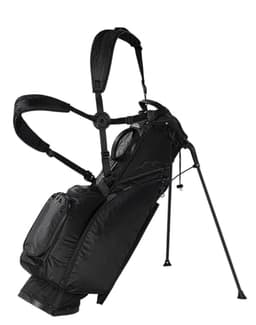
Sun Mountain Eclipse 2.5 Stand Bag
The best all-round beginner bag: genuinely light to carry, with a dual strap and stand legs so you can walk nine holes comfortably. Sun Mountain effectively invented the modern stand bag.
- What it is
- Lightweight stand bag, dual strap
- Who it’s for
- Walkers who want one bag that lasts past their beginner years
Price as of October 5, 2026. #ad How we’re funded
Specs read from the product listing, on July 23, 2026.
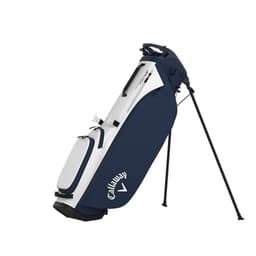
Callaway Hyperlite Zero Stand Bag
One of the lightest stand bags Callaway makes — if the top priority is the least possible weight on your back for nine or eighteen holes walked, this is it.
- What it is
- Ultra-light stand bag, minimal storage
- Who it’s for
- Walkers whose only priority is the least weight on their back
Price as of October 5, 2026. #ad How we’re funded
Specs read from the product listing, on July 23, 2026.
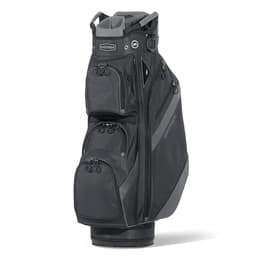
Datrek DG Lite III Golf Cart Bag
Almost everything the Sun Mountain does, including the full-length dividers and the insulated cooler pocket, for meaningfully less. The best value cart bag here.
- What it is
- 14-way cart bag, full-length dividers
- Who it’s for
- Golfers who ride every round and want storage over weight
Price as of October 5, 2026. #ad How we’re funded
Specs read from the product listing, on August 11, 2026.
| Pick | What it is | Who it’s for |
|---|---|---|
| Sun Mountain Eclipse 2.5 Stand Bag | Lightweight stand bag, dual strap | Walkers who want one bag that lasts past their beginner years |
| Callaway Hyperlite Zero Stand Bag | Ultra-light stand bag, minimal storage | Walkers whose only priority is the least weight on their back |
| Datrek DG Lite III Golf Cart Bag | 14-way cart bag, full-length dividers | Golfers who ride every round and want storage over weight |
What not to spend money on yet
A premium cart bag, if you are still deciding whether golf sticks. A good value cart bag has the same cart-strap channel, the same 14-way top with full-length dividers, and the cooler pocket, for meaningfully less than the premium option. The premium bag is a buy-once-keep-ten-years purchase, which is a reasonable thing to want and an odd thing to want in month one.
A matching bag for your set. Most complete beginner sets ship with a stand bag already, and it is usually fine for a first season. If you bought one of our beginner sets, you already own a bag — spend the money on balls, a glove and a lesson instead, and buy the bag when the one you have annoys you. It will tell you how.
Anything sold on brand alone. Bags are one of the few golf purchases where the mid-price option genuinely does the job, because a bag has no swing to flatter. The specs on this page are the entire difference between a good bag and a bad one.
The whole decision in four lines
Walking? Lightweight stand bag, dual strap. Done. Riding every round? Cart bag with a cart-strap channel. Unsure? Light stand bag — it does both jobs adequately and one of them well. Own clubs you care about? Add full-length dividers to whichever you chose.
Everything else — pocket count, top diameter, colorway, brand — is preference. Our best golf bags roundup ranks five bags against exactly these criteria with live prices, and if you are still assembling the rest of the kit, what clubs do I need is the companion piece on what goes in it.
Frequently asked questions
How do I choose a golf bag as a beginner?
Answer one question first: will you walk or ride? If you walk, buy a lightweight stand bag with a dual strap — that is the whole decision, and the Sun Mountain Eclipse 2.5 is our default pick. If you ride a cart every round, buy a cart bag with a cart-strap channel so the strap does not block your pockets. Only then look at dividers, pockets and colors.
What do the numbers on a golf bag mean?
They are the number of club slots in the top — a 14-way top has one slot per club, a 4- or 5-way top groups them. More slots means less tangling and less shaft rub, at the cost of weight. The other number you will see is the top diameter in inches (commonly 8 to 10), which tells you how wide the mouth is and therefore how much the bag weighs and holds.
Do I need full-length dividers?
Not for a starter set, and yes once you own clubs you care about. Full-length dividers run the whole depth of the bag so shafts cannot cross and rub. Without them, graphite shafts in particular wear against each other over a season. If your clubs came in one box and cost less than a premium driver, this spec is not worth paying weight for yet.
How many pockets does a golf bag need?
Fewer than you think, but at least these three: one that fits a dozen balls, one that fits a rain jacket, and one small valuables pocket you can reach without unhooking the bag. Every extra pocket adds weight you carry for four hours. Cart bags can afford seven pockets because the cart carries them; a walking bag cannot.
Can I use a cart bag to walk?
You can carry one for a hole or two, and you will not want to do it again. A cart bag is built around storage and a 14-way top, with a single strap at best — the weight is the point of the design, because a cart is holding it. If you split your golf between walking and riding, a light stand bag works on a cart; a cart bag does not work on your back.
Sources
- USGA — Rule 4: The Player's Equipment — The official Rule limiting a player to 14 clubs and governing conforming equipment (accessed July 23, 2026)
- USGA — Rules Hub: Clubs — USGA overview of the 14-club limit and the freedom to carry any conforming club types (accessed July 23, 2026)
Keep reading
Best Golf Bags for Beginners
Five bags ranked with live prices, from the lightest carry bag to the best cart bag — the roundup this guide feeds into.
See the bagsStand Bag vs Cart Bag
The one decision that drives every other bag spec, argued out in full with the weight and storage trade-offs.
Read the comparisonBest Golf Cart Bags
If you ride every round: the cart-strap channel, the 14-way tops and the cooler pockets worth having.
See the cart bagsBest Golf Push Carts
The third route nobody mentions — walk the course without carrying anything at all.
See the push cartsWhat Clubs Do I Need?
Once you have the bag: the clubs that earn a slot in it, and the ones a beginner can leave at home.
Read the guideBest Golf Travel Bags
The bag that protects the bag, for the first time you fly with your clubs.
See the travel bags