Tee & Tempo

The Best Golf Travel Bags

Hard case, hybrid hard-top or soft cover — what each one actually protects, what it costs you in weight and storage, and how to pack so your driver arrives in one piece.

By Stephen V.Last updated How we pick

There is exactly one thing that goes wrong when you fly with golf clubs, and it is always the same thing: the driver. It is the longest club in the bag, its head sits nearest the top, and a shaft loaded across two hard points snaps at the weakest one.

Every travel bag on this page is really a solution to that problem, and they differ in how completely they solve it. A hard case removes the risk. A hybrid hard-top removes most of it for half the storage headache. A soft cover reduces it and asks you to pack sensibly.

Below are five, from a fifty-dollar fabric sleeve to a bag with retractable legs that carries itself through an airport. We have been specific about what each one gives up, because none of them is free of a trade.

How this is funded:we earn a commission if you buy through our links, at no extra cost to you. It never changes which product we recommend, and we’ll tell you when we’d skip one. Full disclosure.

Quick picks

Ranked on forgiveness, how complete the pick is, and value for a beginner. Select a row to jump to the full write-up. We have not hit these clubs on a launch monitor — here is exactly what we do instead.

#ProductBest forPrice
1
Sun Mountain ClubGlider Meridian Travel Bag

Sun Mountain ClubGlider Meridian Travel Bag

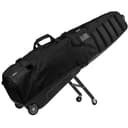
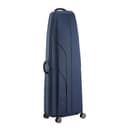
The bag that solves the problem everyone else ignores: a loaded travel bag is heavy and awkward to drag through an airport. The ClubGlider's retractable legs take the weight onto four wheels instead of your arm.

Best overall
$303.99 · View on Amazon

$380.0020% off

Price as of September 6, 2026. #ad How we’re funded

2
Samsonite Tour Classic Hardside Golf Travel Case

Samsonite Tour Classic Hardside Golf Travel Case

If you want your driver to arrive in one piece, a hard case is the only honest answer. Samsonite's spinner wheels also make it the easiest of these to move when it is fully loaded.

Best hard case
$219.99 · View on Amazon

Price as of September 6, 2026. #ad How we’re funded

3
CaddyDaddy Enforcer Hard Top Travel Bag Cover

CaddyDaddy Enforcer Hard Top Travel Bag Cover

The sensible compromise. A hard top over the club heads where the damage happens, and soft sides everywhere else so the bag still folds away when you get home.

Best hybrid hard-top
$199.95 · View on Amazon

Price as of September 6, 2026. #ad How we’re funded

4
Bag Boy T-660 Golf Travel Cover

Bag Boy T-660 Golf Travel Cover

The value pick with the details that matter: a padded top, a lockable wrap-around zipper and an internal compression strap so the bag cannot rattle around inside the cover.

Best value
$84.95 · View on Amazon

Price as of September 6, 2026. #ad How we’re funded

5
Himal Outdoors Soft-Sided Golf Travel Bag with Wheels

Himal Outdoors Soft-Sided Golf Travel Bag with Wheels

About the price of two sleeves of balls, and honest about what it is: a tough fabric sleeve with wheels. It will not save a driver from a serious impact, but it will stop the scuffs and keep the bag dry.

Best budget
$52.99 · View on Amazon

Price as of September 6, 2026. #ad How we’re funded

The picks in full

#1Best overall

Sun Mountain ClubGlider Meridian Travel Bag

The bag that solves the problem everyone else ignores: a loaded travel bag is heavy and awkward to drag through an airport. The ClubGlider's retractable legs take the weight onto four wheels instead of your arm.

Strengths

  • Retractable-leg system carries the load on four wheels through the terminal
  • Sun Mountain has built this design for years, so the mechanism is proven
  • Padded soft-sided construction still folds down for storage at home

Trade-offs

  • The most expensive option here
  • The leg mechanism adds weight, which matters against airline limits
What it isSoft travel bag, 4-wheel retractable-leg system
In the boxNot published
HandednessNot published
Shaft / flexNot published
Best forGolfers who fly more than once a year, Anyone traveling alone with clubs and a suitcase

Beginner note. Airline golf-bag allowances are usually a weight limit, not a size limit. A heavier travel bag eats into the weight you have available for the clubs inside it.

Specs read from the product listing, on August 11, 2026. “Not published” means the listing does not state it.

#2Best hard case

Samsonite Tour Classic Hardside Golf Travel Case

If you want your driver to arrive in one piece, a hard case is the only honest answer. Samsonite's spinner wheels also make it the easiest of these to move when it is fully loaded.

Strengths

  • Hard shell is the only real protection against a baggage handler's throw
  • Spinner wheels roll in any direction rather than needing to be tilted and dragged
  • Luggage-brand build quality rather than golf-brand

Trade-offs

  • Takes up serious space in a garage between trips — it does not fold
  • Heavier empty than any soft bag here
What it isHardside golf travel case with spinner wheels
In the boxNot published
HandednessNot published
Shaft / flexNot published
Best forExpensive drivers, Golfers who have already had a club broken in transit

Beginner note. The classic failure is a snapped driver head, because the driver is the longest club and sits nearest the top of the bag. A hard shell removes that risk; a soft bag only reduces it.

Specs read from the product listing, on August 11, 2026. “Not published” means the listing does not state it.

#3Best hybrid hard-top

CaddyDaddy Enforcer Hard Top Travel Bag Cover

The sensible compromise. A hard top over the club heads where the damage happens, and soft sides everywhere else so the bag still folds away when you get home.

Strengths

  • Rigid top protects the club heads, which is where breakages occur
  • Soft body packs down far smaller than a full hard case
  • Lighter than a hardside case, which helps against airline weight limits

Trade-offs

  • Sides offer less protection than a full hard shell
  • Wheels are smaller than the spinner wheels on the Samsonite
What it isHybrid hard-top, soft-body travel cover
In the boxNot published
HandednessNot published
Shaft / flexNot published
Best forOccasional flyers, Golfers with no garage space for a hard case

Beginner note. Most travel damage happens to the heads of the longest clubs. Protecting the top eighteen inches gets you most of the benefit of a hard case at a fraction of the storage problem.

Specs read from the product listing, on August 11, 2026. “Not published” means the listing does not state it.

#4Best value

Bag Boy T-660 Golf Travel Cover

The value pick with the details that matter: a padded top, a lockable wrap-around zipper and an internal compression strap so the bag cannot rattle around inside the cover.

Strengths

  • Internal compression strap stops the clubs shifting in transit
  • Lockable full wrap-around zipper for peace of mind at check-in
  • Quilted padded top over the club heads at a fraction of a hard case's price

Trade-offs

  • In-line skate wheels need the bag tilted and dragged rather than pushed
  • Soft-sided, so genuinely rough handling still risks a shaft
What it isPadded soft travel cover, lockable zipper
In the boxInternal compression strap
HandednessNot published
Shaft / flexNot published
Best forOne or two trips a year, Golfers who mostly drive but occasionally fly

Beginner note. The compression strap is the underrated feature. Clubs that can slide inside the cover hit each other for the whole flight, which is how shafts get scratched even when nothing dramatic happens.

Specs read from the product listing, on August 11, 2026. “Not published” means the listing does not state it.

#5Best budget

Himal Outdoors Soft-Sided Golf Travel Bag with Wheels

About the price of two sleeves of balls, and honest about what it is: a tough fabric sleeve with wheels. It will not save a driver from a serious impact, but it will stop the scuffs and keep the bag dry.

Strengths

  • Cheapest way to get your clubs on a plane at all
  • Heavy 600D Oxford fabric resists tearing better than thin nylon
  • Folds to almost nothing for storage

Trade-offs

  • Minimal padding — pack towels around the club heads
  • Universal sizing means a large staff bag is a tight fit
What it isSoft-sided wheeled travel bag, 600D Oxford
In the boxNot published
HandednessNot published
Shaft / flexNot published
Best forA first trip with clubs, Road trips and car travel

Beginner note. The standard trick with an unpadded cover is a stiff support rod or a rolled towel above the driver head, so nothing lands directly on the longest shaft.

Specs read from the product listing, on August 11, 2026. “Not published” means the listing does not state it.

How we picked these travel bags

We have not put these through a baggage system and we are not going to pretend otherwise. What follows is a comparison of what each listing publishes — construction type, wheel arrangement, fabric weight, locking and compression features — against the four things that decide whether your clubs arrive intact and whether you keep using the bag.

1. Protection where it is actually needed

The top eighteen inches. That is where the club heads sit and where the damage happens, and it is the reason the hybrid hard-top category exists at all: a rigid top over the heads gets you most of a hard case’s benefit for a fraction of its bulk.

A full hard shell also protects the shafts against crushing, which is the failure mode when your bag ends up under something heavy. Whether that is worth the storage problem depends entirely on how often you fly.

2. Weight, because the airline is counting

Golf bag allowances are almost always a weight limit rather than a size limit, and the travel bag itself eats into it. A hardside case can weigh close to double a soft cover empty, and that difference is weight you cannot spend on clubs, shoes or balls.

Weigh the loaded bag at home on a bathroom scale before you go. It takes two minutes and it is much cheaper than finding out at the desk.

3. How it moves when it is loaded

A loaded golf travel bag is awkward, long and heavy, and dragging one through a terminal with a suitcase in your other hand is genuinely unpleasant. Spinner wheels roll in any direction without tilting. Retractable legs, as on the Sun Mountain, take the load onto four wheels entirely. In-line skate wheels — the cheapest arrangement — need the bag tilted and pulled.

4. Where it lives between trips

The reason most people own a soft cover rather than a hard case is not price, it is the garage. A hard case is a permanent object roughly the size of a wardrobe door. A soft cover folds into a cupboard. If you fly twice a year, that is a real consideration.

How to pack a golf travel bag

Most travel damage is avoidable, and the five habits below cost nothing.

Protect the driver head.A stiff support rod — usually sold separately, sometimes included — sits inside the bag and stands taller than your longest club, so any downward load lands on the rod rather than the shaft. If you do not have one, invert your longest club so the head sits low, or pack a rolled towel above it.

Use the compression strap. Clubs that can slide inside the cover hit each other for the whole flight. That is how shafts get scratched even when nothing dramatic happens.

Fill the gaps with soft kit. Shoes, towels, rain gear and a spare layer all have to travel anyway, and packed around the club heads they do genuine work. Our rain jacket picks pack down small enough to be useful here.

Take the balls out. A dozen golf balls weigh close to a pound and a half and are cheaper at your destination than the excess-baggage fee.

Photograph the clubs before you close it. Two minutes, and it is the entire difference between a straightforward damage claim and a long argument.

Hard case or soft cover: the honest answer

Buy a hard case if your clubs are expensive, if you fly more than three or four times a year, or if you have already had something broken. The storage problem is real but it is a one-time annoyance; a snapped driver is not.

Buy a hybrid hard-top if you fly once or twice a year and want the head protection without the wardrobe. This is the sensible default for most golfers, and it is why the category exists.

Buy a soft coverif you mostly drive to golf and fly rarely, if your clubs are a package set rather than a premium bag, or if the budget is the binding constraint. Pack it carefully and it will be fine most of the time — and “most of the time” is an honest description, not a guarantee.

If your clubs are a value-brand starter set, the arithmetic changes completely: a hard case can cost more than the clubs it is protecting. Our budget sets page puts that price in context.

What about renting clubs instead?

Worth considering honestly, because it is often the better answer for a beginner. Most resort courses rent decent sets, the daily rate for a short trip can compare favorably with an airline’s golf-bag fee both ways, and you arrive with one fewer awkward object to move.

What you lose is familiarity. If you are still building a swing, playing clubs of unknown length and flex for a week is a genuine handicap, and it is more of one than most people expect. Our clubs guide explains why length and flex matter that much.

Our rule: rent for a single-round trip, take your own for anything longer than two rounds or for a trip you have been looking forward to.

A note on airline fees

Policies vary by carrier and change often, so we are not going to publish numbers that will be wrong within a season. What is worth knowing is the shape of the rules: golf bags are usually treated as standard checked baggage rather than oversize, they count against your normal allowance, and the limit that bites is weight rather than length. Check your specific airline before you pack, not at the airport.
Frequently asked questions

Do I need a hard case to fly with golf clubs?

Not necessarily, but it is the only construction that removes the risk rather than reducing it. A hard shell protects the club heads and the shafts against crushing; a hybrid hard-top protects the heads only; a soft cover reduces scuffing and relies on you packing well. Choose by how often you fly and what the clubs cost.

What breaks when you fly with golf clubs?

The driver, almost every time. It is the longest club, its head sits nearest the top of the bag, and a shaft loaded across two hard points snaps at the weakest one. A support rod that stands taller than your longest club takes that load instead, and it is the single most effective thing you can pack.

How much does a golf travel bag weigh?

Soft covers are the lightest, hybrid hard-tops sit in the middle, and hardside cases are heaviest empty. Airline golf allowances are usually a weight limit rather than a size limit, so a heavier travel bag directly reduces what you can pack inside it. Weigh the loaded bag at home before you leave.

Should I rent clubs instead of flying with mine?

For a single-round trip, often yes — most resort courses rent decent sets and you avoid moving an awkward object. For anything longer, take your own: playing clubs of unknown length and flex for a week is a real handicap while you are still building a swing.

Can I put other things in a golf travel bag?

Yes, and you should — shoes, towels, rain gear and spare layers all have to travel anyway and do genuine protective work packed around the club heads. Take the golf balls out, though: a dozen weighs close to a pound and a half and they are cheap at your destination.

Sources

Keep reading