Tee & Tempo

The Best Golf Alignment Sticks

Two painted rods that cost less than a sleeve of balls, and the only honest way to find out you have been aiming thirty yards right of the flag for years.

By Stephen V.Last updated How we pick

Buy the GoSports 3-pack. Three 48-inch rods for about the price of two balls is the most useful thing a beginner can put in a bag, and the third stick is what lets you check aim, stance and ball position in the same drill instead of choosing one. If you want to spend as little as possible, the Seticek 48-inch collapsible pair costs less again and includes the tube case. If your sticks need to travel inside your bag rather than strapped to it, the Callaway Alignment Stix collapse to fit.

This is a category where almost nothing is published. Alignment sticks are painted rods; most listings state a length and a pack count and then stop, with no material, no diameter and no stiffness figure anywhere. So this page ranks them on what the listings actually publish — length, how many rods you get, one-piece or collapsible, and whether a case comes with them — and says “not published” everywhere else rather than inventing a spec. One set, the SuperStroke, is the only one that names its material at all.

Before the picks, the thing most alignment-stick pages never mention. Under the Rules you may not use an alignment rod during a round. Rule 4.3a names it explicitly as a training or swing aid, and Rule 10.2b(3) separately bans setting any object down to help with aiming or taking a stance — and says you cannot avoid the penalty by picking it up before you play. Sticks are a practice tool, not a playing tool. The methodology page says what we do and do not claim; every price below is live and carries the date it was checked.

How this is funded: we earn a commission if you buy through our links, at no extra cost to you. It never changes which product we recommend, and we’ll tell you when we’d skip one. Full disclosure.

Quick picks

Ranked on forgiveness, how complete the pick is, and value for a beginner. Select a row to jump to the full write-up. We have not hit these clubs on a launch monitor — here is exactly what we do instead.

#ProductBest forPrice
1
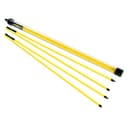
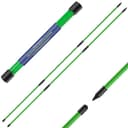
GoSports Golf Alignment Training Sticks (3-Pack, 48")

GoSports Golf Alignment Training Sticks (3-Pack, 48")

The cheapest and most useful thing on this page. Two sticks on the ground tell you where you are actually aiming, and most beginners discover they have been aimed thirty yards right of the target for years.

Best overall
$14.99 · View on Amazon

Price as of October 21, 2026. #ad How we’re funded

2
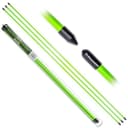
Seticek Golf Alignment Sticks (48", Collapsible, 2 Pack, With Tube Case)

Seticek Golf Alignment Sticks (48", Collapsible, 2 Pack, With Tube Case)

The cheapest honest way to find out whether you have been aiming where you think you are. Full 48-inch length, collapsible, and it ships with the tube case the dearer sets leave out.

Best budget
$9.99 · View on Amazon

Price as of October 21, 2026. #ad How we’re funded

3
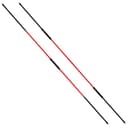
Callaway Alignment Stix (48", Collapsible, Set of 2)

Callaway Alignment Stix (48", Collapsible, Set of 2)

Full 48-inch length that comes apart to fit a golf bag, from a brand you already know. If the reason your sticks live in the garage is that they will not travel, these are the ones that solve it.

Best for carrying in your bag
$19.99 · View on Amazon

$24.9920% off

Price as of October 21, 2026. #ad How we’re funded

4
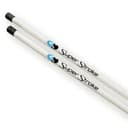
SuperStroke Golf Alignment Sticks (45" Fiberglass, Set of 2)

SuperStroke Golf Alignment Sticks (45" Fiberglass, Set of 2)

The only set here whose listing names its material: fiberglass rods at 45 inches. A stick that stays straight is the whole product, and fiberglass is the reason to pay more than ten dollars for two of them.

Best built
$29.99 · View on Amazon

Price as of October 21, 2026. #ad How we’re funded

5
Callaway Hinge Alignment Stix

Callaway Hinge Alignment Stix

A different tool wearing the same name. These hinge and push into the ground, so the line you set stands up instead of lying flat — useful for a swing-path gate, overkill as a first pair.

Best for standing drills
$22.99 · View on Amazon

$24.998% off

Price as of October 21, 2026. #ad How we’re funded

The picks in full

#1Best overall

GoSports Golf Alignment Training Sticks (3-Pack, 48")

The cheapest and most useful thing on this page. Two sticks on the ground tell you where you are actually aiming, and most beginners discover they have been aimed thirty yards right of the target for years.

Strengths

  • Costs less than a sleeve of balls and diagnoses the most common hidden fault
  • Three sticks lets you set up aim, ball position and swing path drills
  • Legal to use during practice rounds under the Rules

Trade-offs

  • Does nothing on its own — you need a drill to point it at
  • Bright colors are easy to leave behind on the range
What it is48-inch alignment rods, 3-pack
In the box3 alignment sticks
HandednessNot published
Shaft / flexNot published
Best forEvery beginner, Range practice

Beginner note. Alignment sticks may be used during a practice round but must be removed before you play a stroke in competition. Rule 4.3 covers what equipment help is and is not allowed.

Specs read from the product listing, on August 11, 2026. “Not published” means the listing does not state it.

#2Best budget

Seticek Golf Alignment Sticks (48", Collapsible, 2 Pack, With Tube Case)

The cheapest honest way to find out whether you have been aiming where you think you are. Full 48-inch length, collapsible, and it ships with the tube case the dearer sets leave out.

Strengths

  • Costs less than a sleeve of balls, which removes every excuse not to own a pair
  • 48 inches and collapsible — the same length-and-portability combination as the Callaway set
  • The clear tube case is included, so the sticks do not rattle loose in a bag

Trade-offs

  • An unbranded listing: no material, diameter or stiffness is published anywhere on it
  • Sold in a specific color and the color options change — check which one the listing is offering
  • At this price the tips and the joint are the first things to go if they get stood on
What it is48-inch collapsible rods, 2-pack with tube case
In the box2 collapsible alignment sticks and a clear tube case
HandednessNot published
Shaft / flexNot published
Best forFirst-time buyers, Anyone who wants a spare pair for the car

Beginner note. The listing publishes a 48-inch length, a collapsible build, a 2-pack and the included clear tube case. No material or weight is stated.

Specs read from the product listing, on October 20, 2026. “Not published” means the listing does not state it.

#3Best for carrying in your bag

Callaway Alignment Stix (48", Collapsible, Set of 2)

Full 48-inch length that comes apart to fit a golf bag, from a brand you already know. If the reason your sticks live in the garage is that they will not travel, these are the ones that solve it.

Strengths

  • Collapsible, so a 48-inch stick fits a bag pocket or a suitcase
  • Full length rather than the shortened 40-inch rods many cheap sets use
  • A brand with an address, which matters more than it sounds on a product this generic

Trade-offs

  • A joint in the middle is a joint that can loosen or sit slightly off-straight
  • Two sticks, not three — you cannot run an aim line, a feet line and ball position at once
  • Dearer than unbranded sets that publish the same length
What it is48-inch collapsible rods, 2-pack
In the box2 collapsible alignment sticks
HandednessNot published
Shaft / flexNot published
Best forGolfers who carry their practice gear, Anyone who travels to play

Beginner note. The listing publishes the length (48 inches), the collapsible build and the pack count, and nothing else — no material, diameter or weight is stated.

Specs read from the product listing, on October 20, 2026. “Not published” means the listing does not state it.

#4Best built

SuperStroke Golf Alignment Sticks (45" Fiberglass, Set of 2)

The only set here whose listing names its material: fiberglass rods at 45 inches. A stick that stays straight is the whole product, and fiberglass is the reason to pay more than ten dollars for two of them.

Strengths

  • Fiberglass is published on the listing, where most sets state no material at all
  • 45 inches is long enough to lay down a real target line, not a stub
  • One-piece rods have no joint to loosen or bend out of true

Trade-offs

  • The dearest set on this page by some margin, for two sticks
  • One-piece means it will not fit inside a bag pocket — it rides outside, down a club tube
  • The listing's own wording about posture correction is marketing, not a measurement
What it is45-inch fiberglass rods, 2-pack
In the box2 alignment sticks
HandednessNot published
Shaft / flexNot published
Best forGolfers who want one set to last, Range practice where sticks get stood on

Beginner note. The listing states a 45-inch length, fiberglass construction and a 2-rod set. It publishes no diameter, weight or stiffness figure.

Specs read from the product listing, on October 20, 2026. “Not published” means the listing does not state it.

#5Best for standing drills

Callaway Hinge Alignment Stix

A different tool wearing the same name. These hinge and push into the ground, so the line you set stands up instead of lying flat — useful for a swing-path gate, overkill as a first pair.

Strengths

  • Hinges and sticks into the ground, which a plain rod cannot do
  • Lets you build a vertical reference or a gate instead of only a flat target line
  • Same Callaway support as the plain Stix if something arrives broken

Trade-offs

  • The listing publishes neither a length nor a pack count — unusually thin even for this category
  • Needs soft ground: on a mat or a hard winter range there is nothing to push into
  • Not the set to buy first; a plain pair of rods teaches aim better and costs less
What it isHinged alignment rods that push into the ground
In the boxNot published
HandednessNot published
Shaft / flexNot published
Best forGolfers who already own plain sticks, Grass ranges and back yards

Beginner note. The listing describes rods that “hinge and stick in the ground for additional training and alignment” and publishes no length, pack count or material.

Specs read from the product listing, on October 20, 2026. “Not published” means the listing does not state it.

Why aim is the fault you cannot see

Every other beginner fault announces itself. A slice curves, a topped ball dribbles, a fat strike leaves a crater. Aim does none of that. You stand to the ball, you believe you are pointed at the flag, you make a reasonable swing, and the ball finishes twenty-five yards right of the green. Nothing in that sequence tells you the swing was fine and the feet were wrong.

It happens because of where you stand. You set your eyes over the ball and look at the target along a line that is offset from the line your body is on, which is the same trick that makes a railway track look like it converges. New golfers overwhelmingly aim right of where they think they are aiming, then unconsciously learn a swing that compensates. A pair of sticks on the ground turns that invisible error into something you can see from above, in about ten seconds, for about ten dollars.

That is the whole argument for owning a set. It is not that the sticks improve your swing — they do nothing on their own. It is that they tell you the truth about where you were pointed, so you stop fixing a swing that was never the problem. If you have read our guide to fixing a slice, this is the step that comes before all of it: a ball that starts right and stays right is often an aim problem wearing a slice costume.

What we ranked on

Length. Forty-eight inches is the standard and the number to want. A stick has to be long enough to lay down a line you can read from behind the ball; the 40-inch rods some budget sets use are easier to pack and noticeably less convincing to stand over. Four of the five sets here publish 45 inches or more. The Callaway Hinge publishes no length at all, which is why it is last.

How many rods you get. Two is the working minimum: one on your target line, one along your toes. Three is where the drills open up, because the third rod can mark ball position, build a gate for the clubhead, or lie perpendicular to show your shoulders. The GoSports set is the only three-pack here, and it is cheaper than two of the two-packs.

One-piece or collapsible. A one-piece rod has no joint, so it stays straight for life and rides outside your bag in a club tube. A collapsible rod comes apart to fit a bag pocket or a suitcase, at the cost of a joint that can loosen or sit a degree out of true. Neither is better; they answer different questions, which is why both are represented above. If the honest answer is that sticks you cannot carry will live in the garage forever, buy the collapsible pair.

What the listing publishes about build. Only the SuperStroke set names a material (fiberglass). Nobody publishes a diameter, a weight or a stiffness number. That means nobody can honestly rank this category on rigidity, and anyone who does is guessing. We say what each listing says and leave the rest blank.

Whether a case comes with it. Minor until you own a pair. Loose rods slide to the bottom of a bag, jam against club heads and get left on the range. The Seticek set includes a clear tube; the others do not mention one.

Price, in context. The spread here runs from under ten dollars to about three times that, which in absolute terms is the difference between two coffees. Buy on length and pack count first. This is the one category where the cheapest sensible option is genuinely close to the best one, and we would rather tell you that than talk you into the dearest set on the page.

The Rules: where you can and cannot use them

Get this right before you take a pair to the course. Rule 4.3a lists what you must not use equipment for during a round, and it names the device in its own words: using any type of golf training or swing aid, “such as an alignment rod or a weighted headcover or ‘donut’”. The same Rule separately bans using an alignment device to help align the ball. The penalty for a first breach is the general penalty — two strokes in stroke play, loss of hole in match play.

Rule 10.2b(3) closes the other door. A player must not set an object down to help with aiming or to help in taking a stance for the stroke to be made, where “set an object down” means the object is touching the ground and you are not holding it. The Rule adds the part that catches people out: if you breach it, you cannot avoid the penalty by removing the object before you play the stroke. Laying a stick down, checking your feet, picking it up and hitting is still the general penalty.

So: range, practice green, back yard, net, lessons and a casual practice round where no competition is being played — sticks are fine and that is what they are for. A round you are posting for handicap or playing in a competition — leave them in the car. Our beginner Rules guide covers the rest of the equipment traps, and how handicaps work explains which rounds count.

Five drills that make a pair of rods worth owning

1. The aim check. Lay one stick on the ground pointing at your target, about a foot outside the ball and parallel to your intended ball flight. Set up as normal, then look down. For most beginners the first look is a shock. Do not adjust the stick to match your feet; adjust your feet to match the stick.

2. The railway track. Add the second stick along your toes, parallel to the first. Clubface and ball on one line, body on the other. Two parallel lines is the picture every instruction book describes and almost nobody checks.

3. Ball position.With a three-pack, lay the third stick perpendicular to the toe line, touching the ball. Now you can see whether your driver ball position really is inside your lead heel and your wedge really is center — the two positions our driver guide and chipping guide keep asking for.

4. The gate. Put two sticks on the ground in a narrow V just wider than your clubhead, pointing down the target line, and swing through the gap. It gives immediate feedback on path without you having to interpret anything: you either came through the gate or you clipped a stick.

5. Putting. One stick on the ground outside the ball, aimed at the hole, turns a putting mat into an aim drill. Beginners miss far more short putts to aim than to stroke, which is the point our putting basics guide opens with, and a stick is the cheapest way to prove it on a putting mat at home.

None of these require a coach, a net or a launch monitor, which is exactly why sticks belong in the bag before any of those. If you are building a home setup around them, how to practice golf at home covers what genuinely works indoors and what needs real measured space.

How many rods, and how long?

Two rods at 48 inches covers the first four drills and is all most golfers ever need. Three rods is better value here because the GoSports set happens to be the cheapest full length option on the page, not because the third rod is essential. Buy 48 inches if you have any way to carry it, and accept 45 inches without complaint — the difference matters far less than the difference between owning a pair and not.

One warning on the cheap end. These are rods with plastic tips, and the failure mode is always the same: somebody stands on one on a mat, or the collapsible joint is pulled apart at an angle, and you are buying another pair. At these prices that is an acceptable risk rather than a reason to spend three times more, but it is the honest reason the SuperStroke fiberglass set exists.

What alignment sticks will not fix

They will not change your swing path, add distance, or fix a strike. They will not make an unfitted club fit, and they cannot tell you whether your shaft is too stiff — that is what our regular vs stiff shaft guide is for. They also will not help at all if you do not actually look down at them. The most common failure with a set of sticks is not breaking one; it is laying them out, hitting twenty balls, and never once checking the picture from behind the ball.

And they are not a club. If your real problem is that nothing in your bag is forgiving enough to get a ball airborne, sticks will diagnose a clean aim on a bad club. Our easiest clubs to hit page is the better place to start in that case, and our Launcher XL 2 driver review shows what a genuinely forgiving specification looks like on paper.

Where this sits next to our other practice gear

Alignment sticks are the first thing on our training aids roundup, where they beat every gadget on the page for value, and they sit at the bottom of the practice-equipment ladder for a reason: they cost almost nothing and they tell you something true. A practice net and a hitting mat come next if you want to swing at home; a launch monitor is the step after that, and only once you have something to measure. If you are standing at a range bay wondering what to do with a bucket of balls, our range guide is built around drills a pair of sticks makes possible.
Frequently asked questions

What are the best golf alignment sticks?

The GoSports 3-pack is our overall pick: three 48-inch rods, which is full length and one more stick than most sets, at a price under most two-packs. If you want to spend less, the Seticek 48-inch collapsible pair includes a tube case. If you want the sturdiest build, the SuperStroke set is the only one here whose listing names its material, fiberglass.

Can you use alignment sticks during a round of golf?

No. Rule 4.3a bans using a training or swing aid during a round and names an alignment rod as an example, and Rule 10.2b(3) bans setting any object down to help with aiming or taking a stance. The penalty for a first breach is the general penalty, two strokes in stroke play or loss of hole in match play, and you cannot avoid it by picking the stick up before you hit. They are a practice tool: range, practice green, home net, or a casual practice round where no competition is being played.

How long should golf alignment sticks be?

Forty-eight inches is the standard and the length to want, because it lays down a line you can actually read from behind the ball. Forty-five inches is fine. Shorter 40-inch rods pack more easily and are less convincing to stand over. Length is one of the very few specs these listings reliably publish, which is why we rank on it.

Do I need two alignment sticks or three?

Two covers aim and stance, which is most of the value. A third rod lets you mark ball position or build a gate for the clubhead in the same drill instead of resetting between them. We lead with a three-pack mainly because it happens to be the cheapest full-length set on this page, not because two is not enough.

Are collapsible alignment sticks worth it?

If the alternative is leaving your sticks at home, yes. A collapsible pair fits a bag pocket or a suitcase; a one-piece rod rides outside the bag in a club tube and never has a joint to loosen. The trade is real but small, and the set you actually carry beats the better set in the garage.

Can you use a golf club instead of an alignment stick?

On the range, yes, and plenty of people do. A club laid on the ground shows a line perfectly well. The reasons to own rods anyway: a club is shorter than 48 inches through the grip and head, a dropped club picks up dirt and grip wear, and you cannot build a gate or mark ball position with the same clubs you are hitting.

Will alignment sticks fix my slice?

Not by themselves, but they will tell you whether you have one. Plenty of balls that start right and stay right are aimed right rather than sliced, and that is a two-second check with a stick on the ground. Once the aim is genuinely square and the ball still curves, the fix is a swing change, which is what our slice guide covers.

Sources

  • R&A -- Rule 4.3: Use of Equipment (Rules of Golf) — Rule 4.3a lists what a player must not use equipment for during a round. Under distance and direction it names 'Using an alignment device (see definition in Equipment Rules) to help align the ball'. Under training or swing aids it names 'Using any type of golf training or swing aid (such as an alignment rod or a weighted headcover or “donut”)' or a non-conforming club 'in any way that creates a potential advantage'. Rule 4.3b sets the penalty for a first breach as the general penalty, and states that where the breach happens between two holes the penalty applies to the next hole (accessed October 20, 2026)
  • R&A -- Rule 10.2b(3): No Setting Down Object to Help With Aiming, Taking Stance or Swinging — The Rule's own wording: 'A player must not set an object down to help with aiming or to help in taking a stance for the stroke to be made', where 'set an object down' means 'the object is in contact with the ground and the player is not touching the object'. The Rule adds that 'If the player breaches this Rule, they cannot avoid penalty by removing the object before the stroke is made.' Breach of Rule 10.2b carries the general penalty (accessed October 20, 2026)

Keep reading