Tee & Tempo

Titleist Pro V1 Alternatives

The Pro V1 is the best-known golf ball in the world and it is very good. It is also about $58 a dozen. Here is what it is known for, and five cheaper balls that give you the part of it you can actually use.

By Stephen V.Last updated How we pick

If you are looking for a Pro V1 alternative, buy the Titleist TruFeel: the same maker, a soft low-compression two-piece build, and a fraction of the price. It is the pick for the golfer who wants the Titleist name and the soft feel without the tour-ball premium. If price is the whole point, the TaylorMade Noodle is the budget pick— the cheapest brand-name ball here, and sold as a 15-ball pack, which lowers the cost per ball further than the headline suggests. The other three are swaps for a specific reason rather than a general one, and each write-up says which.

Let us be straight about one thing first, because plenty of pages on this subject are not: none of these is a Pro V1.Every ball below is a two-piece design. The Pro V1 is not. If what you want is the Pro V1’s greenside behavior, no ball on this page will reproduce it, and we are not going to pretend otherwise. What this page is for is the much more common situation — a golfer who plays a Pro V1 because it is the ball they have heard of, and who would lose less money and swing more freely with something else.

All five picks carry a live price with the date it was checked (November 21, 2026 at the time this page rendered), read from our price layer rather than typed in. Our methodology pagesays exactly what we do and do not claim — we have not launch-monitored any of these, and we have no test data of our own.

How this is funded: we earn a commission if you buy through our links, at no extra cost to you. It never changes which product we recommend, and we’ll tell you when we’d skip one. Full disclosure.

Quick picks

Ranked on forgiveness, how complete the pick is, and value for a beginner. Select a row to jump to the full write-up. We have not hit these clubs on a launch monitor — here is exactly what we do instead.

#ProductBest forPrice
1
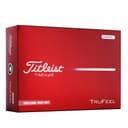
Titleist TruFeel Golf Balls

Titleist TruFeel Golf Balls

Titleist's softest, most affordable ball — the way to play the sport's most trusted brand without paying Pro V1 prices. A great confidence buy for a new golfer.

Closest in the family
$24.97 · View on Amazon

Price as of November 21, 2026. #ad How we’re funded

2
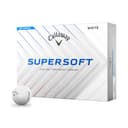
Callaway Supersoft Golf Balls

Callaway Supersoft Golf Balls

The default beginner ball, and rightly so: soft, low-spin, straight-flying and cheap enough that losing a few in the trees does not hurt. Start here.

Best all-round swap
$24.99 · View on Amazon

$26.997% off

Price as of November 21, 2026. #ad How we’re funded

3
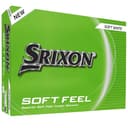
Srixon Soft Feel Golf Balls

Srixon Soft Feel Golf Balls

A perennial 'best soft ball for the money' pick. The Soft Feel launches high and flies straight, and Srixon often sells it in value packs that stretch a beginner's budget further.

Best feel for the money
$24.99 · View on Amazon

Price as of November 21, 2026. #ad How we’re funded

4
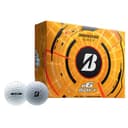
Bridgestone e6 Soft Golf Balls

Bridgestone e6 Soft Golf Balls

A straight-flying, low-side-spin ball from a serious ball maker. The e6 is designed to reduce hooks and slices, so it flatters a beginner's crooked shots while feeling a touch more premium.

Best if your miss is a slice
$23.97 · View on Amazon

Price as of November 21, 2026. #ad How we’re funded

5
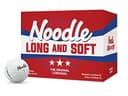
TaylorMade Noodle Long & Soft Golf Balls

TaylorMade Noodle Long & Soft Golf Balls

Sold in a 15-ball box for the price others charge for 12 — the cheapest sensible ball here from a major brand. When you are losing balls learning, the Noodle is the frugal, guilt-free choice.

Budget pick
$18.99 · View on Amazon

Price as of November 21, 2026. #ad How we’re funded

The picks in full

#1Closest in the family

Titleist TruFeel Golf Balls

Titleist's softest, most affordable ball — the way to play the sport's most trusted brand without paying Pro V1 prices. A great confidence buy for a new golfer.

Strengths

  • Titleist quality control at an entry price
  • Soft feel with straight, forgiving flight
  • The brand-name reassurance a lot of beginners want

Trade-offs

  • Costs a little more than the cheapest soft balls
  • Still a distance/feel ball, not a spin-and-stop ball
What it isSoft, low-compression two-piece ball
In the boxNot published
HandednessNot published
Shaft / flexNot published
Best forBrand-conscious beginners, Average swing speeds

Beginner note. The TruFeel is Titleist's soft, straight-flying value model — the same brand as the tour ball, built for feel and distance rather than spin.

Specs read from the product listing, on July 23, 2026. “Not published” means the listing does not state it.

#2Best all-round swap

Callaway Supersoft Golf Balls

The default beginner ball, and rightly so: soft, low-spin, straight-flying and cheap enough that losing a few in the trees does not hurt. Start here.

Strengths

  • Low-spin design flies straighter, which flatters a slice or hook
  • Very soft feel off the putter and irons
  • Inexpensive enough to lose without frustration

Trade-offs

  • Low spin means less stopping power on the green for advanced players
  • Not built for the shot-shaping a better player wants
What it isLow-compression, low-spin ball
In the boxNot published
HandednessNot published
Shaft / flexNot published
Best forMost beginners, Slower swing speeds

Beginner note. Low 'compression' means the ball deforms easily at slower swing speeds, which helps beginners get distance without swinging out of their shoes.

Specs read from the product listing, on July 23, 2026. “Not published” means the listing does not state it.

#3Best feel for the money

Srixon Soft Feel Golf Balls

A perennial 'best soft ball for the money' pick. The Soft Feel launches high and flies straight, and Srixon often sells it in value packs that stretch a beginner's budget further.

Strengths

  • Soft feel with a notably high, easy launch
  • Straight, forgiving flight for developing swings
  • Frequently available in value multi-dozen packs

Trade-offs

  • Less greenside spin than a premium ball
  • Feel is a matter of taste — some prefer firmer
What it isSoft, high-launch two-piece ball
In the boxNot published
HandednessNot published
Shaft / flexNot published
Best forValue buyers, Slower swings needing launch

Beginner note. A high-launch profile helps slower swings carry the ball further in the air — useful when you are not yet compressing the ball like a low-handicapper.

Specs read from the product listing, on July 23, 2026. “Not published” means the listing does not state it.

#4Best if your miss is a slice

Bridgestone e6 Soft Golf Balls

A straight-flying, low-side-spin ball from a serious ball maker. The e6 is designed to reduce hooks and slices, so it flatters a beginner's crooked shots while feeling a touch more premium.

Strengths

  • Engineered to cut side-spin, so it flies straighter
  • Soft feel with a slightly more premium character
  • Bridgestone is a top-tier ball manufacturer

Trade-offs

  • Usually a little pricier than the softest budget balls
  • Anti-slice help fades in usefulness as you improve
What it isLow-side-spin straight-flight ball
In the boxNot published
HandednessNot published
Shaft / flexNot published
Best forSlicers and hookers, Beginners wanting straighter flight

Beginner note. Reducing side-spin is what straightens a slice or hook in the air — the e6's whole design goal, and exactly what a wayward beginner benefits from.

Specs read from the product listing, on July 23, 2026. “Not published” means the listing does not state it.

#5Budget pick

TaylorMade Noodle Long & Soft Golf Balls

Sold in a 15-ball box for the price others charge for 12 — the cheapest sensible ball here from a major brand. When you are losing balls learning, the Noodle is the frugal, guilt-free choice.

Strengths

  • 15-ball packs make it the best value per ball
  • Soft feel and straight, distance-oriented flight
  • TaylorMade name at a bargain price

Trade-offs

  • Very much a distance/feel ball — minimal spin
  • Not a ball you keep once you stop losing them
What it isSoft distance ball (15-ball pack)
In the boxNot published
HandednessNot published
Shaft / flexNot published
Best forBeginners losing lots of balls, Tight budgets

Beginner note. The 15-ball box is the point: while you are learning and losing balls, cost per ball matters more than marginal spin numbers.

Specs read from the product listing, on July 23, 2026. “Not published” means the listing does not state it.

What the Pro V1 is actually known for

Worth stating carefully, because much of what gets written about this ball is embellished.

Here is what an authorized Titleist dealer publishes. The listing is titled “Titleist Pro V1 Golf Balls” at a listed price of $57.99when we checked on November 7, 2026, alongside the Pro V1x at the same price. The ball is described as having “multi-layer construction”, and the dealer’s own explanation of the premium tier reads, verbatim: “The urethane covers found in premium models provide superior greenside spin.”

That is the whole sourced picture, and we are going to stay inside it. We are not going to quote you a compression number, a dimple count or a piece count for the Pro V1, because the pages we can reach do not publish those figures for that model and we do not invent specs. What is documented is enough to make the decision: the Pro V1 is a multi-layer, urethane-covered ball sold at around fifty-eight dollars a dozen, and the thing the urethane cover delivers is greenside spin.

The other half of the picture comes from Callaway’s own golf ball buying guide, which is unusually candid for a manufacturer page. On covers: “Surlyn covers are durable and cut-resistant, typically made from an ionomer resin... often found on 2 piece golf balls. They offer low spin rates to produce extra distance,” while “Urethane covers are softer than Surlyn, offering a better feel and more control.” On construction: “the more pieces a golf ball has, the higher the compression. Higher compression golf balls are designed for players with faster swing speeds,” and multi-layer balls “are often preferred by low handicap players looking for specific flight characteristics off the tee.”

Put those together and the Pro V1 is doing exactly what it says: a firmer, multi-layer ball with a soft urethane cover, aimed at a golfer with speed who wants control into greens. It is genuinely excellent at that. The question is whether that is you.

Who should switch, and who should not

Switch if you lose golf balls.This is the biggest one and it is pure arithmetic. At $57.99 a dozen you are putting nearly five dollars into the water every time a tee shot leaks right. Lose four in a round and you have spent twenty dollars on golf balls on top of the green fee. Worse, you will start protecting them — aiming away from water, clubbing down, making defensive swings. That habit costs far more strokes than any cover material saves.

Switch if your wedge shots land and run.Greenside spin is produced by a descending strike with a lofted club at speed. If your pitches arrive low and roll out, you are paying for a feature you cannot yet access. Learn the strike first — our chipping guideis the place to start — and revisit the ball later.

Switch if you swing at moderate speed.Callaway’s guide is plain that higher-compression, multi-layer balls are designed for faster swing speeds. A softer, lower-compression ball compresses more easily at a moderate speed, which feels better off the face and tends to launch higher. Our soft versus distance explainer covers that properly.

Do not switch if you already hold greens. If you can land a 56-degree wedge and stop it, and you finish rounds with the ball you started on, the Pro V1 is doing something for you that nothing on this page will. Keep buying it. We would rather tell you that than sell you a cheaper ball you will regret.

How to actually test a replacement

The useful thing about dropping from fifty-eight dollars to twenty-odd is that you can afford to experiment, and Callaway’s guide recommends the right method rather than a spec sheet: “you should always test a golf ball by starting from the green and working your way back to the tee.”

That translates into a concrete plan that costs almost nothing.

Putt first. Take two different balls to a practice green and roll twenty putts with each from the same spot. Feel off the putter face is the single most noticeable difference between balls, and it is the one you experience on every hole. If one of them feels dead and the other feels alive, you have your answer in ten minutes.

Chip second. Same two balls, same lie, same club. You are not looking for tour spin; you are looking for whether the ball checks at all or runs out consistently, because that changes where you aim.

Tee shots last, and ignore them. This is where everyone starts and it is the least informative test, because dispersion swamps any difference between two-piece balls at a developing swing speed. A golfer whose shots scatter thirty yards cannot detect a five-yard ball difference, and a page that tells you otherwise is selling something.

What you give up, and what you do not

Fair is fair, so here is the honest accounting of a switch.

You give up greenside spin.The urethane cover is the Pro V1’s real advantage and the two-piece balls here do not have it. On a full wedge into a firm green you will see more run-out. This is the cost of the switch and we are not going to dress it up.

You give up a little durability on the cover scuffing.Surlyn-family covers are described by Callaway as “durable and cut-resistant”, so in fairness this one often goes the other way — cheaper two-piece balls frequently survive a cart path better than a soft urethane cover does.

You do not give up distance. Low-spin two-piece balls are built to go forward. For most golfers at moderate speed they are the same or longer off the tee, because less spin means less climb and less curve.

You do not give up straightness.Sidespin is what curves a ball, and lower-spin balls curve less. If your miss is a slice, a low-spin two-piece ball is quietly helping you — which is why the Bridgestone e6 has a slice-specific award on this page, and why the clubs-for-a-slice page makes the same point about equipment generally.

You do not give up confidence, if you choose well. Four of the five picks here are from Titleist, Callaway, Srixon, Bridgestone or TaylorMade. Nobody is going to look at the ball you tee up and think less of you, and that genuinely matters to some people.

Where to go next

If you want the picks ranked by fit rather than by their relationship to the Pro V1, our best golf balls for beginners page does that. If the price band is the thing you care about, the balls under $25 page is the same products under a hard ceiling with the date of the price check on the page. And if you want the whole decision from first principles, including why compression figures are mostly unpublished, what golf ball should I use is the long answer.

For specific head-to-heads, we have Callaway Supersoft vs Titleist TruFeel and Callaway Supersoft vs Srixon Soft Feel — between them they cover the three balls most people land on after leaving the Pro V1 behind. The balls, bags and gear hub has the rest.
Frequently asked questions

What is the best Titleist Pro V1 alternative?

The Titleist TruFeel, if you want to stay in the family: the same maker, a soft low-compression two-piece build, and a fraction of the price. The TaylorMade Noodle is the budget pick and comes as a 15-ball pack, which lowers the cost per ball further. Be clear that none of these is a Pro V1 - all five are two-piece balls, and the Pro V1's urethane greenside spin is not something they reproduce.

Why is the Titleist Pro V1 so expensive?

It is a multi-layer ball with a urethane cover, and both of those cost more to make than a two-piece Surlyn-family ball. An authorized Titleist dealer listed it at $57.99 when we checked on November 7, 2026, describing it as having 'multi-layer construction', and explained the premium tier as 'the urethane covers found in premium models provide superior greenside spin'. That spin is what you are paying for.

Is there a cheaper ball that performs like a Pro V1?

Not in a two-piece ball, and we will not tell you there is. The Pro V1's distinguishing feature is a urethane cover on a multi-layer build, and the balls on this page are two-piece designs in the Surlyn family - which Callaway's own guide describes as offering 'low spin rates to produce extra distance'. What you can match or beat is distance, straightness and durability. What you cannot match is greenside check.

Should a beginner play a Pro V1?

Usually no, for two reasons. First, greenside spin is produced by a descending strike with a lofted club at speed - a skill rather than a purchase - so a developing golfer has bought a feature they cannot access yet. Second, at nearly five dollars a ball, people start protecting them: aiming away from water, clubbing down, swinging defensively. That costs more strokes than any cover material saves.

Do cheaper golf balls go shorter than a Pro V1?

Generally not, at moderate swing speeds. Two-piece, low-spin balls are built to go forward, and less spin means less climb and less sideways curve. What they give up is control into greens, not distance off the tee. The ball that costs you distance is the wrong-compression ball for your speed, which is as likely to be a tour ball as a budget one.

How do I test whether a cheaper ball suits me?

Callaway's own buying guide gives the right method: 'you should always test a golf ball by starting from the green and working your way back to the tee.' Putt twenty balls of each type from the same spot on a practice green - feel off the putter is the clearest difference and you experience it on every hole. Then chip. Test tee shots last and weight them least, because your own dispersion will swamp the difference.

Who should keep buying the Pro V1?

Anyone who can land a lofted wedge and stop it, and who finishes rounds with the ball they started on. If both of those are true, the Pro V1 is doing something for you that nothing on this page will reproduce, and the cost per round is modest because you are not losing them. The switch is for golfers losing balls, not for golfers using them.

Sources

  • Golfballs.com -- Titleist golf balls (authorized dealer listing, Pro V1) — What an authorized Titleist dealer actually publishes about the Pro V1, which is less than most writing about it assumes. The listing is titled 'Titleist Pro V1 Golf Balls' at a listed price of $57.99, alongside 'Titleist Pro V1x Golf Balls' at the same $57.99. The ball is described only as having 'multi-layer construction', and the page's own explanation of the premium tier reads, verbatim: 'The urethane covers found in premium models provide superior greenside spin.' NOT published anywhere on the page for the Pro V1 specifically: a piece count, a named cover material for that model, a dimple count, a compression number, or a swing-speed recommendation. We quote only what is on the page, and we do not state a Pro V1 spec that no source we can reach publishes (accessed November 7, 2026)
  • Callaway -- Golf Ball Buying Guide — The maker's own buying guide, which is the rare manufacturer page that defines the terms rather than only selling against them. On compression: 'The compression rate refers to how much the golf ball compresses upon impact', 'The lower the compression rate, the easier to compress', and 'the more pieces a golf ball has, the higher the compression. Higher compression golf balls are designed for players with faster swing speeds.' On construction: '2 piece limited performance' versus 'Multi-layer for performance from tee to green', and 'Multi-layer golf balls are often preferred by low handicap players looking for specific flight characteristics off the tee.' On covers: 'Surlyn covers are durable and cut-resistant, typically made from an ionomer resin...often found on 2 piece golf balls. They offer low spin rates to produce extra distance', while 'Urethane covers are softer than Surlyn, offering a better feel and more control.' On method: 'you should always test a golf ball by starting from the green and working your way back to the tee.' The guide publishes NO per-model compression numbers (accessed October 13, 2026)

Keep reading