Tee & Tempo

Callaway Supersoft vs Srixon Soft Feel

Two soft, two-piece, budget balls with almost the same pitch. What each one is actually built to do, which swing each suits, and why the box size may decide it for you.

By Stephen V.Last updated How we pick

If you want one answer, buy the Callaway Supersoft. It is the lower-compression, lower-spinning of the two, which is the right bias for a beginner: easier to deform at a slower swing speed and straighter when the strike is imperfect. Buy the Srixon Soft Feelinstead for one specific reason — you struggle to get the ball in the air. Its listing is built around a high-launch profile, and if your shots run along the ground rather than climbing, that is worth more to you than a point of compression.

Both are soft two-piece value balls, both fly straight, and neither is a spin-and-stop ball. Anyone who tells you they feel dramatically different at beginner swing speeds is selling something. The real differences are a small one in flight, a smaller one in feel, and a potentially decisive one in how many balls come in the box — Srixon regularly sells the Soft Feel in value packs, and while you are losing three a round, cost per ball beats every performance characteristic on the sleeve.

Below we compare them on compression, launch, flight and price, using what each listing publishes plus Callaway’s own golf-ball buying guide for the definitions. We have not run either ball through a launch monitor and we publish no invented test data; our methodology page says exactly what we do instead.

How this is funded: we earn a commission if you buy through our links, at no extra cost to you. It never changes which product we recommend, and we’ll tell you when we’d skip one. Full disclosure.

Quick picks

Ranked on forgiveness, how complete the pick is, and value for a beginner. Select a row to jump to the full write-up. We have not hit these clubs on a launch monitor — here is exactly what we do instead.

#ProductBest forPrice
1
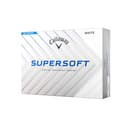
Callaway Supersoft Golf Balls

Callaway Supersoft Golf Balls

The default beginner ball, and rightly so: soft, low-spin, straight-flying and cheap enough that losing a few in the trees does not hurt. Start here.

Best for most beginners
$26.97 · View on Amazon

Price as of October 16, 2026. #ad How we’re funded

2
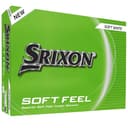
Srixon Soft Feel Golf Balls

Srixon Soft Feel Golf Balls

A perennial 'best soft ball for the money' pick. The Soft Feel launches high and flies straight, and Srixon often sells it in value packs that stretch a beginner's budget further.

Best if you need height
$24.97 · View on Amazon

Price as of October 16, 2026. #ad How we’re funded

3
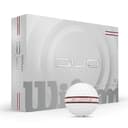
Wilson DUO Soft Golf Balls

Wilson DUO Soft Golf Balls

Marketed as one of the softest balls in golf, and it feels it. If you like a pillowy feel off the face and want straight, forgiving flight, the DUO Soft is a low-cost way to get both.

Softest alternative
$24.99 · View on Amazon

Price as of October 16, 2026. #ad How we’re funded

The picks in full

#1Best for most beginners

Callaway Supersoft Golf Balls

The default beginner ball, and rightly so: soft, low-spin, straight-flying and cheap enough that losing a few in the trees does not hurt. Start here.

Strengths

  • Low-spin design flies straighter, which flatters a slice or hook
  • Very soft feel off the putter and irons
  • Inexpensive enough to lose without frustration

Trade-offs

  • Low spin means less stopping power on the green for advanced players
  • Not built for the shot-shaping a better player wants
What it isLow-compression, low-spin ball
In the boxNot published
HandednessNot published
Shaft / flexNot published
Best forMost beginners, Slower swing speeds

Beginner note. Low 'compression' means the ball deforms easily at slower swing speeds, which helps beginners get distance without swinging out of their shoes.

Specs read from the product listing, on July 23, 2026. “Not published” means the listing does not state it.

#2Best if you need height

Srixon Soft Feel Golf Balls

A perennial 'best soft ball for the money' pick. The Soft Feel launches high and flies straight, and Srixon often sells it in value packs that stretch a beginner's budget further.

Strengths

  • Soft feel with a notably high, easy launch
  • Straight, forgiving flight for developing swings
  • Frequently available in value multi-dozen packs

Trade-offs

  • Less greenside spin than a premium ball
  • Feel is a matter of taste — some prefer firmer
What it isSoft, high-launch two-piece ball
In the boxNot published
HandednessNot published
Shaft / flexNot published
Best forValue buyers, Slower swings needing launch

Beginner note. A high-launch profile helps slower swings carry the ball further in the air — useful when you are not yet compressing the ball like a low-handicapper.

Specs read from the product listing, on July 23, 2026. “Not published” means the listing does not state it.

#3Softest alternative

Wilson DUO Soft Golf Balls

Marketed as one of the softest balls in golf, and it feels it. If you like a pillowy feel off the face and want straight, forgiving flight, the DUO Soft is a low-cost way to get both.

Strengths

  • Extremely soft, low-compression feel
  • Straight flight that suits a developing swing
  • Budget-friendly by the dozen

Trade-offs

  • Very soft feel is polarizing — not everyone likes it
  • Low spin limits greenside control
What it isUltra-low-compression soft ball
In the boxNot published
HandednessNot published
Shaft / flexNot published
Best forSoft-feel preferers, Slower swing speeds

Beginner note. One of the lowest-compression balls widely sold, which is why it feels so soft and helps slower swings — the same reason it spins less around the green.

Specs read from the product listing, on July 23, 2026. “Not published” means the listing does not state it.

Compression: what the word means and why it is the whole comparison

Callaway’s own buying guide defines compression as how much the ball deforms at impact: “The compression rate refers to how much the golf ball compresses upon impact”, and “the lower the compression rate, the easier to compress”. The same guide ties it to construction and swing speed — “the more pieces a golf ball has, the higher the compression. Higher compression golf balls are designed for players with faster swing speeds.”

That is the entire argument for a soft ball as a beginner: a slower swing cannot fully compress a firm ball, and an uncompressed ball loses distance and feels like a rock. Both of these balls are built low. The Supersoft is the one marketed hardest on it, and the registry note on our pick says it plainly: low compression means the ball deforms easily at slower swing speeds, so you get distance without swinging out of your shoes.

What neither maker publishes is a number. We checked: Callaway’s guide explains compression at length and gives no per-model figures, and the charts circulating online are third-party measurements of varying rigour rather than published specifications. Treat compression as low, mid or high and ignore the decimal points — our ball-choosing guide goes through why there is no authoritative compression chart.

Launch: the one real difference

The Srixon Soft Feel’s listing is explicit about a high-launch profile, and that is the cleanest distinction between these two balls. A high-launch ball helps a slower swing carry further in the air, which matters if your problem is that shots never climb.

The Supersoft’s pitch is the opposite emphasis: low spin and straight flight. Low spin flattens the curve on a mis-hit, which is what you want when the miss is a slice rather than a worm-burner.

So the honest decision rule is about your miss, not the brand. If your bad shots are low and running, take the Soft Feel. If your bad shots are sideways, take the Supersoft. If you have both problems, the Supersoft is the safer default because sideways loses golf balls and low does not.

Feel, and how much to trust it

Both balls are marketed on feel, and feel is the one thing you can genuinely assess for yourself without equipment. Callaway’s guide gives the method and it is not what most golfers do: “you should always test a golf ball by starting from the green and working your way back to the tee.” Putt and chip a sleeve of each before you judge them off a driver, because the difference is largest and most perceptible around the green.

If soft feel is the thing you care most about, there is a third ball worth knowing. Wilson’s DUO Soft is marketed as one of the softest balls in golf and is one of the lowest-compression balls widely sold, which is why it is the third pick here. The trade-off is in the same sentence as the benefit: the same softness that makes it feel pillowy also means it spins less around the green.

Price per lost ball is the real spec

In your first season you will lose balls. That makes cost per ball the dominant consideration, and it is why Srixon’s value packs can settle this comparison on arithmetic rather than performance. Check both live prices above and divide by the box count — the cheaper one per ball is very often the right answer, and nothing on either box will cost you a shot.

It is also worth knowing that both conform to the Rules. Rule 4 governs the player’s equipment and the Equipment Rules behind it set the conditions a conforming ball must meet; every ball sold by a mainstream manufacturer meets them, so this is not something a recreational golfer needs to police.

Which to buy, and when to stop caring

Buy the Supersoft as the default, the Soft Feel if you need height or the value pack is meaningfully cheaper per ball, and the DUO Soft if feel is your priority. Then stop thinking about it. The ball becomes a real decision at the point where two things are true: you lose no more than a ball or two a round, and your approach shots land where you aimed. Before that, the gap between any two soft two-piece balls is smaller than your shot-to-shot variation.

If you would like the wider field rather than a head to head, our beginner ball roundup ranks six balls including both of these, and Supersoft vs Titleist TruFeel is the other comparison people run — that one is largely a question of what the box says. Soft vs distance golf balls covers the category labels themselves, and our Supersoft review looks at the winner on its own.
Frequently asked questions

Callaway Supersoft or Srixon Soft Feel - which is better for a beginner?

The Supersoft, for most beginners. It is the lower-compression, lower-spinning ball of the two, which means it deforms more easily at a slower swing speed and curves less on a poor strike. Choose the Soft Feel instead if your problem is getting the ball airborne, because its listing is built around a high-launch profile.

Is the Srixon Soft Feel softer than the Callaway Supersoft?

Neither maker publishes a compression number, so nobody can answer that from published specifications. Both are marketed as soft, low-compression two-piece balls. If maximum softness is the goal, the Wilson DUO Soft is marketed as one of the softest balls in golf and is one of the lowest-compression balls widely sold.

What does low compression actually do?

Callaway's buying guide puts it simply: compression is how much the ball deforms at impact, and the lower the compression, the easier it is to compress. A slower swing cannot fully compress a firm ball, which costs distance and feels harsh, so a low-compression ball is the right bias while your swing speed is still developing.

Which ball is cheaper?

It changes week to week, which is why both prices on this page are live and stamped with the date they were checked. The thing to compare is cost per ball rather than cost per box: Srixon regularly sells the Soft Feel in value packs, and while you are losing several balls a round that arithmetic matters more than any spec.

Will I notice a difference between these two balls?

Around the green, possibly. Off the tee, almost certainly not at beginner swing speeds. Callaway's own guide recommends testing a ball from the green back to the tee for exactly that reason - putt and chip a sleeve of each before you judge them on a full swing.

Are both balls legal for competition?

Yes. Rule 4 covers the player's equipment and the Equipment Rules set the conditions a conforming ball must meet. Every ball from a mainstream manufacturer conforms, so this only becomes relevant with novelty or practice balls.

Sources

  • Callaway -- Golf Ball Buying Guide — The maker's own buying guide, which is the rare manufacturer page that defines the terms rather than only selling against them. On compression: 'The compression rate refers to how much the golf ball compresses upon impact', 'The lower the compression rate, the easier to compress', and 'the more pieces a golf ball has, the higher the compression. Higher compression golf balls are designed for players with faster swing speeds.' On construction: '2 piece limited performance' versus 'Multi-layer for performance from tee to green', and 'Multi-layer golf balls are often preferred by low handicap players looking for specific flight characteristics off the tee.' On covers: 'Surlyn covers are durable and cut-resistant, typically made from an ionomer resin...often found on 2 piece golf balls. They offer low spin rates to produce extra distance', while 'Urethane covers are softer than Surlyn, offering a better feel and more control.' On method: 'you should always test a golf ball by starting from the green and working your way back to the tee.' The guide publishes NO per-model compression numbers (accessed October 13, 2026)
  • USGA — Rule 4: The Player's Equipment — The official Rule limiting a player to 14 clubs and governing conforming equipment (accessed July 23, 2026)

Keep reading