Tee & Tempo

Callaway Supersoft vs Titleist TruFeel

The two soft golf balls a beginner is most likely to pick up. What each is built to do, which one suits which swing, and whether the brand on the box is worth the difference.

By Stephen V.Last updated How we pick

If you want one answer: buy the Callaway Supersoft. It is the lowest-compression, lowest-spin ball of the two, which means it deforms more easily at a slower swing speed and flies straighter when you do not strike it perfectly — the two things that matter most in your first season. The Titleist TruFeel is the better buy for one reason that is entirely legitimate: you want to play the sport’s most trusted brand without paying Pro V1 prices.

Both are soft, two-piece, straight-flying value balls and both are good. Neither is a spin-and-stop ball, and anyone telling you they feel dramatically different at beginner swing speeds is selling something. The honest difference is a small one in flight and a larger one in what the box says.

Below we compare them on compression, spin, flight and price per lost ball — using what each listing publishes, read on the dates shown under each pick. We have not run these through a launch monitor and we publish no invented test data; our methodology page says exactly what we do instead.

How this is funded: we earn a commission if you buy through our links, at no extra cost to you. It never changes which product we recommend, and we’ll tell you when we’d skip one. Full disclosure.

Quick picks

Ranked on forgiveness, how complete the pick is, and value for a beginner. Select a row to jump to the full write-up. We have not hit these clubs on a launch monitor — here is exactly what we do instead.

#ProductBest forPrice
1
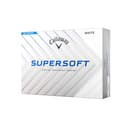
Callaway Supersoft Golf Balls

Callaway Supersoft Golf Balls

The default beginner ball, and rightly so: soft, low-spin, straight-flying and cheap enough that losing a few in the trees does not hurt. Start here.

Best for most beginners
$26.97 · View on Amazon

Price as of October 5, 2026. #ad How we’re funded

2
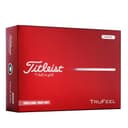
Titleist TruFeel Golf Balls

Titleist TruFeel Golf Balls

Titleist's softest, most affordable ball — the way to play the sport's most trusted brand without paying Pro V1 prices. A great confidence buy for a new golfer.

Best if the brand matters
$24.97 · View on Amazon

Price as of October 5, 2026. #ad How we’re funded

3
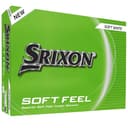
Srixon Soft Feel Golf Balls

Srixon Soft Feel Golf Balls

A perennial 'best soft ball for the money' pick. The Soft Feel launches high and flies straight, and Srixon often sells it in value packs that stretch a beginner's budget further.

Best value alternative
$24.99 · View on Amazon

Price as of October 5, 2026. #ad How we’re funded

The picks in full

#1Best for most beginners

Callaway Supersoft Golf Balls

The default beginner ball, and rightly so: soft, low-spin, straight-flying and cheap enough that losing a few in the trees does not hurt. Start here.

Strengths

  • Low-spin design flies straighter, which flatters a slice or hook
  • Very soft feel off the putter and irons
  • Inexpensive enough to lose without frustration

Trade-offs

  • Low spin means less stopping power on the green for advanced players
  • Not built for the shot-shaping a better player wants
What it isLow-compression, low-spin ball
In the boxNot published
HandednessNot published
Shaft / flexNot published
Best forMost beginners, Slower swing speeds

Beginner note. Low 'compression' means the ball deforms easily at slower swing speeds, which helps beginners get distance without swinging out of their shoes.

Specs read from the product listing, on July 23, 2026. “Not published” means the listing does not state it.

#2Best if the brand matters

Titleist TruFeel Golf Balls

Titleist's softest, most affordable ball — the way to play the sport's most trusted brand without paying Pro V1 prices. A great confidence buy for a new golfer.

Strengths

  • Titleist quality control at an entry price
  • Soft feel with straight, forgiving flight
  • The brand-name reassurance a lot of beginners want

Trade-offs

  • Costs a little more than the cheapest soft balls
  • Still a distance/feel ball, not a spin-and-stop ball
What it isSoft, low-compression two-piece ball
In the boxNot published
HandednessNot published
Shaft / flexNot published
Best forBrand-conscious beginners, Average swing speeds

Beginner note. The TruFeel is Titleist's soft, straight-flying value model — the same brand as the tour ball, built for feel and distance rather than spin.

Specs read from the product listing, on July 23, 2026. “Not published” means the listing does not state it.

#3Best value alternative

Srixon Soft Feel Golf Balls

A perennial 'best soft ball for the money' pick. The Soft Feel launches high and flies straight, and Srixon often sells it in value packs that stretch a beginner's budget further.

Strengths

  • Soft feel with a notably high, easy launch
  • Straight, forgiving flight for developing swings
  • Frequently available in value multi-dozen packs

Trade-offs

  • Less greenside spin than a premium ball
  • Feel is a matter of taste — some prefer firmer
What it isSoft, high-launch two-piece ball
In the boxNot published
HandednessNot published
Shaft / flexNot published
Best forValue buyers, Slower swings needing launch

Beginner note. A high-launch profile helps slower swings carry the ball further in the air — useful when you are not yet compressing the ball like a low-handicapper.

Specs read from the product listing, on July 23, 2026. “Not published” means the listing does not state it.

Supersoft vs TruFeel, head to head

1. Compression — the spec that actually matters to you

Compression describes how much a ball deforms when you hit it. A low-compression ball squashes more easily at slower swing speeds, which is how a beginner gets distance without swinging out of their shoes. Both of these are low-compression balls: the Supersoft is listed as a low-compression, low-spin model, and the TruFeel as a soft, low-compression two-piece.

The Supersoft sits at the softer end of that pair, and if your driver swing is on the slower side that is the one to pick. If you are unsure where you sit, our guide to soft vs distance golf balls explains how to tell from your own ball flight rather than from a number you have never measured.

2. Spin — why less of it helps you right now

The Supersoft is explicitly a low-spin design, and low spin flatters a slice or a hook: less sidespin means less curve, so a mis-struck drive finishes closer to the fairway than it deserves to. That is the single most useful property a ball can have for a new golfer.

The trade-off is real but it arrives later. Low spin means less stopping power on the green, so an approach shot runs rather than bites. If you are losing shots to curve off the tee — and nearly every beginner is — take the straighter ball and read how to fix a slice. The day you start worrying about holding a green is the day to change ball, not before.

3. Flight and feel

The Supersoft is very soft off the putter and irons, which most beginners like and some find mushy. The TruFeel pairs a soft feel with straight, forgiving flight and is built for feel and distance rather than spin — it is the same brand as the tour ball, built to a different brief.

Feel is genuinely a matter of taste, and it is the one thing you cannot read off a listing. The cheap way to settle it is to buy one dozen of each over two months and notice which you putt better with. Nothing else about this decision justifies more research than that.

4. Price per lost ball

This is the metric beginners should actually use, because in your first season the ball’s most important property is how much it hurts to lose one. The Supersoft is inexpensive enough to lose without frustration; the TruFeel costs a little more than the cheapest soft balls. The live prices in the table above are dated, so compare them per dozen rather than per box — multi-dozen packs change this calculation more than the models do.

A practical note on quantity: if you are new, buy more balls than you think you need and do not keep the good ones for best. Playing a premium ball you are frightened of losing is the most expensive way to make golf less fun.

The third option that often beats both

The Srixon Soft Feel is a perennial best-soft-ball-for-the -money pick, with a notably high, easy launch and the same straight, forgiving flight — and Srixon frequently sells it in value multi-dozen packs. A high-launch profile helps a slower swing carry the ball further in the air, which is useful when you are not yet compressing the ball like a low-handicapper.

If your problem is getting the ball up rather than getting it straight, buy the Srixon ahead of either headline ball. Our best golf balls for beginners roundup ranks all three plus the cheapest ball worth playing, and our Callaway Supersoft review covers the winner here in full.

Who should buy neither

Two groups, both common.

If you lose more than a few balls a round, play the cheapest two-piece ball you can find until that stops. A lost premium ball and a lost cheap ball travel the same distance into the trees. Our roundup names the value picks, and a bag of used balls from the pro shop is an entirely respectable answer.

If your swing speed is genuinely slow— a senior golfer, or anyone whose driver carries under about 180 yards — there are balls built specifically for that, with even lower compression. Our best golf balls for seniors page is the one to read, and it is relevant to anyone with a slower swing regardless of age.

The bottom line

Take the Supersoft if you want the straightest, softest, most forgiving of the two. Take the TruFeel if the Titleist name on the box makes you stand over the ball with more confidence — that is not a silly reason, and it costs very little. Take the Srixon if you want the most golf ball per dollar and a higher flight. And whichever you choose, buy a dozen rather than a sleeve: the ball is the one piece of golf equipment you are guaranteed to need more of.
Frequently asked questions

Is the Callaway Supersoft or the Titleist TruFeel better for a beginner?

The Supersoft, for most people. It is a low-compression, low-spin ball, and low spin means less curve on a mis-hit — the most useful property a ball can have for a new golfer. The TruFeel is the better buy if you want Titleist's quality control and the brand reassurance at an entry price, and the two are close enough in function that confidence is a fair tiebreaker.

What does low compression mean on a golf ball?

It describes how easily the ball deforms when struck. A low-compression ball squashes more at slower swing speeds, which is how a beginner gets distance without swinging harder. Both the Supersoft and the TruFeel are low-compression models; the Supersoft is the softer of the two.

Does a low-spin golf ball really reduce a slice?

It reduces the curve, not the cause. Less sidespin means a mis-struck drive bends less, so it finishes closer to the fairway than the swing deserved. The slice itself comes from the club path and face at impact, which is a swing matter rather than a ball matter — fix that and the ball choice stops mattering nearly as much.

Is the Titleist TruFeel the same as a Pro V1?

No. The TruFeel is Titleist's soft, straight-flying value model, built for feel and distance; the Pro V1 is a premium multi-layer tour ball built for spin control. They share the brand and the quality control, not the construction. For a beginner that is an advantage: the TruFeel is the cheaper, straighter, more forgiving ball of the two.

How many golf balls should a beginner buy at once?

More than feels sensible — a dozen at minimum, and two if your rounds currently include trees and water. The most expensive mistake a new golfer makes with golf balls is playing a ball they are afraid to lose, because it changes how they swing. Buy cheap, buy plenty, and save the brand-name box for when you stop losing them.

Sources

Keep reading