Tee & Tempo

The Best Distance Golf Balls

Two-piece, low-spin, cheap and tough. What a distance ball genuinely changes about your round, what it quietly costs you around the green, and the five we would actually buy.

By Stephen V.Last updated How we pick

Buy the Callaway Warbird if you want a distance ball and do not want to think about it again. It is a major-brand ball at value-brand money, built around a large core for speed and a tough ionomer cover that survives cart paths and tree bark — which matters more to your scorecard than any claim about yards. If you are still losing three or four balls a round, the Nitro Ultimate Distance is the budget pick at by far the lowest cost per ball here, and we would rather you swung freely at a cheap ball than carefully at an expensive one.

Here is the honest version of this category, up front: a distance ball will not add a club to your drives, and anyone promising that is selling. What it genuinely gives a developing golfer is a firm, low-spin, cut-resistant ball for not much money — and low spin off the driver slightly reduces how much a slice curves, which is a real benefit if your miss goes right. Our methodology page says exactly what we do and do not claim: we rank on what these listings publish and on honest beginner fit, and we have not hit these balls on a launch monitor.

Prices on this page come from our live price layer rather than being typed in, so what you see on each button is what the listing showed when we last checked. All five picks sit in the same low bracket, and none of them is a premium ball — that is the point of the category. Where they differ most is pack size, which is what actually decides your cost per ball.

How this is funded: we earn a commission if you buy through our links, at no extra cost to you. It never changes which product we recommend, and we’ll tell you when we’d skip one. Full disclosure.

Quick picks

Ranked on forgiveness, how complete the pick is, and value for a beginner. Select a row to jump to the full write-up. We have not hit these clubs on a launch monitor — here is exactly what we do instead.

#ProductBest forPrice
1
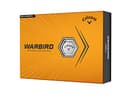
Callaway Warbird Golf Balls (12-Pack)

Callaway Warbird Golf Balls (12-Pack)

The best balance of brand, price and durability for someone still losing golf balls. A big soft core for speed, a tough cover for cart paths, and a price that makes a lost ball an annoyance rather than an event.

Best overall
$22.49 · View on Amazon

Price as of November 21, 2026. #ad How we’re funded

2
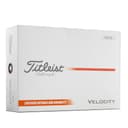
Titleist Velocity Golf Balls

Titleist Velocity Golf Balls

Titleist's distance ball, and the step up worth taking once you stop losing a sleeve a round. Same manufacturing standards as the balls the professionals play, aimed at speed rather than spin.

Best step-up
$29.97 · View on Amazon

Price as of November 21, 2026. #ad How we’re funded

3
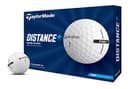
TaylorMade Distance+ Golf Balls (12-Pack)

TaylorMade Distance+ Golf Balls (12-Pack)

The most genuinely distance-focused ball we would recommend to a high handicapper, with a low-drag dimple pattern that helps a ball that is already going the wrong way go slightly less far off line.

Lowest spin off the tee
$19.99 · View on Amazon

Price as of November 21, 2026. #ad How we’re funded

4
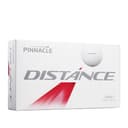
Pinnacle Distance Golf Balls (15-Ball Pack)

Pinnacle Distance Golf Balls (15-Ball Pack)

Fifteen balls instead of twelve, from Titleist's value label. When you are losing three or four a round, the pack size is a more useful spec than anything happening inside the ball.

Best bulk pack
$19.99 · View on Amazon

Price as of November 21, 2026. #ad How we’re funded

5
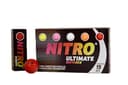
Nitro Ultimate Distance Golf Balls (15-Pack)

Nitro Ultimate Distance Golf Balls (15-Pack)

The cheapest ball we will put our name to. It is not as good as the Callaway or the Pinnacle and we are not pretending otherwise — but if losing balls is stopping you from swinging freely, this fixes that.

Budget pick
$13.50 · View on Amazon

Price as of November 21, 2026. #ad How we’re funded

The picks in full

#1Best overall

Callaway Warbird Golf Balls (12-Pack)

The best balance of brand, price and durability for someone still losing golf balls. A big soft core for speed, a tough cover for cart paths, and a price that makes a lost ball an annoyance rather than an event.

Strengths

  • Major-brand ball at value-brand money
  • Large core built for distance at moderate swing speeds
  • Durable ionomer cover survives thin strikes and tree bark

Trade-offs

  • Firmer feel than a Supersoft off the putter
  • Almost no greenside spin — it will not check up
What it isTwo-piece distance ball, 12-pack
In the box12 balls
HandednessNot published
Shaft / flexNot published
Best forHigh handicappers, Golfers who want a known name cheaply

Beginner note. Cover durability is an underrated spec for a high handicapper. A ball that scuffs on the first cart path is effectively a one-hole ball, whichever brand made it.

Specs read from the product listing, on August 11, 2026. “Not published” means the listing does not state it.

#2Best step-up

Titleist Velocity Golf Balls

Titleist's distance ball, and the step up worth taking once you stop losing a sleeve a round. Same manufacturing standards as the balls the professionals play, aimed at speed rather than spin.

Strengths

  • Titleist quality control, which is the most consistent in the business
  • Built for high launch and low long-game spin
  • Feels considerably better than the value-brand distance balls

Trade-offs

  • Costs meaningfully more per ball than the Warbird or Pinnacle
  • Wasted money if you are still losing four balls a round
What it isTwo-piece high-speed distance ball
In the boxNot published
HandednessNot published
Shaft / flexNot published
Best forImproving high handicappers, Golfers who keep the ball in play

Beginner note. Velocity is the distance ball in the Titleist range, not the tour ball. If you want the ball professionals actually use it is the Pro V1, which is roughly double the price and the wrong ball for a high handicapper.

Specs read from the product listing, on August 11, 2026. “Not published” means the listing does not state it.

#3Lowest spin off the tee

TaylorMade Distance+ Golf Balls (12-Pack)

The most genuinely distance-focused ball we would recommend to a high handicapper, with a low-drag dimple pattern that helps a ball that is already going the wrong way go slightly less far off line.

Strengths

  • Fast core aimed squarely at maximum ball speed
  • Low spin off the driver, which slightly reduces sidespin on a slice
  • Tour brand at a value price

Trade-offs

  • Firm feel that some golfers dislike on and around the greens
  • Distance gains over any decent ball are small and easy to oversell
What it isTwo-piece low-spin distance ball, 12-pack
In the box12 balls
HandednessNot published
Shaft / flexNot published
Best forSlicers, Golfers chasing tee-shot distance

Beginner note. Low spin cuts both ways. It reduces how much a slice curves, and it also removes any chance of stopping the ball quickly on a green. For a high handicapper that trade is usually worth taking.

Specs read from the product listing, on August 11, 2026. “Not published” means the listing does not state it.

#4Best bulk pack

Pinnacle Distance Golf Balls (15-Ball Pack)

Fifteen balls instead of twelve, from Titleist's value label. When you are losing three or four a round, the pack size is a more useful spec than anything happening inside the ball.

Strengths

  • Fifteen-ball pack drops the cost per ball meaningfully
  • Made under the Titleist umbrella, so quality control is real
  • Also sold in high-visibility yellow, which finds more balls than any dimple pattern

Trade-offs

  • Firm, clicky feel off the putter
  • Basic two-piece performance with no short-game control
What it isTwo-piece distance ball, 15-ball pack
In the box15 balls
HandednessNot published
Shaft / flexNot published
Best forGolfers losing several balls a round, Bulk buyers

Beginner note. High-visibility yellow is worth more to a high handicapper than any performance claim. A ball you can find is a ball you do not have to replace, and it speeds up your group.

Specs read from the product listing, on August 11, 2026. “Not published” means the listing does not state it.

#5Budget pick

Nitro Ultimate Distance Golf Balls (15-Pack)

The cheapest ball we will put our name to. It is not as good as the Callaway or the Pinnacle and we are not pretending otherwise — but if losing balls is stopping you from swinging freely, this fixes that.

Strengths

  • By far the lowest cost per ball on this page
  • Multi-colored pack makes balls easier to spot in rough
  • Durable titanium-core construction that resists scuffing

Trade-offs

  • Noticeably harder feel than anything else here
  • Quality varies more ball to ball than a major brand
What it isTwo-piece distance ball, 15-pack, multi-colored
In the box15 balls
HandednessNot published
Shaft / flexNot published
Best forAbsolute beginners, Range and practice rounds

Beginner note. There is a real psychological effect to playing a cheap ball: golfers who are not worried about losing it swing more freely, and a free swing beats a careful one for almost every beginner.

Specs read from the product listing, on August 11, 2026. “Not published” means the listing does not state it.

What a distance ball actually is

Worth defining, because “distance” on a ball box is marketing and the real construction difference is simple.

Callaway’s own golf ball guide draws the line more plainly than most: a two-piece ball is “2 piece limited performance”, against “multi-layer for performance from tee to green”. Two pieces means a large rubber core and a cover, and nothing in between. The cover on these balls is Surlyn or a similar ionomer, and the same guide explains exactly what that does: “Surlyn covers are durable and cut-resistant, typically made from an ionomer resin…They offer low spin rates to produce extra distance,” while “urethane covers are softer than Surlyn, offering a better feel and more control.”

So a distance ball is a cheap, tough, low-spin ball. Every one of those three properties is a genuine advantage for a golfer who is still learning — and the third one, low spin, is also the entire reason a distance ball will not hold a green. You are not buying a lesser ball by mistake; you are buying a different trade.

One more thing from the same guide, because it quietly undermines the usual swing-speed chart: on compression, Callaway says only that “the compression rate refers to how much the golf ball compresses upon impact”, that “the lower the compression rate, the easier to compress”, and that “the more pieces a golf ball has, the higher the compression”. It publishes no compression number for any model, and neither does any listing on this page. We therefore quote none. If you see a precise compression figure for a budget ball, ask where it came from.

The criteria we ranked on

Four things separate these balls, and the one everybody shops on is third at best.

1. Cover durability — and this is a Rules issue, not just value. Under Rule 4.2c(2) you may swap a ball mid-hole “only if it can be clearly seen that the original ball is cut or cracked and this damage happened during the hole being played — but not if it is only scratched or scraped or its paint is only damaged”. In other words a scuffed ball is a ball you must keep playing until the hole is over. A cover that survives a cart path is therefore worth more than a dimple pattern, and it is the main reason the Warbird leads this page.

2. Cost per ball, which means pack size. Two of these five come in 15-ball packs rather than a dozen, and that changes the real cost more than the sticker price suggests. If you are losing four balls a round, pack size is the most useful spec on the box. Our balls under $25 page ranks the same question purely on price if that is your constraint.

3. Visibility.Unglamorous and underrated. The Pinnacle is also sold in high-visibility yellow and the Nitro pack is multi-colored, and a ball you can find is a ball you do not have to replace — it also keeps your group moving, which your playing partners will notice long before they notice your driving distance.

4. Low spin, and what it costs you. This is the headline feature and it cuts both ways. Less spin off the driver means slightly less sidespin, so a slice curves a little less. It also means essentially no greenside check: these balls run out when they land, and a pitch that lands on the front of a green will finish at the back of it. If your short game is where you are losing shots, read soft versus distance golf balls before you buy anything here.

What we did not rank on: claimed yardage. No listing on this page publishes a carry figure we could verify, and the two balls here that make the strongest distance case also say plainly in their own cons that the gains over any decent ball are small and easy to oversell. We agree with that.

Does a distance ball really go farther?

A little, probably, in the right hands — and far less than the box implies.

The mechanism is real: a firm core and a low-spin cover produce a faster, lower-spinning ball flight, and for a slower swing a ball that is easier to compress returns more of the energy you put into it. But the differences between any two conforming balls at this end of the market are measured in yards, not clubs, and they are smaller than the difference between your good drive and your average one.

It is also worth knowing that the ball is a regulated piece of equipment. Rule 4.2a(1) is explicit: “In making each stroke, a player must use a ball that conforms to the requirements in the Equipment Rules.” Every ball on this page is a mainstream retail ball sold as conforming. The Rule itself publishes no distance, size or weight figure — it defers all of that to the separate Equipment Rules document, which we could not reach from here, so we quote no limit. What that regulation means in practice is simply that there is a ceiling, and that nobody at any price is selling you a ball that goes meaningfully past it.

Where you can find real yards is in your own numbers. An hour at the range working out how far you actually hit each club removes more strokes than any ball change, because most beginners play their best-ever 7-iron distance rather than their normal one and come up short of every green. Fixing a slice is worth several balls.

Who should not buy a distance ball

Three groups, and between them they are a lot of golfers.

Anyone who dislikes a firm feel.These balls are clicky off the putter, and that is not a small thing when a third of your shots are putts. If feel matters to you, a soft two-piece ball gives up very little real distance and feels far better — our beginner ball roundup leads with exactly that kind of ball.

Slower swings that want help getting the ball up. A low-spin ball launches lower, and if you already struggle to get the ball airborne that is the wrong direction. Our balls for seniors page covers the soft, easy-to-compress end instead.

Golfers who have stopped losing balls. Once you keep the ball in play, the cheap-and-tough argument stops paying and short-game control starts to. That is the moment the step-up ball here, or a soft premium ball, becomes a sensible purchase rather than a vanity one. What golf ball should I use walks through that transition, and the high-handicapper roundup sits between the two camps.

Two Rules details that save you a penalty

Both come from Rule 4.2, and both come up in ordinary rounds.

Do not “improve” a ball.Rule 4.2a(2) states that a player “must not make a stroke at a ball whose performance characteristics have been deliberately altered, such as by scuffing or heating the ball or by applying any substance (other than in cleaning it)”. The penalty for a breach is disqualification — the most severe in the Rules. Warming balls on a radiator before a cold round is exactly what this prohibits.

You can borrow one.The same Rule says a player “may get a conforming ball to play from anyone else, including another player on the course”. Run out mid-round and your partner can hand you one without anybody incurring a penalty. And if a ball breaks into pieces after a stroke, Rule 4.2b gives you no penalty and the stroke does not count.

For the handful of other rules that genuinely affect a casual round, our golf rules for beginners page is the short version.

How to choose between these five

Default to the Warbird. Known brand, durable cover, lowest fuss. It is the ball we would put in the bag of nearly every golfer reading this page.

Take the Nitro if you are losing a sleeve a round.It is not as good and we are not pretending otherwise — but swinging freely at a cheap ball beats protecting an expensive one, and the multi-colored pack is easier to find in rough.

Take the Pinnacle if you want the lowest cost per ball from a name you recognize, and the yellow version if you lose balls in shadow and rough.

Take the TaylorMade if your miss is a slice and you want the lowest spin here, accepting a firm feel for it.

Take the Titleist Velocity once you keep the ball in play. It is the distance ball in the Titleist range rather than the tour ball, it feels considerably better than the value-brand options, and it is wasted money while you are still losing four a round.

Whichever you pick, buy the biggest pack you can and stop thinking about it. The balls, bags and gear hub has the rest of what goes in the bag, and the bags under $200 page covers what you carry it all in.
Frequently asked questions

What are the best distance golf balls?

The Callaway Warbird is our overall pick: a major-brand two-piece ball at value money, with a large core for speed and a tough ionomer cover that survives cart paths - durability matters more to your scorecard than any yardage claim. The Nitro Ultimate Distance is the budget pick at the lowest cost per ball, and the Titleist Velocity is the step-up once you stop losing several balls a round.

Do distance golf balls actually go farther?

A little, and much less than the box implies. A firm core and a low-spin ionomer cover do produce a faster, lower-spinning flight, but the gap between conforming balls at this end of the market is measured in yards rather than clubs - smaller than the gap between your good drive and your average one. The bigger real-world gains come from knowing your true club distances and curing a slice.

What is the difference between a distance ball and a soft ball?

Construction and cover. Callaway's own guide describes a two-piece ball as 'limited performance' against 'multi-layer for performance from tee to green', and says Surlyn or ionomer covers are 'durable and cut-resistant' and 'offer low spin rates to produce extra distance', while urethane covers are 'softer, offering a better feel and more control'. In practice a distance ball is firm, cheap, tough and will not check up on a green; a soft ball feels better and stops sooner.

Are distance golf balls bad for beginners?

No - for most beginners they are the right ball, because cheap and durable beats spin you cannot yet use. The exceptions are real though: if you dislike a firm feel off the putter, or you struggle to get the ball airborne with a slower swing, a soft two-piece ball gives up very little actual distance and suits you better.

Do distance balls hurt your short game?

They remove greenside check. Low spin means these balls run out when they land, so a pitch that lands at the front of a green can finish at the back. You can play around that by landing the ball shorter and letting it release, but if your scores are leaking around the greens rather than off the tee, a softer ball is the better purchase.

Can I change golf balls during a hole if mine gets scuffed?

No. Rule 4.2c(2) lets you substitute mid-hole only if it can be clearly seen that the ball is cut or cracked and the damage happened on that hole - 'but not if it is only scratched or scraped or its paint is only damaged'. That is exactly why cover durability is a scoring spec and not just a value one. You can change balls freely between holes.

How many golf balls should I buy at once?

More than you think, in the biggest pack available. Two of our five picks come in 15-ball packs rather than a dozen, which lowers the cost per ball meaningfully. If you are losing three or four a round, pack size is the most useful number on the box - and high-visibility yellow or multi-colored balls reduce how many you lose in the first place.

Sources

  • Callaway -- Golf Ball Buying Guide — The maker's own buying guide, which is the rare manufacturer page that defines the terms rather than only selling against them. On compression: 'The compression rate refers to how much the golf ball compresses upon impact', 'The lower the compression rate, the easier to compress', and 'the more pieces a golf ball has, the higher the compression. Higher compression golf balls are designed for players with faster swing speeds.' On construction: '2 piece limited performance' versus 'Multi-layer for performance from tee to green', and 'Multi-layer golf balls are often preferred by low handicap players looking for specific flight characteristics off the tee.' On covers: 'Surlyn covers are durable and cut-resistant, typically made from an ionomer resin...often found on 2 piece golf balls. They offer low spin rates to produce extra distance', while 'Urethane covers are softer than Surlyn, offering a better feel and more control.' On method: 'you should always test a golf ball by starting from the green and working your way back to the tee.' The guide publishes NO per-model compression numbers (accessed October 13, 2026)
  • R&A -- Rule 4.2: Balls (Rules of Golf) — Rule 4.2 in full, read from the R&A's own Rules page. The purpose statement for Rule 4 says the player 'Must use conforming clubs and balls'. Rule 4.2a(1), verbatim: 'In making each stroke, a player must use a ball that conforms to the requirements in the Equipment Rules. A player may get a conforming ball to play from anyone else, including another player on the course.' Rule 4.2a(2): 'A player must not make a stroke at a ball whose performance characteristics have been deliberately altered, such as by scuffing or heating the ball or by applying any substance (other than in cleaning it)', with the penalty for a breach of 4.2a given as Disqualification. Rule 4.2c(2) governs mid-hole swaps: a player 'may substitute another ball only if it can be clearly seen that the original ball is cut or cracked and this damage happened during the hole being played -- but not if it is only scratched or scraped or its paint is only damaged or discoloured.' Rule 4.2b adds that if a ball breaks into pieces after a stroke there is no penalty and the stroke does not count. The Rule itself publishes NO distance, size or weight figure; it defers all of those to the Equipment Rules (accessed November 18, 2026)
  • USGA — Rule 4: The Player's Equipment — The official Rule limiting a player to 14 clubs and governing conforming equipment (accessed July 23, 2026)

Keep reading