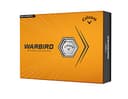
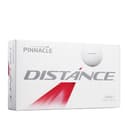
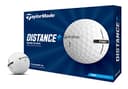
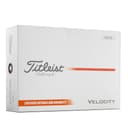
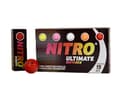
How we picked these balls
No launch monitor, no test units, no invented numbers. We compared what each ball publishes about its construction and pack size against what a high handicapper actually experiences on a golf course, and we have been explicit about the trade-offs. Three criteria did the work.
1. Cost per ball, including pack size
Two of the picks here come in 15-ball packs rather than a dozen, which quietly drops the unit cost by twenty percent. That is a bigger real-world saving than any performance difference between these balls, and it is the sort of thing reviews ignore because it is boring.
2. Cover durability
A ball that scuffs on the first cart path is a one-hole ball. Every pick here uses a firm ionomer cover rather than the soft urethane found on premium balls, precisely because ionomer survives thin strikes, tree bark and cart paths. Urethane feels better and cuts more easily — a bad trade for this golfer.
3. Low spin off the long clubs
All of these are two-piece, low-spin designs. This matters for a specific reason we will explain properly below: sidespin is what makes a slice curve, and a ball that generates less spin overall generates less sidespin too.
Will a low-spin ball fix my slice?
No. It will make it curve slightly less, which is not the same thing.
A slice happens because the clubface is open relative to the path the club is traveling on. That relationship imparts sidespin, and sidespin curves the ball. A low-spin ball reduces the total amount of spin generated, so the same face-to-path relationship produces a slightly smaller curve. You might turn a forty-yard slice into a thirty-five-yard slice. You will not turn it into a straight shot.
The cause is in your setup and swing, and it is genuinely fixable — our slice guide works through what actually causes it and what to change. Buy the low-spin ball because it is cheap and durable; treat the reduced curve as a small bonus rather than the reason.
Soft or firm — which for a high handicapper?
This is the one place where our advice splits by swing speed rather than by handicap, and it is worth being precise.
If you swing the driver slowly— under about 85 mph, which includes most beginners, most senior golfers and most women golfers — a soft, low-compression ball is the better choice, because a firm ball will not deform enough at that speed to release its energy efficiently. The balls on our beginner ball page and our senior ball page are chosen on exactly that basis.
If you swing at a moderate or fast speed but score badly— a genuinely common combination, particularly for younger golfers coming from other sports — then the firmer distance balls on this page suit you well. You have the speed to compress them and you are not yet in a position to use greenside spin.
If you are not sure which describes you, our soft versus distance comparison has a practical way to work it out without a launch monitor.
What about used and refurbished balls?
You will see “recycled” and “refinished” balls sold cheaply, often in large lots, and the distinction between those two words matters.
Recycled(sometimes called “lake” or “used”) balls have been found, cleaned and graded. A high-grade recycled ball is close to new and is genuinely good value. The risk is that balls that have sat in water for months can absorb moisture and lose performance, and grading standards vary between sellers.
Refinished balls have been stripped and repainted. That process changes the surface and can alter the dimple geometry, and refinished balls are explicitly not the same product as the brand printed on them. We would avoid these.
Our overall position: buying cheap new balls in bulk, as on this page, is simpler and involves no grading lottery. If you do buy recycled, buy the highest grade from a seller who states their grading standard.
When to stop buying cheap balls
There is a point where this advice reverses, and it is worth knowing where it is so you do not stay on value balls out of habit.
Move up when two things are true at once: you keep the ball in play most of the time — losing perhaps one a round rather than three — and you are hitting enough greens with wedges that stopping the ball on them would genuinely change your score. In practice that tends to arrive somewhere around breaking 90.
Until then, the money is better spent on green fees, a lesson, or the practice aids that actually change your strike. A premium ball cannot improve a swing; a bucket of range balls can.
If you would rather understand the specs than pick from a list, what golf ball should I use covers compression, Surlyn versus urethane covers, and the manufacturer-recommended way to test a ball - which starts on the green, not the tee.