How Many Wedges Do You Need?
One, for your first season — plus the pitching wedge your set already has. Here is which loft to add, why the 30-yard hole in your distances exists, and when a third wedge earns its slot.
How this is funded: we earn a commission if you buy through our links, at no extra cost to you. It never changes which product we recommend, and we’ll tell you when we’d skip one. Full disclosure.
The honest answer: one, on top of the pitching wedge your set already has. Two wedges cover everything a first-season golfer faces, and the one to add is a 56-degree sand wedge if bunkers are costing you shots, or a 50 to 52 degree wedge if your problem is the hole in your distances just below the pitching wedge. Tour players carry four; they also hit full shots to a yardage, which you do not yet.
If you want the single most forgiving version of that purchase, buy a wedge with an extra-wide sole designed to skid along the turf instead of digging in — the Cleveland Smart Sole Full-Face at 50 degrees is the one we point beginners at, and it sits between a pitching and a sand wedge, which makes it the most useful in-between loft to own. The picks are below, after the part that explains why.
What you already have, and what your set left out
Nearly every complete beginner set includes a pitching wedge, usually stamped P or PW, at something like 44 to 48 degrees of loft. Many include a sand wedge; plenty do not — two of the budget sets we track publish their contents without one. Check your own set before you buy anything, because the answer changes which wedge you need.
What almost no set includes is a gap wedge, and that is the omission that creates the problem people feel but cannot name. A 52-degree wedge typically flies about 10 to 15 yards shorter than a modern pitching wedge. If you have a pitching wedge and a sand wedge and nothing in between, there is a yardage where you have to choose between hitting one soft and the other hard, and both of those are the shots that produce a duff.
Modern pitching wedges are stronger-lofted than they used to be, which widens that gap rather than closing it. Our guide to golf club numbers and letters explains what the stampings actually mean, including why the same number means a different loft from one set to another.
Loft gapping, in plain English
Gapping just means keeping an even spread of distances between your clubs. Four to six degrees of loft between consecutive wedges is the conventional spacing, and the standard modern ladder runs 52 / 56 / 60— gap, sand, lob. Each step costs you roughly ten to fifteen yards.
Why a beginner should not build the full ladder yet: the spacing only matters if your strike is consistent enough to produce repeatable distances. Until then, two wedges with a wide gap between them are more useful than three with perfect spacing, because you are choosing clubs by “near” and “nearer” rather than by yardage. Build the ladder when you start thinking in numbers.
Which wedge to add first
If bunkers are the problem: a 56-degree sand wedge
Fifty-six degrees is the standard sand-wedge loft, and it is the club most package sets leave out, which is why it is usually a beginner’s first add-on. It gets the ball out of sand without asking you to make a tour swing, and it doubles as your short pitching club around the green. A brand-name wedge at an off-brand price is all you need here — learn on it and replace it in a few years if you still care.
If the distance gap is the problem: 50 to 52 degrees
This is the most under-bought club in beginner golf. It fills the yardage your set forgot, it is easier to hit than a sand wedge because it has less loft, and on a wide-soled design it is also the most forgiving club in the bag around the green. Fifty degrees with a full-face groove pattern and a skidding sole is the version we would hand a beginner; 52 degrees with a steel shaft is the conventional, cheaper one.
If you chunk and thin every short shot: consider a chipper instead
A chipping club is a wedge-lofted head on a shorter, putter-ish shaft with a heavy sole, and for greenside shots many beginners score better with one than with any wedge. It is useless from a bunker and anywhere you need height, so it is an addition rather than a replacement — and if you play competitions, check the listing states the club is legal for tournament play, because some two-faced chippers do not conform. Our chippers roundup compares them, and the easiest golf clubs to hit explains the wide-sole principle they share with the wedges here.
The wedges to add, in order
Add the first one now, the second when you can name a yardage you cannot cover, and the third only when you are hitting wedges to a number. All are picks from our beginner wedges roundup; prices are live and dated, and every spec comes from the listing read on the date shown in the row.
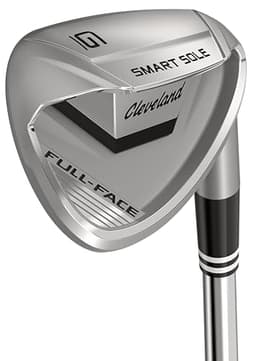
Cleveland Smart Sole Full-Face Wedge (50°)
The wedge built for people who chunk and thin wedges, which is every beginner. The extra-wide sole is designed to skid along the turf instead of digging in, so a slightly fat strike still gets the ball out. If you buy one wedge to stop the short-game disasters, buy a Smart Sole.
- What it is
- 50-degree, extra-wide skidding sole
- Who it’s for
- Your first added wedge, if you chunk or thin short shots
Price as of October 5, 2026. #ad How we’re funded
Specs read from the product listing, on August 28, 2026.
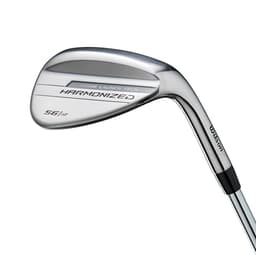
Wilson Harmonized Golf Wedge (56°)
The sensible first sand wedge. It is a brand-name club at an off-brand price, it comes in the lofts a beginner actually needs, and it does the job of getting out of a bunker without asking you to make a tour swing. Buy it, learn on it, replace it in three years if you still care.
- What it is
- 56-degree sand wedge, steel shaft
- Who it’s for
- Your first added wedge, if bunkers are costing you shots
Price as of October 5, 2026. #ad How we’re funded
Specs read from the product listing, on August 11, 2026.
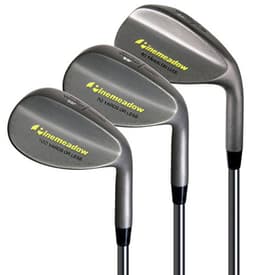
Pinemeadow 3-Wedge Set (52°/56°/60°)
Three wedges for roughly the price of one branded wedge. If you want to learn the difference between a gap, sand and lob wedge without spending several hundred dollars finding out, this is how you do it honestly.
- What it is
- 52, 56 and 60 degrees, steel shafts
- Who it’s for
- Anyone who wants the whole 52/56/60 ladder at once, cheaply
Specs read from the product listing, on August 11, 2026.
| Pick | What it is | Who it’s for |
|---|---|---|
| Cleveland Smart Sole Full-Face Wedge (50°) | 50-degree, extra-wide skidding sole | Your first added wedge, if you chunk or thin short shots |
| Wilson Harmonized Golf Wedge (56°) | 56-degree sand wedge, steel shaft | Your first added wedge, if bunkers are costing you shots |
| Pinemeadow 3-Wedge Set (52°/56°/60°) | 52, 56 and 60 degrees, steel shafts | Anyone who wants the whole 52/56/60 ladder at once, cheaply |
When a third wedge earns its slot
One test: can you name a yardage you have no club for? If the answer is “about 80 yards — my sand wedge goes 65 and my pitching wedge goes 100,” you have found a real gap and a third wedge fills it. If the answer is “I do not know how far any of my wedges go,” a third wedge adds a decision rather than a shot, and the money is better spent on an hour with a coach or a putting mat.
The fourth wedge — a 60-degree lob — is the one to leave longest. It needs a confident, accelerating strike to work at all, and the thin miss it produces scuttles across the green and into trouble. Learn the high short shot with a sand wedge first. If you buy the three-wedge set because the value is good, treat the lob wedge as a club you grow into rather than one you take to the course this month.
Remember the ceiling too: the Rules of Golf allow fourteen clubs, made up however you like. Most beginner sets hold nine to twelve, so you have room for one or two wedges without taking anything out — how many clubs in a bag covers the rule and the penalty for getting it wrong.
What a wedge will not fix
The chunked chip is usually deceleration, not loft. A wide sole genuinely helps — it skids where a thin sole digs — but the swing that produces the chunk is the one that slows down before the ball, and no club prevents that. Read how to chip a golf ball first; it costs nothing and it is the actual fix.
Bunker shots are the same story in sand. A sand wedge makes the shot possible; the technique makes it work. Buy the club, then spend twenty minutes in a practice bunker doing nothing but splashing sand out, which is a more useful twenty minutes than a bucket of balls on the range.
The bottom line
Two wedges for your first season: the pitching wedge you already own plus one more. Make it a wide-soled 50-degree if your short shots are a lottery, or a 56-degree sand wedge if bunkers are the problem. Add a third when you can name the yardage it fills, and leave the lob wedge until the rest of your short game has caught up. Our wedges roundup has all five picks with live prices, and what clubs do I need is the wider version of this question for the whole bag.
Friendly guidance, not coaching. Tee & Tempo is written by a golf enthusiast, not a teaching pro. Our picks come from published specs and honest buyer-fit reasoning — we compare the numbers so you don’t have to, but we haven’t hit every club ourselves. When in doubt, hitting a few at a shop or a lesson beats any article.
Frequently asked questions
How many wedges does a beginner need?
Two clubs in total: the pitching wedge that came with your set, plus one more. Make that one a sand wedge of about 56 degrees if bunkers are costing you shots, or a 50 to 52 degree wedge if your problem is the gap in distance below your pitching wedge. A third wedge is worth adding when you can name a yardage you have no club for.
What is the difference between a gap, sand and lob wedge?
Loft, and therefore job. A gap wedge of around 52 degrees fills the distance between your pitching wedge and your sand wedge and is used mostly for full shots. A sand wedge of around 56 degrees is for bunkers and short pitches. A lob wedge of around 60 degrees is for high, short shots over an obstacle — the rarest shot in beginner golf and the hardest to hit.
Which wedge should a beginner buy first?
A sand wedge, if you are losing shots in bunkers — most beginner sets do not include one, and 56 degrees is the standard loft. If bunkers are not the problem, a 50 to 52 degree wedge is the better first buy, because package sets jump from a pitching wedge to nothing and leave a 10 to 15 yard hole in your distances. A wide-soled wedge built to skid rather than dig is the most forgiving version of either.
Do beginners need a lob wedge?
No. A 60-degree lob wedge needs a confident, accelerating strike to work at all, and a beginner's miss with it — the thin one that scuttles across the green — is worse than anything the same shot played with less loft produces. Learn the shot with a sand wedge first. If you buy a three-wedge set, treat the lob wedge as the one you grow into.
How many clubs can you carry in total?
Fourteen, under the Rules of Golf, and you may make them up from any conforming clubs you like. That is the ceiling your wedge decision lives inside: most beginner sets hold nine to twelve clubs, so there is room for one or two wedges without anything else coming out.
Sources
- USGA — Rule 4: The Player's Equipment — The official Rule limiting a player to 14 clubs and governing conforming equipment (accessed July 23, 2026)
- USGA — Rules Hub: Clubs — USGA overview of the 14-club limit and the freedom to carry any conforming club types (accessed July 23, 2026)
Keep reading
Best Golf Wedges for Beginners
Five wedges ranked with live prices, from the budget sand wedge to the three-wedge set that teaches you the whole ladder.
See the wedgesCleveland Smart Sole Full-Face Review
The most forgiving wedge we track, reviewed in full — the sole built to skid, and the one lie it hates.
Read the reviewHow to Chip a Golf Ball
The free version of the fix. Technique first, equipment second — this is the technique.
Read the guideBest Chippers for Beginners
The club that replaces a wedge around the green entirely, and whether it is legal for competition.
See the chippersHow Many Clubs in a Golf Bag?
The 14-club limit explained, and what to do when your set leaves you slots to fill.
Read the guideGolf Club Numbers Explained
What the numbers and the letters on your clubs mean — including the P, A, S and L stamped on wedges.
Read the guide