Tee & Tempo

The Best Golf Wedges Under $100

A wedge is the cheapest stroke-saver in golf and the club package sets leave out. Three that clear $100 at live prices with the date checked - and which loft to buy first.

By Stephen V.Last updated How we pick

Buy the Wilson Harmonized 56° if you want the best golf wedge under $100 and only want to buy one. Fifty-six degrees is the classic all-purpose sand wedge loft, it is the loft most complete beginner sets leave out, and this is a genuine Wilson club at an off-brand price. If your set already has a sand wedge and you are short of a club between it and your pitching wedge, the Tour Edge 52° gap wedge is the budget pick and the most under-bought club in beginner golf.

All 3 picks below carried a live price under $100 as of November 21, 2026, read from the price layer that refreshes daily rather than typed into this page. That is also why there are three picks and not five: these are the only wedges in our registry clearing $100with a live price right now. The wedge we rank first overall — the Cleveland Smart Sole Full-Face — sits above this line, and so does the three-wedge set we usually point value hunters at. Both are discussed below instead of being squeezed under a headline they do not fit.

The surprise on this list is the second pick. The Cleveland CBX4 ZipCore is a cavity-back wedge from a wedge specialist — normally a step-up club — and it is currently under this ceiling. We have still not ranked it first, because it is a 58° head and that is a lot of loft to control while your contact is patchy. That is the kind of judgment this page is for. Our methodology page says exactly what we do and do not claim: we rank on published specs and honest beginner fit, not on testing we have not done.

How this is funded: we earn a commission if you buy through our links, at no extra cost to you. It never changes which product we recommend, and we’ll tell you when we’d skip one. Full disclosure.

Quick picks

Ranked on forgiveness, how complete the pick is, and value for a beginner. Select a row to jump to the full write-up. We have not hit these clubs on a launch monitor — here is exactly what we do instead.

#ProductBest forPrice
1
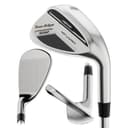
Wilson Harmonized Golf Wedge (56°)

Wilson Harmonized Golf Wedge (56°)

The sensible first sand wedge. It is a brand-name club at an off-brand price, it comes in the lofts a beginner actually needs, and it does the job of getting out of a bunker without asking you to make a tour swing. Buy it, learn on it, replace it in three years if you still care.

Best overall under $100
$50.99 · View on Amazon

$59.9915% off

Price as of November 21, 2026. #ad How we’re funded

2
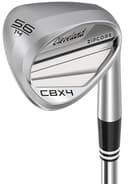
Cleveland CBX4 ZipCore Wedge (58°)

Cleveland CBX4 ZipCore Wedge (58°)

The step-up wedge for a golfer who has stopped topping it. The CBX line is Cleveland's cavity-back wedge — a real tour-brand short game with game-improvement forgiveness built in, which is a genuinely unusual combination. Buy this when your ball-striking has caught up with your ambition.

Most club for the money
$79.99 · View on Amazon

Price as of November 21, 2026. #ad How we’re funded

3
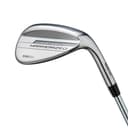
Tour Edge Hot Launch E525 VibRCor Gap Wedge (52°)

Tour Edge Hot Launch E525 VibRCor Gap Wedge (52°)

The single most under-bought club in beginner golf. Package sets jump straight from a pitching wedge to nothing, which leaves a 30-yard hole in your distances. A 52-degree gap wedge fills it, and Tour Edge's version is cheap and genuinely well made.

Budget pick
$39.99 · View on Amazon

Price as of November 21, 2026. #ad How we’re funded

The picks in full

#1Best overall under $100

Wilson Harmonized Golf Wedge (56°)

The sensible first sand wedge. It is a brand-name club at an off-brand price, it comes in the lofts a beginner actually needs, and it does the job of getting out of a bunker without asking you to make a tour swing. Buy it, learn on it, replace it in three years if you still care.

Strengths

  • Costs a fraction of a premium wedge while still being a real Wilson club
  • Fifty-six degrees is the classic all-purpose sand wedge loft for a beginner
  • Sold in matching 52, 56 and 60 degree lofts, so you can build a set gradually

Trade-offs

  • Basic stock grip — most people re-grip it eventually
  • Softer face metal wears faster than a premium wedge if you practice a lot
  • No fitting options: it is one shaft, one length, take it or leave it
What it is56-degree sand wedge, steel shaft
In the boxNot published
HandednessRight (a left-handed version is listed separately)
Shaft / flexNot published
Best forBeginners filling the gap in a package set, Anyone on a tight budget

Beginner note. The listing describes a unisex 56-degree steel-shafted wedge. Fifty-six degrees is the standard sand-wedge loft and the one that most package sets leave out, which is why it is usually a beginner's first add-on club.

Specs read from the product listing, on August 11, 2026. “Not published” means the listing does not state it.

#2Most club for the money

Cleveland CBX4 ZipCore Wedge (58°)

The step-up wedge for a golfer who has stopped topping it. The CBX line is Cleveland's cavity-back wedge — a real tour-brand short game with game-improvement forgiveness built in, which is a genuinely unusual combination. Buy this when your ball-striking has caught up with your ambition.

Strengths

  • Cavity-back construction makes it far more forgiving than a traditional blade wedge
  • Cleveland's wedge grooves are the real thing, so you get actual spin on a clean strike
  • Graphite shaft option is lighter and easier to swing than the usual heavy wedge steel

Trade-offs

  • Overkill for a first-season golfer — you will not feel the difference yet
  • Fifty-eight degrees is a lot of loft to control if your contact is still patchy
  • Meaningfully more expensive than the budget wedges above
What it is58-degree cavity-back wedge, graphite shaft, tour satin finish
In the boxNot published
HandednessRight (a left-handed version is listed separately)
Shaft / flexNot published
Best forSecond-season golfers, Beginners upgrading one club at a time

Beginner note. The listing specifies a 58-degree head with a graphite shaft in a tour satin finish. A cavity-back wedge moves weight to the perimeter of the head — the same forgiveness idea as a game-improvement iron, applied to a club that usually gets none.

Specs read from the product listing, on August 11, 2026. “Not published” means the listing does not state it.

#3Budget pick

Tour Edge Hot Launch E525 VibRCor Gap Wedge (52°)

The single most under-bought club in beginner golf. Package sets jump straight from a pitching wedge to nothing, which leaves a 30-yard hole in your distances. A 52-degree gap wedge fills it, and Tour Edge's version is cheap and genuinely well made.

Strengths

  • Fills the distance gap between a pitching wedge and a sand wedge, which most package sets ignore
  • Priced like a budget club but built by a company that makes proper game-improvement gear
  • Wide, forgiving sole in keeping with the rest of the Hot Launch line

Trade-offs

  • Least glamorous club you will ever buy — nobody is impressed by a gap wedge
  • Only worth it once you can reliably make contact with a full pitching wedge
  • Tour Edge resale is weak compared with the big brands
What it is52-degree gap wedge, True Temper MPH 95 steel shaft
In the boxNot published
HandednessRight
Shaft / flexNot published
Best forBeginners with a package set, Anyone with a big gap in their short irons

Beginner note. The listing names a True Temper MPH 95 steel shaft in the 52-degree head. A 52-degree wedge typically flies about 10 to 15 yards shorter than a modern pitching wedge — precisely the yardage most beginners have no club for.

Specs read from the product listing, on August 11, 2026. “Not published” means the listing does not state it.

Why a wedge is the cheapest shot you can buy

Most equipment money goes to the tee shot, where it buys the least. A wedge is the opposite trade.

Count where your strokes actually go. A beginner round is full of 30- to 70-yard shots — the pitch after a decent drive, the one out of a bunker, the chip from short of the green — and a complete beginner set hands you one club for all of them. Buy one wedge and you have a club for the shot you face most often after the full swing. There is no driver at any price that does that.

The Rules are generous here, too. You are limited to 14 clubsand otherwise free to carry whatever conforming club types you like, so adding a wedge costs you nothing but a slot — and a package set rarely fills more than ten of them. Our how many wedges do you need page is the longer answer; the short one is that your first extra wedge is the best club purchase you will make all season.

Which loft to buy first

This decides your purchase far more than brand does, and it depends on one thing: what your set already contains.

If your set has a pitching wedge and nothing else, buy 56°. That is the standard sand wedge loft, the one that gets you out of bunkers, and the gap between it and your pitching wedge is wide but workable. This is the single most common situation and it is why the Wilson leads this page.

If your set has a pitching wedge and a sand wedge, buy 52°.A 52° gap wedge typically flies about 10 to 15 yards shorter than a modern pitching wedge, which is precisely the yardage most beginners have no club for — the reason so many 60-yard shots get hit with a half-swing that comes off thin. Nobody is impressed by a gap wedge; it still saves more shots than a new driver.

Do not start with 60°.A lob wedge is the hardest club in the bag to hit cleanly, the face is easy to slide under the ball, and the shot it is built for — a high, soft flop over a bunker — is one you should not be attempting yet. Our wedge degrees explained page lays out the whole ladder in plain language, and how to chip a golf ball is the technique that makes any of these clubs work.

The specs that matter under $100, and the ones that do not

Budget wedge listings publish little. Three things on them are worth reading.

1. The loft, obviously — but check it is sold in a family. The Wilson Harmonized is listed in matching 52, 56 and 60 degree lofts, which means you can add the next wedge in a year and have two clubs that feel related rather than two strangers. That matters more than it sounds: matched heads and shafts mean the swing that works for one works for the other.

2. Shaft material and what it does to the feel.Two of these three are steel-shafted, which is traditional for wedges and gives a heavier, more stable club at short-swing speeds. The Cleveland here is graphite, which is lighter and easier to swing — a genuine advantage if the heavy steel in a standard wedge feels like work. Neither is better; they feel different. Our steel versus graphite page covers the trade in full.

3. The head shape: cavity-back or blade.Almost every wedge at this price is a traditional blade-style head. The CBX4 is not — it is cavity-backed, which moves weight to the perimeter and makes an off-center strike behave better. That is the same forgiveness idea as a game-improvement iron, applied to a club that usually gets none, and it is why the CBX4 is the most club on this page for the money even though it is not our top pick.

What to ignore: the finish, and any number about spin. Tour satin, chrome and black oxide are cosmetic choices with a mild glare difference, not performance ones. And no listing in this band publishes a verifiable spin figure, so treat any spin number you see for a budget wedge as marketing. What you can rely on is that a wedge from a specialist like Cleveland has real grooves; what you cannot do is put a figure on it.

One spec that wouldmatter and that none of these publishes: bounce. Bounce is the angle between the leading edge and the lowest point of the sole, and it governs whether a club digs or skids. None of these three listings states it, so we do not quote one — which is itself a reason the wide-soled wedge discussed below is worth the step up for a habitual chunker.

What you give up under $100

Two specific things, and one of them is the reason our overall wedge pick is not on this page.

A sole designed to skid rather than dig.The wedge we rank first overall, the Cleveland Smart Sole Full-Face, is built around an extra-wide sole that is designed to glide along the turf instead of digging in, with grooves across the whole face so a toe-side strike still grips the ball. For a golfer who chunks and thins wedges — which is most beginners — that is the most valuable thing you can buy in a wedge, and it sits above this ceiling. If chunked chips are what is wrecking your cards, read our Smart Sole review and consider spending the extra rather than saving it.

Buying all three wedges at once.The other route we usually recommend to value hunters is a matched three-wedge set, which covers gap, sand and lob in one purchase for roughly the price of one branded wedge. It is also above this line. If you know you want the full short-game ladder, that is the more efficient spend — our wedges for beginners roundup ranks it in context.

Fitting options and grips. At this price you get one shaft, one length and a basic stock grip. The grip is the cheap fix: a fresh one transforms how a wedge feels in wet hands, and our regripping guide and grip size page cover doing it yourself for a few dollars a club.

What you do not give up: the shot itself.A 56° wedge is a 56° wedge. The loft that gets you out of a bunker is identical at $70 and at $200, and nothing about the premium club makes the sand easier. What you are buying above this line is forgiveness on a mis-hit, not the ability to play the shot.

Learning the bunker shot, and the Rule people get wrong

A sand wedge is bought for bunkers, so it is worth knowing what you are allowed to do in one — because most beginners believe the restrictions are tighter than they are.

Rule 12 exists because bunkers are “specially prepared areas intended to test the player’s ability to play a ball from the sand”, with restrictions on touching the sand before the stroke. What you must not do is deliberately touch the sand to test its condition, or touch it with the club right in front of or right behind the ball, in a practice swing, or on the backswing.

What you maydo is more than most players realize. The Rule specifically allows digging in with your feet to take your stance, smoothing the bunker to care for the course, placing your clubs or equipment in the bunker, leaning on a club to stay balanced — and, in its own words, “striking the sand in frustration or anger”. You may also remove loose impediments and movable obstructions first, including any reasonable touching of the sand that happens while you do it. Rule 12.1 adds a detail worth having: a ball inside the bunker’s edge that is sitting on soil or grass without touching any sand is not in the bunker at all.

None of that makes the shot easy, but it does mean you can set your feet properly and play it. Our bunker technique guide is the next thing to read after you buy the club, and rules for beginners covers the rest of what affects a casual round.

Who should spend nothing

If you cannot yet make solid contact with the pitching wedge already in your bag, buy nothing on this page.

A second wedge does not fix a strike problem; it gives you another club to hit thin. The honest sequence is contact first, then clubs: half an hour on chipping technique, or a single lesson if one is worth it to you, will do more for your scores this month than any of these three — as will a box of balls you are not afraid to lose. Come back when you can find the middle of the face with a full pitching wedge and the 56° will feel like a revelation rather than a liability.

For everyone else: the Wilson Harmonized 56° is the pick, the Tour Edge 52° is the clever cheap add if you already own a sand wedge, and the clubs hub covers the rest of the bag.
Frequently asked questions

What is the best golf wedge under $100?

The Wilson Harmonized 56-degree sand wedge. It is a real brand-name club at an off-brand price, 56 degrees is the classic all-purpose sand wedge loft, and it is the loft most complete beginner sets leave out. The Tour Edge 52-degree gap wedge is the budget pick if your set already includes a sand wedge.

What loft wedge should a beginner buy first?

It depends what your set already has. If you own only a pitching wedge, buy 56 degrees - that is the standard sand wedge loft and it gets you out of bunkers. If you already have a sand wedge, buy a 52-degree gap wedge, which flies roughly 10 to 15 yards shorter than a modern pitching wedge and fills the distance most beginners have no club for. Do not start with a 60-degree lob wedge.

Are cheap golf wedges any good?

For the shot itself, yes. A 56-degree wedge has the same loft at $70 as at $200, and nothing about a premium club makes the sand easier. What you buy above $100 is forgiveness on a mis-hit - most importantly a wider sole designed to skid along the turf instead of digging in, which is the feature that rescues the chunked chips beginners actually hit.

How many wedges does a beginner need?

One more than your set came with. The Rules limit you to 14 clubs and let you carry any conforming club types you like, and a package set rarely fills more than ten of those slots - so there is room. Start with the single loft that fills your biggest gap, play it for a season, and add the next one when you can tell which distance you are missing.

Steel or graphite shaft in a wedge?

Steel is traditional and gives a heavier, more stable club at the slow speeds a wedge swing uses. Graphite is lighter and easier to swing, which is a real advantage if standard wedge steel feels like hard work - one of our three picks is graphite for exactly that reason. Neither is better; they feel different, and feel is most of what a wedge gives you.

Can I touch the sand in a bunker before my shot?

Not deliberately, to test it, and not with the club right in front of or behind the ball, in a practice swing or on your backswing. But Rule 12 explicitly allows more than most players think: digging in with your feet to take a stance, smoothing the bunker to care for the course, placing clubs or equipment in the bunker, leaning on a club for balance, and removing loose impediments first - including reasonable touching of the sand while you do.

What is a gap wedge and do I need one?

It is a wedge between your pitching and sand wedge, usually 50 to 52 degrees, and it exists because modern pitching wedges are stronger-lofted than they used to be. If your set jumps from a pitching wedge straight to a sand wedge you have roughly a 30-yard hole in your distances, and a 52-degree wedge fills it. It is the least glamorous club you will ever buy and one of the most useful.

Sources

  • USGA — Rules Hub: Clubs — USGA overview of the 14-club limit and the freedom to carry any conforming club types (accessed July 23, 2026)
  • USGA — Rule 4: The Player's Equipment — The official Rule limiting a player to 14 clubs and governing conforming equipment (accessed July 23, 2026)
  • R&A -- Rule 12: Bunkers (Rules of Golf) — The Rule's own wording. Purpose: bunkers are 'specially prepared areas intended to test the player's ability to play a ball from the sand', with 'restrictions on touching the sand before the stroke is made'. Rule 12.1: a ball lying on soil, grass or other growing or attached natural objects inside the edge of the bunker 'without touching any sand' is NOT in the bunker. Rule 12.2a: before playing, a player may remove loose impediments and movable obstructions, including 'any reasonable touching or movement of the sand' that happens while doing so. Rule 12.2b(1), when touching sand results in penalty -- before making a stroke a player must not 'deliberately touch sand in the bunker with a hand, club, rake or other object to test the condition of the sand', nor touch sand with a club 'in the area right in front of or right behind the ball', 'in making a practice swing' or 'in making the backswing for a stroke'. Rule 12.2b(2), what does NOT incur a penalty -- 'digging in with the feet to take a stance for a practice swing or the stroke', 'smoothing the bunker to care for the course', placing clubs or equipment in the bunker, actions taken under a Rule, 'leaning on a club to rest, stay balanced or prevent a fall', and 'striking the sand in frustration or anger' -- but the general penalty applies if those actions improve the conditions affecting the stroke in breach of Rule 8.1a (accessed October 17, 2026)

Keep reading