Tee & Tempo

The Best Golf Chippers for Beginners

The club that turns a duffed chip into a putt you can make — how chippers work, whether they are legal, and the five worth buying.

By Stephen V.Last updated How we pick

There is a specific shot that ruins more beginner rounds than the slice does. You have missed the green by six yards. The ball is sitting on short grass. All you need is to get it near the hole. And instead you either hit the ground four inches behind it and move it two feet, or you catch it thin and send it screaming across the green into a bunker.

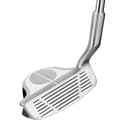
That shot — the chip — is technically the easiest in golf and psychologically the hardest, because you are trying to hit a delicate shot with a club designed to swing hard. A chipper fixes it by removing the technique entirely. It is a club with the loft of a mid-iron on a shaft the length of a putter, so you use your putting stroke and the loft does the rest.

It is not a glamorous club and no professional carries one. It is also, for a certain kind of beginner, the single most useful thing you can put in the bag. Below are five worth buying, plus an honest account of when you should not.

How this is funded:we earn a commission if you buy through our links, at no extra cost to you. It never changes which product we recommend, and we’ll tell you when we’d skip one. Full disclosure.

Quick picks

Ranked on forgiveness, how complete the pick is, and value for a beginner. Select a row to jump to the full write-up. We have not hit these clubs on a launch monitor — here is exactly what we do instead.

#ProductBest forPrice
1
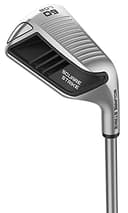
Square Strike Wedge (45°, Right Hand)

Square Strike Wedge (45°, Right Hand)

The best-known chipping club in golf, and it earns it. Heavy sole, no offset to worry about, and a length between a wedge and a putter — which is exactly what stops a beginner decelerating into the ball.

Best overall
$119.00 · View on Amazon

Price as of September 6, 2026. #ad How we’re funded

2
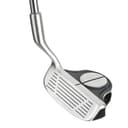
Intech EZ Roll Golf Chipper (35", Right Hand)

Intech EZ Roll Golf Chipper (35", Right Hand)

A putter-length chipper for a third of the Square Strike's price. You swing it like a putter and the loft does the rest, which is the single easiest short-game motion to learn.

Best budget
$46.88 · View on Amazon

Price as of September 6, 2026. #ad How we’re funded

3
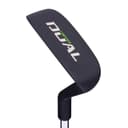
Wilson Dual Black Chipper (35")

Wilson Dual Black Chipper (35")

The known-brand chipper at a value price, and the listing covers both right- and left-handed golfers. If you want a real golf company's name on the club without paying premium money, this is the one.

Best brand-name value
$44.99 · View on Amazon

Price as of September 6, 2026. #ad How we’re funded

4
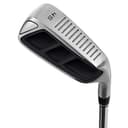
MAZEL Pitching & Chipper Wedge (45°, Right Hand)

MAZEL Pitching & Chipper Wedge (45°, Right Hand)

A middle option: wedge-shaped rather than putter-shaped, so it works from slightly longer grass than a pure chipper. Sold in three lofts, which lets you match it to how much your ball needs to fly.

Best from longer grass
$68.90 · View on Amazon

Price as of September 6, 2026. #ad How we’re funded

5
Intech EZ Roll Left Handed Chipper

Intech EZ Roll Left Handed Chipper

The same putter-length chipper built for left-handed golfers, and stocked rather than special-ordered. Lefties get offered a fraction of the short-game options right-handers do, so a cheap, available one is worth knowing about.

Best left-handed
$29.46 · View on Amazon

Price as of September 6, 2026. #ad How we’re funded

The picks in full

#1Best overall

Square Strike Wedge (45°, Right Hand)

The best-known chipping club in golf, and it earns it. Heavy sole, no offset to worry about, and a length between a wedge and a putter — which is exactly what stops a beginner decelerating into the ball.

Strengths

  • Wide, heavy sole skids across turf instead of digging in
  • Listing states it is legal for tournament play, unlike some chippers
  • Genuinely fixes the chunked and bladed chip for most beginners

Trade-offs

  • The most expensive club on this page by a distance
  • Useless from a bunker or anywhere you need height
What it isChipping wedge, heavy sole, tournament-legal
In the boxNot published
HandednessRight
Shaft / flexNot published
Best forBeginners who chunk chip shots, Anyone avoiding the short game

Beginner note. The listing states this club is legal for tournament play. That matters: a chipper is only conforming if it has one striking face and a normal grip, and some two-faced chippers are not.

Specs read from the product listing, on August 11, 2026. “Not published” means the listing does not state it.

#2Best budget

Intech EZ Roll Golf Chipper (35", Right Hand)

A putter-length chipper for a third of the Square Strike's price. You swing it like a putter and the loft does the rest, which is the single easiest short-game motion to learn.

Strengths

  • Putter-length shaft means you use your putting stroke, not a new one
  • Cheap enough to try the whole idea without commitment
  • Also stocked in a left-handed version

Trade-offs

  • Value-brand finish and a basic grip
  • Only useful from tight lies close to the green
What it isPutter-length chipper, 35 inches
In the boxNot published
HandednessRight (a left-handed version is listed separately)
Shaft / flexNot published
Best forBeginners on a budget, Golfers who putt better than they chip

Beginner note. A chipper is loft on a putter shaft. The ball pops over the fringe and then rolls like a putt, which removes the wrist action that causes most chunked chips.

Specs read from the product listing, on August 11, 2026. “Not published” means the listing does not state it.

#3Best brand-name value

Wilson Dual Black Chipper (35")

The known-brand chipper at a value price, and the listing covers both right- and left-handed golfers. If you want a real golf company's name on the club without paying premium money, this is the one.

Strengths

  • Wilson is a genuine golf manufacturer, not a single-product brand
  • Listing covers both right- and left-handed golfers
  • Priced close to the value chippers rather than the premium ones

Trade-offs

  • Less sole weight than the Square Strike, so it helps a heavy strike less
  • Plain finish and a basic stock grip
What it isChipper, 35 inches
In the boxNot published
HandednessRight & Left (both offered)
Shaft / flexNot published
Best forBeginners who want a known brand, Left-handed golfers

Beginner note. A chipper is one of the fourteen clubs you are allowed to carry, so adding one means leaving something else at home. For most beginners the club it replaces is a long iron they cannot hit anyway.

Specs read from the product listing, on August 11, 2026. “Not published” means the listing does not state it.

#4Best from longer grass

MAZEL Pitching & Chipper Wedge (45°, Right Hand)

A middle option: wedge-shaped rather than putter-shaped, so it works from slightly longer grass than a pure chipper. Sold in three lofts, which lets you match it to how much your ball needs to fly.

Strengths

  • Available in 35, 45 and 55 degree lofts to match different shots
  • Stainless head with enough weight to cut through light rough
  • Sits between a chipper and a wedge in both shape and price

Trade-offs

  • Not a golf brand you will have heard of
  • More loft options means more chance of buying the wrong one
What it isChipping wedge, 45°, stainless steel head
In the boxNot published
HandednessRight
Shaft / flexNot published
Best forCourses with longer fringe grass, Golfers who want loft options

Beginner note. 45 degrees is roughly pitching-wedge loft, which flies the ball about a third of the way and rolls the rest. The 55 degree version flies more and rolls less, for shots over a bunker.

Specs read from the product listing, on August 11, 2026. “Not published” means the listing does not state it.

#5Best left-handed

Intech EZ Roll Left Handed Chipper

The same putter-length chipper built for left-handed golfers, and stocked rather than special-ordered. Lefties get offered a fraction of the short-game options right-handers do, so a cheap, available one is worth knowing about.

Strengths

  • A genuinely stocked left-handed chipper at a value price
  • Putter-length, so it uses a stroke you already own
  • Same design as the right-handed version we rate for budget buyers

Trade-offs

  • Value components throughout, as the price implies
  • Left-handed stock in this category disappears without warning
What it isPutter-length chipper, left-handed
In the boxNot published
HandednessLeft
Shaft / flexNot published
Best forLeft-handed beginners, Lefties tired of limited choice

Beginner note. Short-game clubs are the worst-served category for left-handed golfers. When something you want appears in stock left-handed, that availability is itself part of the buying decision.

Specs read from the product listing, on August 11, 2026. “Not published” means the listing does not state it.

How we picked these chippers

We own none of these and have measured nothing. Every judgment below comes from comparing what the listings publish — loft, length, sole design, handedness, and whether the club is stated as conforming — against the shot a beginner actually needs to hit. Three criteria did the work.

1. Is it legal?

This is the first filter, and it eliminates some clubs sold as chippers. Under the Rules of Golf a club must have only onestriking face. Double-sided chippers — the ones with a face on each side so a left- and right-hander can both use them — are not conforming, and using one in competition means disqualification.

Every club on this page is a single-face design, and the Square Strike listing states explicitly that it is legal for tournament play. If you only ever play casual golf with friends this matters less, but you should know which you are buying.

2. Sole width, because that is what stops the duff

The mechanism that ruins a chip is the leading edge digging into the turf. A wide, heavy sole skids across the ground instead, so a strike an inch behind the ball still gets it forward. This is the same principle behind the wedges on our beginner wedge page, taken further.

3. Length you can use with a putting stroke

A 35-inch chipper is putter length, which is the point: you stand to it like a putt, take the club back with your shoulders, and there is no wrist hinge to get wrong. The Square Strike is slightly longer and heavier, which suits a golfer who wants a bit more reach; the Intech and Wilson are pure putter-length.

How to actually use a chipper

Set up as if you were putting: feet close together, ball in the middle of your stance, hands slightly ahead of the ball, and your weight a little on your front foot. Grip it where you grip a putter.

Then make a putting stroke. Not a chip, not a pitch — a putting stroke, driven by the shoulders with the wrists staying quiet. The ball will pop up a few feet, land on the green and roll out like a long putt. There is no acceleration to time and no divot to take.

The one adjustment that matters is length of stroke. A chipper carries the ball roughly a quarter to a third of the way and rolls the rest, so aim to land it just onto the putting surface and let the roll do the work. Practice three stroke lengths — short, medium, long — and you will cover almost every greenside shot you face.

When a chipper is the wrong club

We would rather tell you this than sell you five of them. A chipper does one shot well and everything else badly.

It is useless from a bunker, because it has neither the loft nor the bounce to get out of sand. It is poor from thick rough, because the shallow head snags in grass. And it cannot hit anything high, so if you need to carry a bunker or stop the ball quickly on a fast green, it will not do it. For those shots you need a proper sand wedge, which is why we recommend one on the wedges page before you buy a chipper.

There is also the 14-club limit. Adding a chipper means removing something, and for most beginners the club to remove is a long iron they cannot hit anyway. Our how many clubs guide covers how the rule works.

Chipper or seventh iron?

There is a free alternative worth trying before you spend anything: take a 7- or 8-iron, choke down on the grip until your hands are near the metal, stand close to the ball, and make a putting stroke. That is the “bump and run,” and it produces almost exactly the same shot a chipper does.

The honest comparison is this. The bump and run is free and uses a club you own, but the narrow sole still digs if you catch it heavy, and the full-length shaft makes the stroke feel awkward. A chipper removes both problems for the price of a fairly cheap club. If the bump and run works for you, save your money. If you have tried it and still duff chips, a chipper is a real solution rather than a gimmick.

Where the strokes actually are

It is worth understanding why this club matters more than its price suggests. The average beginner takes a large share of their strokes from within fifty yards of the green — short chips, duffed chips, the recovery from the duffed chip, and then two or three putts.

Turning a duffed chip into a twenty-foot putt does not just save one stroke. It saves the stroke, the frustration, and the tentative swing you make on the next hole because you are now afraid of chipping. That compounding effect is why we would put a cheap chipper ahead of an expensive driver for a struggling beginner every time. Our chipping guide covers the technique side for when you want to learn the shot properly.
Frequently asked questions

Are golf chippers legal?

Single-faced chippers are legal and conform to the Rules of Golf. Double-sided chippers — with a striking face on both sides so left- and right-handers can share one club — are not conforming, because Rule 4 requires a club to have only one striking face. Every chipper on this page is a single-face design.

How do you use a golf chipper?

Set up as if you were putting: feet close together, ball in the middle of your stance, hands slightly ahead, weight a touch forward. Then make a putting stroke driven by the shoulders with quiet wrists. The ball pops up, lands on the green and rolls out like a long putt. Control distance with the length of the stroke, not by hitting harder.

Is a chipper better than a wedge for beginners?

For a plain chip from short grass beside the green, yes, for most beginners — it removes the wrist action that causes duffed chips. But a chipper cannot play a bunker shot, cannot get out of thick rough, and cannot hit the ball high. You still need a sand wedge for those, so think of a chipper as an addition rather than a replacement.

What loft is a golf chipper?

Most chippers are between 32 and 45 degrees, which is the loft range of a 7-iron through a pitching wedge. Lower lofts fly less and roll more; higher lofts fly a little more and stop sooner. Around 37 degrees is a common all-purpose choice, and some models are sold in several lofts so you can match your course conditions.

Do professional golfers use chippers?

No, and that is not an argument against them. Professionals have the technique and practice time to hit every greenside shot with a wedge, and they need the height and spin a wedge produces. A beginner needs neither of those things — they need to get the ball onto the green reliably, which is exactly what a chipper does.

Sources

Keep reading