What Size Golf Grip Do I Need?
Standard fits most golfers, midsize fixes a specific problem, and jumbo belongs on a putter. Here is how to tell which one you are, and why the size matters less than the age.
How this is funded: we earn a commission if you buy through our links, at no extra cost to you. It never changes which product we recommend, and we’ll tell you when we’d skip one. Full disclosure.
Short answer: standard, unless you have a specific reason not to. Standard is what nearly every club ships with and what nearly every golfer plays happily. Midsize fixes one particular problem — hands that are too active through impact, or hands large enough that a standard handle disappears in them. Jumbo is a putter size, not an iron size.
And the more important answer: the age of your grips matters more than the size. Rubber hardens with age and sunlight whether you play or not, and a hardened grip makes you squeeze, and squeezing costs you both distance and control. If your grips came on a package set two seasons ago, replacing them with the same size will do more for your golf than agonizing over this page.
The three sizes, and who each one is for
Standard
The default. Every club you buy off the shelf has a standard grip on it unless the listing says otherwise, and the most widely used grip in the game — Golf Pride’s Tour Velvet — is a neutral, do-everything rubber in exactly this size. If you have no symptoms and no complaints, this is your answer and you can stop reading.
Midsize
Go up a size for one of three reasons. Large hands: if your fingers wrap right around a standard grip and dig into your palm, a thicker handle will feel more secure. Over-active hands: a thicker grip slows the rotation of the club through impact, which takes the sharp edge off a hook. Grip pressure: if you have ever been told to hold the club more lightly and found you could not, a larger grip gives you something to hold without squeezing.
Midsize is also where the interesting designs live. A hybrid grip with a cotton cord upper section and soft rubber lower keeps working when your glove is soaked, and some are built deliberately thicker in the lower hand only — extra layers of tape under the bottom section, so the lower hand is quieter while the upper hand feels normal. That is a design intent rather than a size label, and it is genuinely clever.
Jumbo and oversized
On full-swing clubs, oversized grips are a niche choice for very large hands or for golfers managing arthritis. On a putter, they are close to standard practice: a thicker, less tapered handle reduces wrist action through the stroke, and quiet wrists are most of what a repeatable putting stroke needs.
Two honest caveats. An oversized putter grip adds weight to the handle, which changes how the putter balances, and if you putt well with your wrists it will feel wrong. It is also worth knowing that putter grips are the one place the Rules allow a non-round cross-section — which is why almost every putter grip has a flat front for your thumbs, and why no legal iron grip does.
How to tell which size you are, without a fitting
There is no substitute for holding both, and most golf shops will let you. If you cannot, two practical checks get you close.
The pressure check. Take your normal grip on a club and then try to hold it as lightly as you can while still controlling it. If light feels impossible — if you have to squeeze to feel safe — either the grips are worn out or they are too thin for your hands. Replace them first and retest; most people find the problem was age, not size.
The ball-flight check. If your consistent miss is a hook, or the face feels like it flips through impact, that is the pattern a thicker grip helps. If your miss is a slice, going thicker is more likely to make it worse, because it slows the hands you are already failing to release. In that case leave the size alone and read the swing guide instead.
One thing to ignore entirely: brand charts that convert your glove size into a grip size. They are a starting point at best, and they are not a substitute for holding a club. Our guide to gripping a golf club covers the technique that most of this is really about.
Material matters as much as size
Three families, and the choice is mostly about weather and hands. Rubber is the default: neutral, durable, cheap in bundles, and slick in genuine rain. Cord or hybrid grips weave cotton cord into the upper section so they keep gripping when wet, at the cost of being abrasive on bare skin — wear a glove. Soft polymer grips are tackier and absorb more shock, which is real relief for arthritic or sore hands and for thin strikes on cold mornings; they wear out faster.
The underrated point in all three: a tacky grip lets you hold the club lightly, and light hands swing faster than tight ones. Grip pressure is one of the very few swing faults you can genuinely fix by buying something.
Three grips worth buying
One standard-size bundle for a full re-grip, one midsize hybrid to try a bigger handle without committing to thirteen, and the putter grip that changes a stroke for the price of a sleeve of balls. All three are picks from our golf grips roundup; prices are live and dated, and specs come from each listing on the date shown.
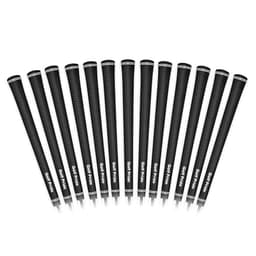
Golf Pride Tour Velvet Golf Grip (Standard, 13 Pack)
The default grip in golf, sold as a full bag's worth. If you own a package set with worn factory grips, this single purchase does more for your golf than any club you could buy for the same money.
- What it is
- Standard rubber, 13-grip bundle
- Who it’s for
- Anyone re-gripping a whole bag and happy with standard size
Price as of October 5, 2026. #ad How we’re funded
Specs read from the product listing, on August 11, 2026.
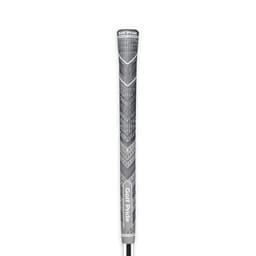
Golf Pride MCC Plus4 Golf Club Grip (Midsize, 1 Pack)
Cord in the upper hand for wet-weather grip, soft rubber in the lower hand for comfort, and a deliberately larger lower section that quiets over-active hands. Sold singly, so you can try one before committing to thirteen.
- What it is
- Midsize cord hybrid, single grip
- Who it’s for
- Golfers with sweaty hands, wet climates or over-active hands
Price as of October 5, 2026. #ad How we’re funded
Specs read from the product listing, on August 11, 2026.
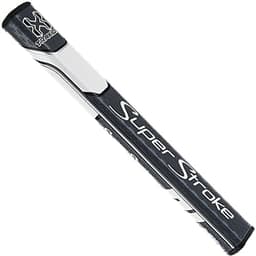
SuperStroke Traxion Pistol GT Tour Putter Grip
A putter grip upgrade is the cheapest stroke change available. A thicker, non-tapered grip quiets the wrists, and quiet wrists are most of what a repeatable putting stroke needs.
- What it is
- Oversized non-tapered putter grip
- Who it’s for
- Wristy putting strokes — try this before buying a new putter
Price as of October 5, 2026. #ad How we’re funded
Specs read from the product listing, on August 11, 2026.
| Pick | What it is | Who it’s for |
|---|---|---|
| Golf Pride Tour Velvet Golf Grip (Standard, 13 Pack) | Standard rubber, 13-grip bundle | Anyone re-gripping a whole bag and happy with standard size |
| Golf Pride MCC Plus4 Golf Club Grip (Midsize, 1 Pack) | Midsize cord hybrid, single grip | Golfers with sweaty hands, wet climates or over-active hands |
| SuperStroke Traxion Pistol GT Tour Putter Grip | Oversized non-tapered putter grip | Wristy putting strokes — try this before buying a new putter |
What re-gripping costs, and whether to do it yourself
A full bag is thirteen grips, which is why they are sold in thirteen-packs. The grips themselves are the cheap part; fitting is the rest. Most golf shops charge a few dollars per club to do it, and doing it yourself needs a vice, double-sided tape and grip solvent — a worthwhile afternoon if you own the tools, a false economy if you do not.
If the budget only stretches to some of the bag, do the clubs you swing hardest: driver, the longer irons, and whichever wedge you use most. And if your set came in a box with basic factory grips — nearly every beginner set does — this is the first upgrade to make, ahead of any new club.
The bottom line
Buy standard unless your hands are large or your hands are busy, in which case go midsize. Put an oversized grip on the putter if your wrists move in the stroke. And whichever size you land on, replace the grips you have if they are more than about two seasons old — it costs less than a driver, it changes every club in the bag, and it is the one upgrade that works on the part of the club you actually touch.
Friendly guidance, not coaching. Tee & Tempo is written by a golf enthusiast, not a teaching pro. Our picks come from published specs and honest buyer-fit reasoning — we compare the numbers so you don’t have to, but we haven’t hit every club ourselves. When in doubt, hitting a few at a shop or a lesson beats any article.
Frequently asked questions
What size golf grip do I need?
Standard, unless you have a reason not to. Standard is what nearly every club ships with and what nearly every golfer plays. Go midsize if your hands are genuinely large, if you have been told to relax your grip pressure, or if your hands are too active through impact — a thicker grip quiets them. Jumbo sizes are a putter thing, where a thicker handle reduces wrist action in the stroke.
How do I know if my golf grips are too small?
The symptom is over-active hands: the clubface rotates too much through impact, which usually shows up as a hook or as wildly inconsistent face control. The other clue is grip pressure — if you find yourself squeezing to feel in control of the club, the handle is probably too thin for your hands. Going up one size is the cheapest thing you can try.
How often should golf grips be replaced?
Rubber hardens with age and sunlight whether you play or not, so a set older than about two seasons is worth replacing regardless of how it looks. If you play a lot, judge by feel instead: when you have to squeeze to stop the club moving in your hands, the grips are done. A slick grip costs you distance, because squeezing tightens your forearms and slows the club.
Is re-gripping your clubs worth it?
It is the cheapest real upgrade in golf. Thirteen new grips cost less than a budget driver and change every club in the bag, and the grip is the only part of the club you actually touch. If you own a package set with worn factory grips, a full re-grip does more for your golf than any single club you could buy for the same money.
Do I need a glove if I change grips?
Not for a plain rubber grip, though most golfers wear one anyway. You do want one with a cord or hybrid grip — the cotton cord that keeps working when wet is abrasive on bare hands. If you are buying both at once, our golf gloves roundup covers what lasts.
Sources
- USGA — Rule 4: The Player's Equipment — The official Rule limiting a player to 14 clubs and governing conforming equipment (accessed July 23, 2026)
- USGA — Rules Hub: Clubs — USGA overview of the 14-club limit and the freedom to carry any conforming club types (accessed July 23, 2026)
Keep reading
Best Golf Grips
Five grips ranked with live prices, from the full-bag default bundle to the soft option for sore hands.
See the gripsHow to Grip a Golf Club
Size is the equipment half of this question. This is the technique half — where the hands go and how hard to hold on.
Read the guideBest Putters for Beginners
Where the oversized grip genuinely belongs, and the putters that already come with one.
See the puttersBest Golf Gloves
The other thing between your hands and the club — what lasts, and why two cheap gloves beat one expensive one.
See the glovesWhen to Upgrade Your Golf Clubs
New grips are the upgrade to do first. This is the guide to the ones that come after.
Read the guideThe Easiest Golf Clubs to Hit
If grips are not the problem: the four design features that make any club more forgiving.
Read the guide