Tee & Tempo

The Best Golf Shoes for Walking the Course

Eighteen holes on foot is four to five miles over uneven ground, carrying or pushing forty pounds. That is a hiking problem with a golf swing attached, and it changes which shoe you should buy.

By Stephen V.Last updated How we pick

Buy the Skechers Go Golf Torque Pro. It is the most comfortable shoe most beginners will ever put on, it is waterproof, and it has real spikes - which is the combination a walker needs and almost nobody sells in one shoe. If your feet want more cushioning than grip, the PUMA Fusion Grip 6 EVO is built around exactly that trade. If you want a shoe you can also wear off the course, the FootJoy FJ Flex is the spikeless pick.

Here is the reframe that makes this page useful. A round of golf walked is somewhere between four and five miles, over ground that tilts in every direction, for four hours, while you carry a bag or lean on a cart. Then, roughly seventy times, you stop and make a violent rotational movement and need your feet not to slide. Most golf shoe recommendations optimise entirely for that second part. For a beginner who walks - and most beginners walk, because a cart costs money every single round - the first part is where the round is won or lost.

So these are ranked on walking comfort over four hours first, waterproofing second, and swing grip third. That order is deliberate and it is the opposite of a tour-focused review. If your feet hurt by the twelfth, your score falls apart for reasons that have nothing to do with traction. Prices are live and carry the date they were checked, and every spec comes from the product’s own listing - our methodology explains what we do and do not claim.

How this is funded: we earn a commission if you buy through our links, at no extra cost to you. It never changes which product we recommend, and we’ll tell you when we’d skip one. Full disclosure.

Quick picks

Ranked on forgiveness, how complete the pick is, and value for a beginner. Select a row to jump to the full write-up. We have not hit these clubs on a launch monitor — here is exactly what we do instead.

#ProductBest forPrice
1
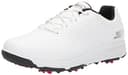
Skechers Go Golf Torque Pro

Skechers Go Golf Torque Pro

Famously the most comfortable golf shoe most beginners will try, and waterproof. If your feet hurt after nine holes, that ends your round faster than any swing flaw — comfort first.

Best overall for walking 18
$97.99 · View on Amazon

Price as of October 10, 2026. #ad How we’re funded

2
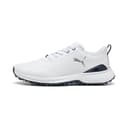
PUMA Fusion Grip 6 EVO

PUMA Fusion Grip 6 EVO

A comfortable, well-cushioned spikeless shoe with modern styling. PUMA leans into cushioning, which suits a beginner who is walking a lot and standing around on the range.

Best cushioning
$90.00 · View on Amazon

Price as of October 10, 2026. #ad How we’re funded

3
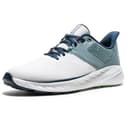
FootJoy FJ Flex

FootJoy FJ Flex

FootJoy is the most-worn shoe brand on tour, and the FJ Flex is its comfortable, athletic, spikeless entry model. A safe, credible choice you can also wear to the clubhouse.

Best spikeless walker
$110.00 · View on Amazon

Price as of October 10, 2026. #ad How we’re funded

4
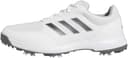
adidas Tech Response 3.0

adidas Tech Response 3.0

The value spiked shoe from a major brand: proper cleats for grip, a supportive build and a price that regularly dips below the field. The classic 'first real golf shoe' choice.

Best value with full grip
$59.85 · View on Amazon

$70.0015% off

Price as of October 10, 2026. #ad How we’re funded

5
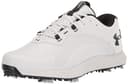
Under Armour Charged Draw 2 Spikeless

Under Armour Charged Draw 2 Spikeless

A supportive, athletic spikeless shoe with Under Armour's Charged cushioning. A solid all-rounder for the beginner who wants a firmer, more athletic feel than a soft comfort shoe.

Best firm, athletic feel
$81.95 · View on Amazon

Price as of October 10, 2026. #ad How we’re funded

The picks in full

#1Best overall for walking 18

Skechers Go Golf Torque Pro

Famously the most comfortable golf shoe most beginners will try, and waterproof. If your feet hurt after nine holes, that ends your round faster than any swing flaw — comfort first.

Strengths

  • Sneaker-level comfort straight out of the box
  • Waterproof for wet mornings and dewy grass
  • Soft spikes give real grip on the swing

Trade-offs

  • Softer build is less rigidly supportive than a firmer shoe
  • Styling is casual rather than classic
What it isWaterproof spiked comfort shoe
In the boxNot published
HandednessNot published
Shaft / flexNot published
Best forComfort-first beginners, Walkers

Beginner note. 'Soft spikes' are the small plastic cleats on the sole that grip during the swing — replaceable, and standard on beginner-friendly shoes.

Specs read from the product listing, on August 28, 2026. “Not published” means the listing does not state it.

#2Best cushioning

PUMA Fusion Grip 6 EVO

A comfortable, well-cushioned spikeless shoe with modern styling. PUMA leans into cushioning, which suits a beginner who is walking a lot and standing around on the range.

Strengths

  • Plush cushioning for long days on your feet
  • Spikeless versatility and clean styling
  • Comfortable straight out of the box

Trade-offs

  • Cushioned sole is slightly less stable than a firm platform
  • Mid-range price rather than budget
What it isCushioned spikeless golf shoe
In the boxNot published
HandednessNot published
Shaft / flexNot published
Best forComfort seekers, Range regulars

Beginner note. More cushioning is more comfortable to walk in but slightly less stable under a hard swing — a reasonable trade for a beginner who prioritizes comfort.

Specs read from the product listing, on July 23, 2026. “Not published” means the listing does not state it.

#3Best spikeless walker

FootJoy FJ Flex

FootJoy is the most-worn shoe brand on tour, and the FJ Flex is its comfortable, athletic, spikeless entry model. A safe, credible choice you can also wear to the clubhouse.

Strengths

  • FootJoy's shoe-fitting pedigree and support
  • Spikeless — versatile enough to wear off the course
  • Athletic, comfortable fit for walking

Trade-offs

  • Spikeless grip is a touch less aggressive than cleats
  • Mesh upper is water-resistant, not waterproof — no waterproof warranty
What it isSpikeless athletic golf shoe
In the boxNot published
HandednessNot published
Shaft / flexNot published
Best forBeginners wanting versatility, Walkers

Beginner note. Spikeless shoes use a molded, dimpled sole instead of removable cleats — a little less grip, but far more comfortable to walk in and wearable off the course.

Specs read from the product listing, on August 28, 2026. “Not published” means the listing does not state it.

#4Best value with full grip

adidas Tech Response 3.0

The value spiked shoe from a major brand: proper cleats for grip, a supportive build and a price that regularly dips below the field. The classic 'first real golf shoe' choice.

Strengths

  • Spiked traction for a fuller swing without slipping
  • adidas build quality and support
  • Frequently on offer below its list price

Trade-offs

  • Spikes need occasional replacing over time
  • Less street-wearable than a spikeless shoe
What it isSpiked value golf shoe
In the boxNot published
HandednessNot published
Shaft / flexNot published
Best forBeginners wanting maximum grip, Value shoppers

Beginner note. Spiked shoes grip more aggressively than spikeless ones, which helps a bigger, faster swing — the trade-off is you cannot wear them everywhere off the course.

Specs read from the product listing, on July 23, 2026. “Not published” means the listing does not state it.

#5Best firm, athletic feel

Under Armour Charged Draw 2 Spikeless

A supportive, athletic spikeless shoe with Under Armour's Charged cushioning. A solid all-rounder for the beginner who wants a firmer, more athletic feel than a soft comfort shoe.

Strengths

  • Responsive Charged cushioning underfoot
  • Supportive, athletic build
  • Spikeless versatility

Trade-offs

  • Firmer feel is less pillowy than a Skechers or PUMA
  • Grip is spikeless-moderate, not full cleat
What it isAthletic spikeless golf shoe
In the boxNot published
HandednessNot published
Shaft / flexNot published
Best forAthletic beginners, Firmer-feel preferers

Beginner note. 'Charged' is Under Armour's responsive foam — firmer and more athletic than plush comfort foams, a matter of preference rather than better or worse.

Specs read from the product listing, on July 23, 2026. “Not published” means the listing does not state it.

The four things that decide a walking shoe

Cushioning, and where it is.Underfoot foam is what your knees and lower back are actually buying. Over four miles the difference between a cushioned midsole and a thin, stable one is not subtle - it is the difference between finishing comfortable and finishing sore. PUMA leans hardest into this of any brand here, which is why the Fusion Grip sits where it does; Under Armour’s Charged foam is the firmer, more athletic version of the same idea, and which you prefer is genuinely preference rather than better or worse.

Waterproofing. This is the most underrated spec for a walker and the reason the Skechers is the top pick. Morning dew alone will soak unprotected shoes through the first three holes, and then you walk the remaining four miles in wet socks. Wet feet are how blisters happen. A waterproof shoe is not a rain-day luxury; on any course before about ten in the morning it is the baseline.

Weight. Every ounce on your foot is lifted several thousand times across a round, which is why a shoe that feels fine in a shop can feel heavy by the back nine. Lighter is generally better for walking, with one caveat: weight often comes off by removing cushioning or waterproofing, and both of those matter more. Do not chase the lightest shoe, chase the lightest shoe that still has the other two.

Grip, and how much you actually need. Spiked shoes grip harder than spikeless ones, and for a fast, aggressive swing that matters. For a beginner swinging at a moderate speed on dry ground, a good spikeless sole is enough - and it is far more comfortable to walk four miles in, because the sole flexes like a shoe rather than resisting like a platform. Our spiked vs spikeless comparison goes through the full trade.

Spiked or spikeless, for a walker specifically

The honest answer depends on your course and your season, and it splits cleanly.

Walk a hilly or wet course, buy spiked. Soft spikes are the small replaceable plastic cleats on the sole, and on a slope in the morning they are the difference between walking down a wet bank and sliding down it. This is a safety point as much as a swing point. The Skechers Torque Pro and the adidas Tech Response 3.0 are the spiked picks here, and the adidas is the value route into a proper cleated shoe.

Walk a flat, dry course, buy spikeless. A molded dimpled sole is lighter, flexes more naturally, and you can drive home in it and wear it to lunch. The FootJoy FJ Flex is the credible version - FootJoy is the most-worn shoe brand on tour and the FJ Flex is its comfortable athletic entry model.

One thing that catches people out: spiked shoes wear their cleats, and worn cleats grip like a bald tyre. They unscrew and replace for a few dollars, and if you walk every week you will be doing it roughly once a season. Budget for it; it is cheaper than a new pair and most golfers never realise it is an option.

Sizing a shoe you will walk four miles in

Golf shoe sizing deserves a paragraph because the standard shoe-shop advice is wrong for golf. Feet swell over four hours of walking, so a shoe fitted tight in a cool shop in the morning is a shoe that pinches by the fifteenth hole.

  • Try them at the end of the day, when your feet are already slightly swollen, and wear the socks you will actually play in.
  • Leave a thumb-width at the toe. Walking downhill slides your foot forward and that gap is what stops your toenails taking the impact.
  • The heel must not lift.Heel slip is the single most reliable cause of blisters, and it does not “break in” - it just wears a hole in you first.
  • Check the width honestly. If your feet are wide, a narrow shoe in a bigger length is not a fix. Several brands list wider options and it is worth searching for them specifically.

And buy two pairs of proper golf socks while you are there. Cushioned, moisture-wicking socks cost very little and do a meaningful share of the work people credit to the shoe. Cotton socks in a waterproof shoe will still give you blisters, because the water they hold is your own.

What else changes when you walk

The shoe is one of three decisions a walking golfer makes, and the other two are bigger.

The bag. A lightweight stand bag with a dual strap is built for walking; a cart bag is not, and carrying one is how people decide they hate walking. Our golf bag roundup leads with the carry bags, and stand bag vs cart bag covers the choice.

Whether to carry at all. A push cart takes the entire weight off your shoulder for well under a hundred dollars at the budget end, and it changes walking from an endurance event into a stroll. If you are buying one thing to make walking sustainable, buy that before you buy better shoes - the push cart roundup is here, and which bag fits one is here.

It is also worth knowing that walking is the normal way to play, not the austere one. The National Golf Foundation’s participation work puts the game at 48.1 million participants with a record three million-plus beginners, and the overwhelming majority of those people are not buying a cart for every round. If you want the fuller case, walking vs riding golf weighs the time, the cost and the pace-of-play side - the Rules themselves expect prompt play, and walkers keep up better than most people assume.
Frequently asked questions

What are the best golf shoes for walking the course?

The Skechers Go Golf Torque Pro is our pick: it is one of the most comfortable golf shoes available, it is waterproof, and it has replaceable soft spikes. That combination - comfort plus waterproofing plus real grip - is what a walker needs, and most shoes give you two of the three rather than all three.

How far do you walk in 18 holes of golf?

Roughly four to five miles for most courses, over uneven and often sloping ground, spread across about four hours. The distance varies with how spread out the course is and how far offline you hit it. It is worth treating as a hike rather than a stroll when you choose footwear.

Are spikeless golf shoes good for walking?

Yes, and often better than spiked ones for comfort. A molded dimpled sole flexes more naturally than a cleated platform, which makes four miles easier on your feet, and you can wear the shoe off the course. The trade is grip: on a wet or hilly course, replaceable soft spikes are safer and more secure.

Do golf shoes need to be waterproof if I walk?

It is the spec we would give up last. Morning dew alone soaks unprotected shoes within a few holes, and then you walk the remaining four miles in wet socks, which is how blisters form. Waterproofing is not a rain-day extra for a walker - on most courses before mid-morning it is the baseline requirement.

What size golf shoes should I buy for walking?

Try them at the end of the day with the socks you will play in, because feet swell over four hours. Leave about a thumb-width of space at the toe so walking downhill does not jam your toes forward, and make sure the heel does not lift - heel slip is the most reliable cause of blisters and it does not break in.

How long do golf shoe spikes last if you walk every round?

Expect to replace soft spikes roughly once a season if you walk weekly. They unscrew with a simple wrench and cost a few dollars a set, and worn cleats grip about as well as a bald tyre - so it is worth checking them rather than concluding the shoes are finished.

Should I buy better shoes or a push cart first?

A push cart, if walking comfort is the goal. Taking forty pounds off your shoulder changes walking far more than any shoe does, and budget push carts cost less than a decent pair of golf shoes. Buy the cart, walk a few rounds, then upgrade the shoes with a clearer idea of what your feet actually need.

Sources

Keep reading