Do You Need Golf Shoes?
Not for your first round, and yes before your tenth. What courses actually require, what the sole does for your swing, and when trainers stop being good enough.
How this is funded: we earn a commission if you buy through our links, at no extra cost to you. It never changes which product we recommend, and we’ll tell you when we’d skip one. Full disclosure.
The honest answer: no, not for your first round — and yes, before you have played ten. Almost no public course requires golf shoes. What courses prohibit is metal spikes, and no shoe sold today has those by default. Turn up in flat-soled trainers, play your first round, and spend the money on balls and a lesson instead.
What changes by round ten is not the rules, it is your swing and your feet. A golf shoe does two things no trainer does: it holds the ground while you rotate against it, and it keeps your feet dry across four hours of wet grass. When you are swinging hard enough to slip, or playing early enough to get soaked, the purchase makes sense. Our comfort-first pick when you get there is the Skechers Go Golf Torque Pro, and the three options worth considering are in the table below.
What courses actually require
Dress codes in golf are mostly about shirts, not shoes. The near-universal shoe rule is a ban on metal spikes, which chew up greens — and since the industry moved to small plastic cleats, usually called soft spikes, that rule affects almost nobody buying new shoes. The Rules of Golf themselves say nothing about footwear; what they ask for is care of the course and consideration for other players, which is the principle the spike ban comes from.
Private clubs and resort courses may ask for “golf shoes,” and that is worth a phone call if you have a booking somewhere smart. For municipal and public golf — where almost every beginner starts — trainers raise no eyebrows at all. Our guide to what to wear golfing covers the collar rule and the rest of the outfit, which is where dress codes really do bite.
What a golf shoe does that a trainer does not
1. It holds the ground while you turn
A golf swing is a rotation against the ground. Your feet stay still while your hips and shoulders turn, and the sole has to resist that twist. Running shoes are built for forward motion with soft, rounded soles, so they roll slightly under rotation — on a damp downhill lie, that becomes an actual slip.
Spiked shoes grip most aggressively, which helps a bigger, faster swing. Spikeless soles use moulded rubber lugs for moderate grip and are perfectly adequate for a developing swing. Flat trainers give the least, and the amount you miss it is proportional to how hard you are swinging. The full trade-off is in spiked vs spikeless golf shoes.
2. It keeps your feet dry
This is the one beginners underrate and regret. Morning tee times mean dew, and dew soaks through mesh trainers within three or four holes. Wet feet for the remaining fourteen holes is genuinely miserable, and it is the single most common reason a new golfer gives up on walking and starts riding.
Waterproofing is a published, checkable feature rather than a vague claim, and it is the spec we would prioritize second after comfort. If you only play dry summer afternoons, you can skip it. If you ever tee off before nine in the morning, do not.
3. It is built for standing and walking, not running
A round of golf walked is a long walk — further than most people cover in an ordinary day, carried out slowly and with a bag. Golf shoes are built for that profile: support for standing still over the ball, cushioning for the miles between. Whether you walk at all is worth deciding before you buy, and our guide to choosing a golf bag starts from the same question.
When trainers are genuinely fine
Three situations, and they cover a lot of beginners.
Your first few rounds. You are not yet swinging fast enough for grip to be the limiting factor, and you do not yet know whether golf will stick. Flat-soled trainers or court shoes — which have flatter, firmer soles than runners — are a perfectly good answer.
The driving range and the practice green. You are standing on a mat or a flat green in both cases. Nobody needs golf shoes for a range session, and no range will ask.
Par-three and pitch-and-putt courses. Short course, short clubs, controlled swings, usually dry. If this is where you are learning — and it is a good place to learn — shoes are not the thing to spend on.
What to look for when you are ready
In this order, because the order is where people go wrong.
Comfort first, and we mean it literally. If your feet hurt after nine holes, that ends your round faster than any swing flaw. Buy the shoe that feels like a trainer out of the box; the break-in period is a myth you do not have to accept.
Waterproofing second, for the reasons above. Sole type third— spikeless if you want to wear them off the course, spiked if your swing is fast or your course is hilly. Brand last. A golf shoe has no swing to flatter, so the famous name buys you styling and resale, not performance.
One sizing note: golf shoes are worn for four hours of walking, so buy for your foot at the end of the day rather than the start. Replaceable soft spikes are a bonus on a spiked shoe — they wear down over a couple of seasons and cost very little to swap.
Three shoes worth buying when you are ready
One per route: the comfort default, the value spiked shoe, and the athletic spikeless option. All three are picks from our full golf shoes roundup. Prices are live and dated; specs come from each listing, read on the date shown in the row.
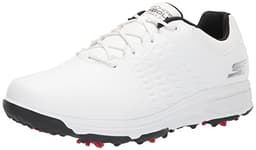
Skechers Go Golf Torque Pro
Famously the most comfortable golf shoe most beginners will try, and waterproof. If your feet hurt after nine holes, that ends your round faster than any swing flaw — comfort first.
- What it is
- Waterproof, soft spikes
- Who it’s for
- Beginners who want comfort and dry feet above everything
Price as of October 5, 2026. #ad How we’re funded
Specs read from the product listing, on August 28, 2026.
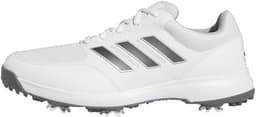
adidas Tech Response 3.0
The value spiked shoe from a major brand: proper cleats for grip, a supportive build and a price that regularly dips below the field. The classic 'first real golf shoe' choice.
- What it is
- Spiked, value price
- Who it’s for
- Golfers wanting maximum grip from a major brand at a value price
Specs read from the product listing, on July 23, 2026.
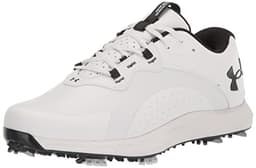
Under Armour Charged Draw 2 Spikeless
A supportive, athletic spikeless shoe with Under Armour's Charged cushioning. A solid all-rounder for the beginner who wants a firmer, more athletic feel than a soft comfort shoe.
- What it is
- Spikeless, athletic cushioning
- Who it’s for
- Anyone who prefers a firmer, athletic feel and wants to wear them off the course
Price as of October 5, 2026. #ad How we’re funded
Specs read from the product listing, on July 23, 2026.
| Pick | What it is | Who it’s for |
|---|---|---|
| Skechers Go Golf Torque Pro | Waterproof, soft spikes | Beginners who want comfort and dry feet above everything |
| adidas Tech Response 3.0 | Spiked, value price | Golfers wanting maximum grip from a major brand at a value price |
| Under Armour Charged Draw 2 Spikeless | Spikeless, athletic cushioning | Anyone who prefers a firmer, athletic feel and wants to wear them off the course |
The bottom line
You do not need golf shoes to start playing golf, and anyone telling a beginner otherwise is selling shoes. Play your first rounds in flat trainers. Buy golf shoes when one of three things happens: your feet are wet, your feet hurt, or you slip during a swing. At that point buy for comfort first and waterproofing second, spend less than you expect to, and put the difference toward a lesson— which will do more for your score than any shoe ever has.
Friendly guidance, not coaching. Tee & Tempo is written by a golf enthusiast, not a teaching pro. Our picks come from published specs and honest buyer-fit reasoning — we compare the numbers so you don’t have to, but we haven’t hit every club ourselves. When in doubt, hitting a few at a shop or a lesson beats any article.
Frequently asked questions
Do you need golf shoes to play golf?
No, not to play. Almost no public course requires golf shoes; what they prohibit is metal spikes, which no shoe sold today has by default. Flat-soled trainers are fine for a first round. What golf shoes give you is grip during the swing and dry feet on wet grass, and both start to matter once you play regularly.
Can I wear running shoes to play golf?
For a first round, yes, with two caveats. Running shoes have soft, rounded soles built for forward motion, so they roll slightly during a golf swing — you will slip on a damp downhill lie. They also soak through within a few holes of morning dew. Flat-soled trainers or court shoes are better than runners if you have a choice.
Are spikeless golf shoes good enough for a beginner?
For most beginners, yes, and they are the more useful purchase because you can wear them off the course. Spiked shoes grip more aggressively, which helps a bigger, faster swing; spikeless grip is moderate rather than full cleat. If your swing is still developing and your golf is mostly dry summer rounds, spikeless is the sensible default.
What should I look for in my first pair of golf shoes?
Comfort over everything, then waterproofing, then sole type. If your feet hurt after nine holes your round is over regardless of how good the shoe is at anything else, and most beginners walk further on a golf course than they do in a normal day. Waterproofing matters because tee times in the morning mean wet grass.
Are metal spikes allowed on golf courses?
Most courses ban them, and the shoes you can buy today do not have them — the standard is small plastic cleats, usually called soft spikes, which are replaceable. If you inherit an old pair of golf shoes with metal spikes, check with the course before you turn up in them.
Sources
- USGA — Expected Standards of Player Conduct (Rule 1.2) — The Rules' expectation of integrity, consideration and prompt play (accessed July 23, 2026)
- National Golf Foundation — Golf Participation in the U.S. (2025) — 48.1M total participants, a record 3M+ beginners (≈75% adults, 35% female) (accessed July 23, 2026)
Keep reading
Best Golf Shoes for Beginners
Six shoes ranked on comfort first, with live prices — the roundup this guide feeds into.
See the shoesSpiked vs Spikeless Golf Shoes
The sole decision in full: how much grip each gives, and which one you can wear to the pub afterwards.
Read the comparisonWhat to Wear Golfing
The rest of the first-round outfit — what is genuinely required and what is only convention.
Read the guideBest Women's Golf Shoes
Five women's shoes ranked, including the waterproof spiked pair and the spikeless everyday option.
See the shoesSkechers Go Golf Torque Pro Review
Our comfort-first pick in full: what waterproof means on this shoe, and who should buy something firmer.
Read the reviewUnder Armour vs adidas Golf Polo
The shirt half of the same question, with the fabric and dress-code differences that actually matter.
Compare the polos