Walking vs Riding Golf
One is cheaper, keeps you in your round and is how the game was built. The other saves your legs and your afternoon. Neither answer is virtuous - here is how to pick for your round.
How this is funded: we earn a commission if you buy through our links, at no extra cost to you. It never changes which product we recommend, and we’ll tell you when we’d skip one. Full disclosure.
Walk if you can, and push rather than carry. Walking costs nothing every round, keeps you in your own rhythm, and is not the pace problem it is assumed to be. Ride when the course requires it, when the heat makes four miles a bad idea, or when a physical limitation means riding is the difference between playing and not playing.
That is the recommendation, and it comes with no moral weight attached. Golf has a tiresome habit of treating walking as the authentic choice and riding as the soft one. It is a logistics decision, it changes round to round, and most golfers who play regularly do both.
1. The cost, which is the decision for most beginners
A cart is charged per round, often per player, and it recurs forever. A push cart is charged once. That is the whole financial argument and it is not close over a season: the budget end of the push cart market sits under a hundred dollars, and a cart fee a couple of times a month passes that inside one summer.
This matters more for a beginner than for anybody else, because the cart fee lands on top of the green fee at exactly the point where you are least sure golf is going to stick. Walking lowers the cost of finding out. If the question in your head is “can I afford to play twice a month”, walking is frequently what makes the answer yes - and playing twice a month is worth far more to your golf than riding is.
If you want the wider picture of what getting started actually costs, how much golf clubs cost covers the equipment side of the same budget.
2. Pace of play: the assumption that is mostly wrong
Nearly everybody believes riding is faster. For a group it often is not, and the reason is geometric rather than controversial.
A riding cart carries two players, and two players’ balls are rarely in the same place. So the cart drives to the first ball, one player hits while the other sits, then it drives across to the second ball, then back toward the green. On a hole where two drives have gone opposite ways, a cart can cover noticeably more ground than either player would have walked - and one player is waiting for the whole of it. Walkers separate, each goes to their own ball, and both are getting ready to play at the same time.
Carts win decisively in one scenario: a long course with substantial distances between a green and the next tee, which is common on resort layouts built around real estate. There, walking genuinely adds time. They also win when cart-path-only rules are not in force; when they are, riders park on the path and walk to the ball with a club or three, which gives away most of the advantage.
The bigger pace lever is not your transport at all. The USGA’s own pace guidance is about habits - being ready to play when it is your turn, taking something like twenty seconds over the shot, and playing “ready golf” where it is safe to do so rather than strictly in turn. A walking group with those habits finishes ahead of a riding group without them, every time.
3. What walking actually asks of you
Four to five miles, four hours, uneven ground, plus whatever your bag weighs. That is the honest description, and it is more than most people picture when they imagine a gentle stroll around a golf course. Add the fact that a beginner hits the ball sideways more than most, and you walk further than the scorecard yardage suggests.
Two things make it comfortable rather than gruelling, and neither is fitness.
Take the weight off your shoulder. A carry bag on one shoulder for four hours is what makes most beginners decide they hate walking - not the distance. A push cart removes that completely, and even the cheapest one does the job. This is the single highest-value purchase in this entire discussion.
Wear shoes built for distance. Waterproofing, because dew will soak ordinary shoes within three holes and wet socks cause blisters; and cushioning, because four miles tells you very quickly what your midsole is made of. Best golf shoes for walking goes through both.
The kit that makes walking the easy choice
Three picks, in the order we would buy them: a cheap cart to find out whether you like walking with one, the cart to buy if you already know you do, and a light stand bag for the rounds you carry. All three are from our existing push cart and golf bag roundups. Prices are live and carry the date they were checked.
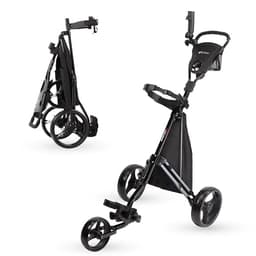
Precise Cruiser 3-Wheel Golf Push Cart
Under a hundred dollars, and it does the one job that matters: it takes forty pounds off your shoulder. Buy it to find out whether you like walking with a cart, then upgrade if you do.
- What it is
- Budget 3-wheel folding push cart
- Who it’s for
- Finding out whether you like walking with a cart, for the least money
Price as of October 10, 2026. #ad How we’re funded
Specs read from the product listing, on August 11, 2026.
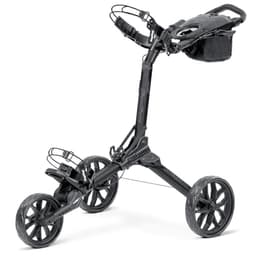
Bag Boy Nitron Golf Push Cart
The one to buy if you will use it every week. The Nitron's gas-strut opening means the cart unfolds itself in one motion, which sounds like a gimmick until you have wrestled a cheap cart in a parking lot in the rain.
- What it is
- 3-wheel push cart with air-assisted one-motion opening
- Who it’s for
- Golfers who already know they will walk every week
Price as of October 10, 2026. #ad How we’re funded
Specs read from the product listing, on August 11, 2026.
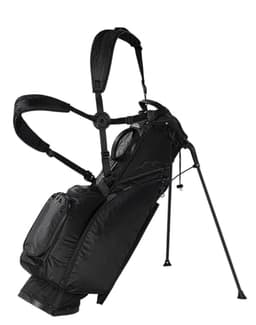
Sun Mountain Eclipse 2.5 Stand Bag
The best all-round beginner bag: genuinely light to carry, with a dual strap and stand legs so you can walk nine holes comfortably. Sun Mountain effectively invented the modern stand bag.
- What it is
- Lightweight stand (carry) bag with dual strap
- Who it’s for
- The rounds you carry - nine holes, or a course where carts are out
Price as of October 10, 2026. #ad How we’re funded
Specs read from the product listing, on July 23, 2026.
| Pick | What it is | Who it’s for |
|---|---|---|
| Precise Cruiser 3-Wheel Golf Push Cart | Budget 3-wheel folding push cart | Finding out whether you like walking with a cart, for the least money |
| Bag Boy Nitron Golf Push Cart | 3-wheel push cart with air-assisted one-motion opening | Golfers who already know they will walk every week |
| Sun Mountain Eclipse 2.5 Stand Bag | Lightweight stand (carry) bag with dual strap | The rounds you carry - nine holes, or a course where carts are out |
4. When riding is simply the right answer
There are four situations where riding is not a compromise, and treating them as one is how people get hurt or stop playing.
Heat. Four to five miles in serious heat and humidity is a genuine risk, not a test of character. A cart with shade and somewhere to put water is the sensible call.
Physical limitations. Knees, hips, backs, recovery from surgery, age. The choice here is not walking versus riding, it is riding versus not playing, and golf is a game people can play for sixty years precisely because riding exists.
The course requires it. Some do, at some times. Check when you book rather than arriving with a push cart you cannot use.
Time pressure. On a long layout with big green-to-tee transfers, a cart can be the difference between finishing eighteen and finishing thirteen before dark.
5. So which should you do?
Default to walking with a push cart. Treat riding as a tool you use when the conditions, the course or your body call for it, rather than as a default or a failure.
It helps to know this is the ordinary way to play, not an austere one. The National Golf Foundation puts U.S. participation at 48.1 million people with a record three million-plus beginners, and that growth is not happening because everybody is buying a cart for every round. Walking is the norm at most municipal courses, and nobody on the first tee will think anything of it.
If you are still assembling the kit for your first walked round, what to put in a golf bag is the checklist, and how long a round of golf takes sets expectations for the four hours itself.
Frequently asked questions
Should a beginner walk or ride in golf?
Walk, if your legs and the course allow it - and buy a push cart rather than carrying. Walking is cheaper every single round, keeps you closer to your own ball and your own rhythm, and does not slow you down the way most people assume. Ride when the course requires it, when the heat makes four miles unwise, or when a physical limitation makes walking the thing that stops you playing.
How far do you walk playing 18 holes?
Roughly four to five miles on most courses, over uneven ground, across about four hours - and further if you hit it offline, which beginners do. Nine holes is about half that. It is worth treating as a proper walk when you decide what shoes to wear and whether to carry your bag.
Is walking or riding faster in golf?
They are closer than people expect, and walking is often quicker for a group. A riding cart holds two players whose balls are usually in different places, so the cart zigzags and one player waits while the other plays. Walkers go straight to their own ball. Carts win clearly on very long courses with big gaps between greens and tees.
Does walking make you play better golf?
We are not going to claim a stroke figure we cannot measure. What is reasonable to say is that walking keeps you moving at a steady rhythm and brings you to your ball on foot, which gives you time to read the lie and pick a club. Riding is less tiring over four hours, and fatigue late in a round costs strokes too. Which effect dominates depends on your fitness.
Is golf good exercise if you walk?
Walking four to five miles over uneven ground while carrying or pushing a bag is meaningful physical activity by any reasonable standard. We are not in a position to publish calorie or health figures - we do not measure them - but the distance and duration are facts you can check with any step counter on your first walked round.
Do golf courses let you walk?
Most do, but not all, and it is worth checking before you book. Some courses require carts at certain times, some have cart-path-only rules after rain, and a few resort layouts are built with distances between holes that make walking impractical. A phone call to the pro shop answers it in thirty seconds.
Is a push cart better than carrying?
For most beginners, yes. A push cart takes the full weight of the bag off your shoulder, which is the single biggest physical cost of walking eighteen holes, and budget models cost less than a decent pair of golf shoes. Carrying is lighter to transport and quicker to set up, so a light stand bag still makes sense for nine holes.
Sources
- National Golf Foundation — Golf Participation in the U.S. (2025) — 48.1M total participants, a record 3M+ beginners (≈75% adults, 35% female) (accessed July 23, 2026)
- USGA — Tips and Suggestions for Improving Pace of Play — USGA practical pace-of-play guidance, including the ~20-second shot suggestion (accessed July 23, 2026)
- USGA — Order of Play / Ready Golf — The Rules encourage playing 'ready golf' when it is safe, to improve pace of play (accessed July 23, 2026)
Keep reading
Best Golf Push Carts
The purchase that makes walking sustainable. Three-wheel, four-wheel, premium and budget options.
See the push cartsBest Golf Shoes for Walking
Four miles of uneven ground changes which shoe you should buy. Cushioning, waterproofing, weight.
See the shoesBest Golf Bag for a Push Cart
Which bag actually works on a cart, and the strap test to run on the one you already own.
See the bagsHow Long Does a Round of Golf Take?
The real numbers for nine and eighteen holes, and what actually makes a round slow.
Read the guideFirst Round Etiquette
Pace of play, ready golf, and the unwritten rules that matter more than the written ones.
Read the guideBest Golf Bags
If you are going to carry, the bag is the decision that makes or breaks it.
See the bags