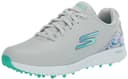
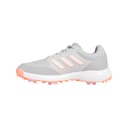
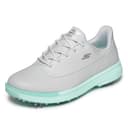
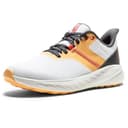
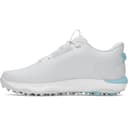
How we picked these shoes
We have not worn these and there are no fit or durability claims on this page that we could not read from the listing. What we compared is construction, waterproofing, sole type and price band against what a beginner needs from a golf shoe. Three criteria drove the picks.
1. Comfort over a long walk
Cushioning and arch support do more for your enjoyment of golf than anything else a shoe offers. Two of our picks are built on Skechers’ arch-support last, which is the reason they lead the page despite not being the most golf-looking shoes here.
2. Waterproofing, which matters more than you expect
Morning tee times mean dew, and dew soaks a non-waterproof shoe within three holes. Wet feet for the remaining fifteen holes is genuinely miserable and it is entirely avoidable. Three of our five picks are explicitly listed as waterproof, and where a pick is not, we have said so in its trade-offs rather than leaving you to find out.
3. Enough grip for the swing you have
Golf shoes need rotational grip, not just forward traction, because the back foot turns through impact. That is why golf outsoles use circular lug patterns rather than the straight treads on a running shoe. At beginner swing speeds a spikeless outsole is more than sufficient in dry conditions; spikes earn their place on wet ground and slopes.
Spiked or spikeless?
The short version: spikeless for most beginners, spiked if your course is wet or hilly.
Spikeless shoes have molded rubber lugs in the outsole. They are more comfortable to walk in, you can wear them from the car and into the clubhouse without changing, and they look like normal shoes. The trade-off is less bite on a wet slope, and the lugs wear smooth over a couple of seasons with no way to renew them.
Spiked shoes have replaceable soft plastic cleats screwed into the sole. They grip better in wet, sloping conditions, and when the spikes wear you replace them for very little rather than replacing the shoe. The trade-offs are comfort off the grass and the fact that many clubhouses ask you to change out of them indoors.
Metal spikes have been banned by most courses for decades because of the damage they do to greens, so “spiked” today always means soft plastic. Our spiked versus spikeless comparison works through the whole decision in more detail.
Sizing, and why it is worth care
Golf shoe sizing is less consistent than trainers, and the differences between brands are real. FootJoy in particular runs narrow, which is worth knowing before you order — it is a common complaint and it is a fit characteristic rather than a manufacturing fault.
Two practical points. First, feet swell over four hours of walking, so a shoe that is snug in the shop will be tight on the sixteenth. Half a size up is usually right if you are between sizes. Second, wear the socks you will actually play in when you try them — a thin liner and a cushioned sports sock are noticeably different volumes.
If you are buying online, buying from a listing that offers straightforward returns matters more than saving a few dollars. A shoe that does not fit is worth nothing regardless of what it cost.
Do you need golf shoes at all to start?
For your first few rounds, no. A pair of trainers with a reasonably grippy sole will get you round a course, and no beginner-friendly club is going to turn you away for it. Spend the money on clubs that fit you first.
The point at which golf shoes become worth buying is when you start playing regularly and either your feet are hurting or you are slipping in wet grass. Both are real problems with a real solution, and both arrive fairly quickly if you keep playing.
One caveat: some private clubs do require golf shoes, and a few municipal courses ban trainers with aggressive treads that damage greens. If in doubt, ring the pro shop — the same advice as for the rest of the dress code.
Making them last
Golf shoes die of neglect more often than of wear. Three habits extend their life considerably and cost nothing.
Knock the mud off before you put them in the car, because dried mud in a lug pattern is what kills grip. Never dry wet golf shoes on a radiator or in direct heat — it cracks the waterproof membrane and hardens the leather. Stuff them with newspaper and let them dry at room temperature instead. And if they are spiked, check the cleats every few months; a worn spike gives no more grip than a smooth sole and replacements cost very little.