Tee & Tempo

The Best Golf Gloves for Sweaty Hands

Premium leather is the best-feeling glove in golf and the worst choice for a humid August round. Here is what to wear instead when your hands sweat - and why it costs less, not more.

By Stephen V.Last updated How we pick

Buy the FootJoy WeatherSof, and buy the two-pack. It is an all-weather synthetic-and-leather glove sold in pairs, which matters more than any single feature on this page: the fix for sweaty hands is partly the material and partly having a dry glove to swap into at the turn. If you want the most ventilation for the money, the Callaway Weather Spann publishes micro-ventilation on the palm, thumb, closure and fingers. If you want leather feel anyway, the Titleist Players is the glove to own - in pairs, and rotated.

The reason this is a separate page from our main glove roundup is that sweat inverts the normal ranking. In a glove roundup, premium cabretta leather wins: it is thinner, it feels like a second skin, and tour players wear it. Get it wet from the inside and it goes slick, then stretches, then dries stiff and shiny and never comes back. A $9 synthetic glove will out-grip a $25 leather one on a humid day, and that is not a value-brand consolation - it is what the material is designed to do.

Ranked here on three things in this order: how the material behaves when wet from the inside, how much ventilation the listing actually publishes, and cost per glove - because the honest answer to sweaty hands involves owning more than one. Prices are live and carry the date they were checked. We have not worn these for a season of humid rounds; what we have done is read what each maker publishes and reason from the materials, which is exactly what our methodology says we do.

How this is funded: we earn a commission if you buy through our links, at no extra cost to you. It never changes which product we recommend, and we’ll tell you when we’d skip one. Full disclosure.

Quick picks

Ranked on forgiveness, how complete the pick is, and value for a beginner. Select a row to jump to the full write-up. We have not hit these clubs on a launch monitor — here is exactly what we do instead.

#ProductBest forPrice
1
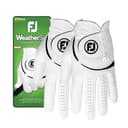
FootJoy WeatherSof Glove (2-pack)

FootJoy WeatherSof Glove (2-pack)

The best-selling glove in golf, sold here in a two-pack. Durable synthetic-and-leather build, all-weather grip, and buying two at once is exactly what a beginner (who wears through gloves) should do.

Best overall for sweaty hands
$22.97 · View on Amazon

Price as of October 10, 2026. #ad How we’re funded

2
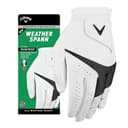
Callaway Weather Spann Glove

Callaway Weather Spann Glove

A soft synthetic glove that punches above its price for feel and grip. A great everyday choice, especially if you like a thinner, more connected feel on the grip.

Best ventilated glove
$12.99 · View on Amazon

$13.997% off

Price as of October 10, 2026. #ad How we’re funded

3
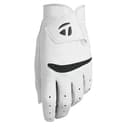
TaylorMade Stratus Soft Glove

TaylorMade Stratus Soft Glove

A leather glove at a friendlier price than tour-grade options — a middle ground between the plush Titleist Players and a workhorse synthetic. Good feel without the top-tier cost.

Softest feel that survives heat
$16.99 · View on Amazon

Price as of October 10, 2026. #ad How we’re funded

4
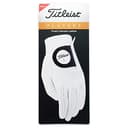
Titleist Players Glove

Titleist Players Glove

A premium cabretta-leather glove for the beginner who wants the best feel and does not mind replacing it more often. Thin, tacky, tour-grade leather — feel over durability.

Best feel, if you rotate two
$30.95 · View on Amazon

Price as of October 10, 2026. #ad How we’re funded

The picks in full

#1Best overall for sweaty hands

FootJoy WeatherSof Glove (2-pack)

The best-selling glove in golf, sold here in a two-pack. Durable synthetic-and-leather build, all-weather grip, and buying two at once is exactly what a beginner (who wears through gloves) should do.

Strengths

  • Two-pack value — beginners go through gloves quickly
  • Durable, all-weather materials that last
  • The most popular glove on the market, so sizing is well understood

Trade-offs

  • Not as buttery as a full-leather glove
  • Synthetic feel is a touch less premium
What it isAll-weather synthetic/leather glove, 2-pack
In the boxNot published
HandednessWorn on the lead hand (left glove for a right-handed golfer)
Shaft / flexNot published
Best forMost beginners, Anyone who wears through gloves

Beginner note. A right-handed golfer wears the glove on the LEFT hand (the top hand on the grip) — the single most common sizing confusion for beginners.

Specs read from the product listing, on July 23, 2026. “Not published” means the listing does not state it.

#2Best ventilated glove

Callaway Weather Spann Glove

A soft synthetic glove that punches above its price for feel and grip. A great everyday choice, especially if you like a thinner, more connected feel on the grip.

Strengths

  • Soft, thin synthetic that grips well
  • Holds up to regular play for the price
  • Callaway sizing is easy to find

Trade-offs

  • Sold as a single, so cost-per-glove is higher than a multipack
  • Thin feel wears faster than thicker gloves
What it isSoft synthetic all-weather glove
In the boxNot published
HandednessWorn on the lead hand
Shaft / flexNot published
Best forFeel-focused beginners, Callaway set owners

Beginner note. Thinner gloves give a more 'connected' feel to the grip; thicker ones last longer. It is a personal-preference trade-off, not a quality difference.

Specs read from the product listing, on July 23, 2026. “Not published” means the listing does not state it.

#3Softest feel that survives heat

TaylorMade Stratus Soft Glove

A leather glove at a friendlier price than tour-grade options — a middle ground between the plush Titleist Players and a workhorse synthetic. Good feel without the top-tier cost.

Strengths

  • Leather feel for less than premium tour gloves
  • Soft and comfortable out of the packet
  • TaylorMade name and easy sizing

Trade-offs

  • Not as durable as an all-synthetic glove
  • Single glove, not a value multipack
What it isSoft leather glove
In the boxNot published
HandednessWorn on the lead hand
Shaft / flexNot published
Best forBeginners wanting leather for less

Beginner note. Sits between full-premium leather and durable synthetic — a sensible compromise if you want leather feel without the fastest wear or the highest price.

Specs read from the product listing, on July 23, 2026. “Not published” means the listing does not state it.

#4Best feel, if you rotate two

Titleist Players Glove

A premium cabretta-leather glove for the beginner who wants the best feel and does not mind replacing it more often. Thin, tacky, tour-grade leather — feel over durability.

Strengths

  • Premium cabretta leather — the softest, tackiest feel
  • Thin and connected for maximum grip feedback
  • Titleist quality throughout

Trade-offs

  • Leather wears faster, especially in wet weather
  • The most expensive glove here, per glove
What it isCabretta-leather premium glove
In the boxNot published
HandednessWorn on the lead hand
Shaft / flexNot published
Best forFeel-first beginners, Dry-weather players

Beginner note. Cabretta is a soft sheepskin leather prized for feel; it grips beautifully but does not last as long as synthetic, and dislikes rain.

Specs read from the product listing, on July 23, 2026. “Not published” means the listing does not state it.

Why leather fails and synthetic does not

A cabretta leather glove is a very thin piece of animal skin, and skin is absorbent. That is the whole reason it feels so good dry - there is almost nothing between your hand and the grip - and the whole reason it fails wet. Moisture soaks into the leather rather than passing through it. Soaked leather loses its friction against a rubber grip, stretches under load so the glove no longer fits the hand it was sized to, and then dries hard. Most golfers who complain that their expensive glove “only lasted four rounds” are describing this exact cycle in summer.

An all-weather synthetic is built the opposite way. The palm is an engineered material chosen for friction when damp rather than feel when dry, so its grip is more consistent wet than dry - a little less tacky at its best, far better at its worst. Callaway publishes the construction on the Weather Spann in those terms: a moisture-wicking fabric with a reinforced palm “that provides durability and stability”, a proprietary premium synthetic for flexibility and durability, and leather used only on the palm and thumb, where wear concentrates. That hybrid layout - synthetic where sweat lives, leather where feel matters - is the pattern every good hot-weather glove follows.

Ventilation is the second lever and it is simpler than it sounds. Perforations and mesh panels let water vapour out before it condenses inside the glove. Callaway publishes micro-ventilation on four separate areas of the Weather Spann - palm, thumb, closure and fingers - which is the most specific ventilation claim on any glove here. A glove with no published perforation is a glove that traps whatever your hand produces.

The two-glove rotation, which is the actual answer

No glove will stay dry through four hours in ninety-degree humidity. The golfers who have genuinely solved this do not own a better glove, they own two and swap them, and the second glove dries while the first one works.

That is why the FootJoy WeatherSof is the top pick in a page about material science: it is sold as a two-pack, so the rotation costs you nothing extra to set up. Clip the spare to the outside of your bag between nines rather than stuffing it in a pocket - air moving over it is what dries it. A glove left balled up in a damp pocket is a glove that will be worse on the back nine than the one you took off.

Two small habits that matter as much as the glove:

  • Dry your hand, not just the glove. A towel on the bag and ten seconds before you put the glove back on is worth more than any ventilation feature.
  • Take the glove off between shots. Walking down the fairway with it on is four hours of a sealed hand. Most good players take it off after every shot out of habit, and this is the reason.

If your hands sweat enough that the grips also get slippery, the glove is only half the problem. Cord and hybrid grips are built for exactly this - our grip roundup covers them, and the all-weather hybrid option there is the one to look at.

Sizing matters more when your hands sweat

A glove should feel like it is slightly too small when you first pull it on. A loose glove rotates on the hand under load, and a damp loose glove rotates more - which is felt as the club twisting, and blamed on the grip.

The two sizing details worth knowing before you order. First, hand: a golf glove goes on your leadhand, which is the left hand for a right-handed golfer. Callaway lists the Weather Spann in six configurations - Men’s Left, Men’s Right, Men’s Cadet Left, Men’s Cadet Right, Women’s Left and Women’s Right - so the hand is a choice you make at checkout, not something the glove works out for you. Second, cadet: a cadet size is the same palm width with shorter fingers, which is the right size for a wide hand with stubby fingers and is the single most commonly missed sizing option in golf. Callaway publishes Small, Medium, Medium/Large, X-Large and XX-Large alongside the cadet variants.

Our guide to which hand a golf glove goes on covers the hand and the sizing method in full, including how to measure for cadet.

What not to buy for this problem

A premium leather glove as your only glove. It is the best-feeling glove in golf and it will be your worst glove by the twelfth hole in July. Own one if you want one, but own it alongside a synthetic rather than instead of one.

Rain gloves, for sweat. Rain gloves are a different product solving a different problem - they grip best when soaked from the outside and are worn in pairs. They are excellent in a downpour and clammy and odd on a merely humid day. If wet weather is your actual issue, start with our rain jacket roundup and the kit around it instead.

Going gloveless.Plenty of good players do, and if it works for you it works. But a bare sweaty hand on a rubber grip is the single most common cause of a beginner’s club twisting through impact, and it is also how you get blisters in your first fortnight. If you are new, wear the glove - and if you are not sure why, our main glove roundup makes the case.
Frequently asked questions

What is the best golf glove for sweaty hands?

An all-weather synthetic glove rather than a premium leather one. The FootJoy WeatherSof is our pick because it combines an all-weather synthetic-and-leather build with a two-pack, which lets you rotate a dry glove in at the turn - the part of the solution no single glove provides.

Why do leather golf gloves get slippery when your hands sweat?

Cabretta leather is thin animal skin and it absorbs moisture rather than letting it pass through. Soaked leather loses friction against a rubber grip, stretches under load so the glove no longer fits properly, and dries stiff and shiny. That cycle is why an expensive leather glove can be worn out in a handful of humid rounds.

Are rain gloves good for sweaty hands?

Not really - they solve a different problem. Rain gloves are designed to grip best when soaked from the outside and are worn as a pair on both hands. In a downpour they are excellent. On a merely humid day they feel clammy and give you no benefit a ventilated all-weather glove would not give you more comfortably.

How many golf gloves should I own if my hands sweat?

Two, at minimum, and swap them at the turn. No glove stays dry through four hot hours, so the practical fix is rotation: wear one, clip the other to the outside of your bag where air can move over it, and change at the ninth. Buying a two-pack makes that cost nothing extra.

Does glove ventilation actually work?

It helps, within limits. Perforations and mesh panels let water vapour escape before it condenses inside the glove, which slows down how fast the glove goes slick. Callaway publishes micro-ventilation on the palm, thumb, closure and fingers of the Weather Spann, which is the most specific ventilation claim among our picks. It delays the problem rather than removing it - rotation is what removes it.

Should a sweaty-handed golfer change their grips too?

If the grips also feel slippery, yes. Cord and hybrid grips weave in a fabric that holds friction when damp, and they are the standard answer for golfers who sweat heavily or play in humidity. Re-gripping is inexpensive relative to clubs and is one of the few upgrades that changes how the club feels immediately.

What size golf glove should I buy?

Snug enough that it feels slightly tight when new - a loose glove rotates on your hand under load, and a damp loose glove rotates more. Also check whether you need a cadet size, which is the same palm width with shorter fingers and suits a wide hand with shorter digits. Callaway publishes Small, Medium, Medium/Large, X-Large and XX-Large plus cadet variants on the Weather Spann.

Sources

  • Callaway -- Weather Spann Golf Glove (product page) — The maker's own published detail for the glove: 'made of moisture-wicking fabric and has a reinforced palm that provides durability and stability', a 'Proprietary Fusetech Premium Synthetic' for 'Comfort, flexibility, and increased durability', a 'Leather Palm and Thumb' for 'Improved Feel and Durability in key wear areas', and 'Micro-ventilation on palm, thumb, closure, and fingers' giving 'Added Comfort, Moisture-Wicking, and Breathability'. The page offers the glove in six hand configurations -- Men's Left, Men's Right, Men's Cadet Left, Men's Cadet Right, Women's Left and Women's Right -- in Small, Medium, Medium/Large, X-Large and XX-Large. It publishes no durability or grip-force figures (accessed October 11, 2026)
  • National Golf Foundation — Golf Participation in the U.S. (2025) — 48.1M total participants, a record 3M+ beginners (≈75% adults, 35% female) (accessed July 23, 2026)

Keep reading