Golf Glove: Which Hand Does It Go On?
Your lead hand - the left one if you play right-handed. It takes five seconds to answer and about four minutes to understand, including the sizing detail that half of golfers never discover.
How this is funded: we earn a commission if you buy through our links, at no extra cost to you. It never changes which product we recommend, and we’ll tell you when we’d skip one. Full disclosure.
A golf glove goes on your lead hand - the hand nearer the target when you stand to the ball. If you play right-handed, that is your left hand, and the glove you buy is sold as a “left-hand” glove. If you play left-handed, it is the right hand and a right-hand glove.
The confusing part is the naming, not the rule. Gloves are named for the hand they fit, not the hand you write with, so a right-handed golfer searching for “right-hand glove” ends up with the wrong product. Order by the hand that will be inside it.
1. Why the lead hand, and why only one
The two hands do completely different jobs in a golf swing, and the glove belongs on the one doing the physical work.
Your lead hand is the anchor. It sits at the top of the grip, it holds the club through the whole swing, and at impact it absorbs the twisting force of a clubhead meeting ground and ball at speed. That is a lot of friction and torque in a small area of skin, concentrated on the pad at the base of the fingers - which is exactly where golfers get their first blister. A glove puts a layer of tacky material between that skin and the rubber, so the club cannot slip and the skin does not tear.
Your trail hand is mostly feel and support. It sits lower on the grip, it does less of the holding and more of the sensing, and the feedback it gives you - particularly on short shots and putts - is information you do not want to muffle. That is the whole reason one glove is the convention rather than two: you glove the hand that needs protection and leave bare the hand that needs feel.
It also explains why nearly every tour player removes the glove to putt. On a putt there is no torque to resist and nothing to grip hard, so the trade swings entirely toward feel. Copy it if you like; it will not cost you anything.
2. When two gloves is the right answer
There is one situation where wearing two is standard rather than eccentric, and that is real rain. Rain gloves are a distinct product: they are built to grip better wet than dry, and they are designed and sold to be worn as a pair, because in a downpour both hands are wet and both need the help. If you see somebody in two gloves on a soaking day, that is what they are wearing.
Outside that, a second glove is a personal fix rather than a convention - golfers managing a hand injury, a skin condition, or hands that sweat heavily enough that the trail hand slips too. Nothing in the Rules stops you; a glove is permitted equipment and Rule 4 concerns itself with clubs and balls rather than what you wear on your hands. If sweat is your reason, read best golf gloves for sweaty hands first, because a ventilated glove and a dry spare usually beats doubling up.
3. How to size a glove without trying it on
A golf glove should feel slightly too tight when it is brand new. Both leather and synthetic relax with use, so a glove that feels perfect out of the packet will be loose by its fourth round - and a loose glove rotates on your hand under load, which you will feel as the club twisting and will probably blame on the grip.
What to check, in order:
- Across the palm. No loose material, no bunching. The glove should follow the shape of your hand with nothing to pinch.
- At the fingertips. Your fingers should reach the end. Spare fabric past the tips is the clearest sign the glove is too big.
- At the closure. The velcro tab should fasten comfortably in its middle range. If you are pulling it to the very end of its travel to get the glove snug, go down a size.
To get a size before you buy, measure the circumference of your hand around the knuckles, excluding the thumb, with a tape measure - then read that against the size chart on the listing. Brands publish their own charts and they do not perfectly agree, so use the chart on the glove you are buying rather than a general one. Callaway, for example, publishes its Weather Spann in Small, Medium, Medium/Large, X-Large and XX-Large.
4. The cadet size, which most golfers never discover
This is the detail worth the price of the page. A cadet glove has the same palm width as a standard glove of the same size, with shorter fingers. It exists for a hand shape that is genuinely common - broad palm, shorter digits - and which a standard size fits badly in both directions at once.
The symptom is specific. You try your correct size and the fingers feel too long, with material gathering at the tips; so you try a size up, and now the palm is loose but the fingers are right. Neither fits. That golfer needs a cadet, and most of them spend years in a glove one size too big instead, because nothing on the shelf explains what cadet means.
Cadet sizes are widely available, not a specialist order. Callaway lists the Weather Spann in six hand configurations - Men’s Left, Men’s Right, Men’s Cadet Left, Men’s Cadet Right, Women’s Left and Women’s Right - so cadet sits right alongside the standard build at the same price. If the description above is you, order one and find out.
Three gloves worth buying, once you know the hand and size
All three are from our main glove roundup, chosen here to cover the three ways a beginner can sensibly go: an all-weather two-pack, a ventilated synthetic, and the premium leather if you want the feel. Remember to order the lead hand - left for a right-handed golfer. Prices are live and carry the date they were checked.
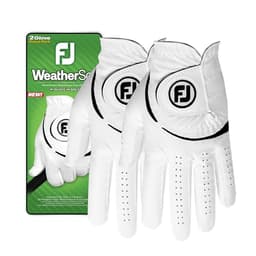
FootJoy WeatherSof Glove (2-pack)
The best-selling glove in golf, sold here in a two-pack. Durable synthetic-and-leather build, all-weather grip, and buying two at once is exactly what a beginner (who wears through gloves) should do.
- What it is
- All-weather synthetic and leather glove, sold as a 2-pack
- Who it’s for
- Almost everyone - the default first glove, and it comes as a pair
Price as of October 10, 2026. #ad How we’re funded
Specs read from the product listing, on July 23, 2026.
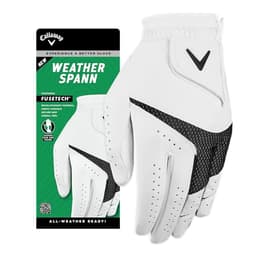
Callaway Weather Spann Glove
A soft synthetic glove that punches above its price for feel and grip. A great everyday choice, especially if you like a thinner, more connected feel on the grip.
- What it is
- Moisture-wicking synthetic with a leather palm and thumb; cadet sizes listed
- Who it’s for
- Warm, humid rounds, and anyone who needs a cadet size
Specs read from the product listing, on July 23, 2026.
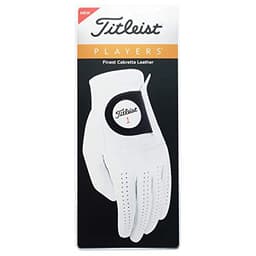
Titleist Players Glove
A premium cabretta-leather glove for the beginner who wants the best feel and does not mind replacing it more often. Thin, tacky, tour-grade leather — feel over durability.
- What it is
- Premium cabretta-leather glove
- Who it’s for
- Golfers who want the thinnest, best-feeling glove and will replace it more often
Price as of October 10, 2026. #ad How we’re funded
Specs read from the product listing, on July 23, 2026.
| Pick | What it is | Who it’s for |
|---|---|---|
| FootJoy WeatherSof Glove (2-pack) | All-weather synthetic and leather glove, sold as a 2-pack | Almost everyone - the default first glove, and it comes as a pair |
| Callaway Weather Spann Glove | Moisture-wicking synthetic with a leather palm and thumb; cadet sizes listed | Warm, humid rounds, and anyone who needs a cadet size |
| Titleist Players Glove | Premium cabretta-leather glove | Golfers who want the thinnest, best-feeling glove and will replace it more often |
5. Three habits that double how long a glove lasts
Take it off between shots. Not for any mystical reason - a glove left on for four hours is four hours of a sealed, sweating hand, and moisture from the inside is what destroys gloves. Off after the shot, on before the next one.
Never dry it balled up. Clip it to the outside of your bag where air can move across it. A glove stuffed damp into a pocket dries stiff and stays that way.
Put it on properly. Open the closure fully, slide the hand in, seat each finger, then fasten. Dragging a glove on by the cuff with the velcro still shut is how the seams go first.
One last thing about why the glove matters at all for a new golfer: gripping too tightly is one of the few swing faults you can partly solve by buying something. A tacky glove lets you hold the club lightly because you trust it not to slip, and light hands swing faster and freer than tight ones. If you want the other half of that - what your hands should actually be doing - our guide to how to grip a golf club is the place to go next.
Frequently asked questions
Which hand does a golf glove go on?
Your lead hand - the hand nearer the target at address. A right-handed golfer wears the glove on the left hand; a left-handed golfer wears it on the right. If you are buying online, note that gloves are sold by the hand they fit, so a right-handed golfer orders a 'left-hand' glove.
Why do golfers only wear one glove?
Because only the lead hand does the gripping work that wears skin. The lead hand holds the club through impact and absorbs the twisting force, while the trail hand mostly supports and feels. A glove on the lead hand prevents blisters and stops the club slipping; a glove on the trail hand mainly removes feel, which is why most players leave it bare.
Do I order a left-hand glove if I am right-handed?
Yes. Glove listings are named for the hand they go on, not the hand you write with, so a right-handed golfer needs a left-hand glove. Callaway, for example, lists its Weather Spann in Men's Left, Men's Right, Men's Cadet Left, Men's Cadet Right, Women's Left and Women's Right - the hand is a choice you make at checkout.
When should you wear two golf gloves?
In genuinely wet weather, with rain gloves. Rain gloves grip best when soaked from the outside and are designed to be worn as a pair, which is why you see them used in both hands in a downpour. Some golfers with hand injuries or very sweaty hands also wear two in heat, but for ordinary play one glove on the lead hand is the standard.
How should a golf glove fit?
Snug enough to feel slightly tight when it is new, with no loose material across the palm and no spare fabric at the fingertips. The velcro closure should fasten comfortably without being pulled to its limit. A glove that feels perfect in the shop is usually a size too big, because leather and synthetic both relax with use.
What is a cadet golf glove?
A cadet glove has the same palm width as a standard glove but shorter fingers. It is the right size for a broad hand with shorter digits, and it is the most commonly missed sizing option in golf - a lot of golfers wear a glove a size too large because the fingers of their correct size felt too short. Cadet sizes are listed alongside standard ones by most major brands.
Do you have to wear a golf glove?
No, there is no rule requiring one. A glove is permitted equipment and plenty of good players go without, particularly for putting. For a beginner it is still worth wearing one, because a bare hand on a rubber grip is the most common reason a club twists through impact, and blisters inside your first few rounds are nearly guaranteed without it.
Sources
- Callaway -- Weather Spann Golf Glove (product page) — The maker's own published detail for the glove: 'made of moisture-wicking fabric and has a reinforced palm that provides durability and stability', a 'Proprietary Fusetech Premium Synthetic' for 'Comfort, flexibility, and increased durability', a 'Leather Palm and Thumb' for 'Improved Feel and Durability in key wear areas', and 'Micro-ventilation on palm, thumb, closure, and fingers' giving 'Added Comfort, Moisture-Wicking, and Breathability'. The page offers the glove in six hand configurations -- Men's Left, Men's Right, Men's Cadet Left, Men's Cadet Right, Women's Left and Women's Right -- in Small, Medium, Medium/Large, X-Large and XX-Large. It publishes no durability or grip-force figures (accessed October 11, 2026)
- USGA — Rule 4: The Player's Equipment — The official Rule limiting a player to 14 clubs and governing conforming equipment (accessed July 23, 2026)
Keep reading
Best Golf Gloves
The full roundup with live prices, from all-weather value gloves to premium cabretta leather.
See the glovesBest Golf Gloves for Sweaty Hands
Why leather fails in humidity, which synthetics breathe, and the two-glove rotation that fixes it.
See the hot-weather picksHow to Grip a Golf Club
What the gloved hand is actually doing. The grip itself, in plain English, with photos of the checkpoints.
Read the guideWhat Size Golf Grip Do I Need?
Glove size and grip size are the same conversation. Measure once, fix both.
Read the guideWhat to Put in a Golf Bag
The spare glove is one of eleven things that belong in there. Here is the rest of the list.
Read the checklistGolf Terms Glossary
Lead hand, trail hand, cadet, cabretta - the vocabulary, defined without jargon.
Browse the glossary