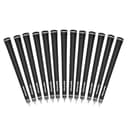
Material is the whole difference
Tour Velvet is rubber. Rubber is firm, it transmits feel, it survives being dragged in and out of a bag thousands of times, and it is what the overwhelming majority of golfers have in their hands — which matters more than it sounds, because a familiar grip removes a variable rather than adding one.
Dri-Tac is a polymer. It is softer under the fingers and tackier, and that tackiness is the point: a grip you can hold lightly is a grip that lets your wrists work. Grip pressure is one of the very few swing faults you can genuinely improve by buying something, because a slick grip forces you to squeeze and tight hands swing slower than light ones.
The cost of that softness is life expectancy. A softer compound wears faster and compresses under the hands over a season, so a Dri-Tac bag is a bag you will re-grip sooner than a Tour Velvet bag. Neither maker publishes a hours-of-use figure and we are not going to invent one — but the trade-off direction is not in dispute, and it is the honest reason the firmer grip is the default.
Wet weather, which is where both have a limit
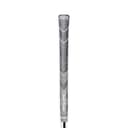
Plain rubber gets slippery when it is wet, and so does polymer once it is properly soaked. If you play in rain regularly, the answer is neither of these two: it is a hybrid cord grip. The Golf Pride MCC Plus4 is the third pick here for exactly that reason — cord in the upper hand for wet-weather hold, soft rubber in the lower hand for comfort, and a deliberately thicker lower section that quiets over-active hands. “Plus4” refers to four extra layers of build-up tape in that lower section, which is a design intent rather than a size label.
It is also sold singly rather than in a bundle, which is a useful way to try a cord grip on one club before committing to thirteen. A sensible compromise a lot of golfers land on: Tour Velvet through the bag, one MCC Plus4 on the driver.
Size matters more than brand
Before you choose a compound, get the size right, because the wrong size undoes any advantage either grip has. Too small and your hands get too active, which closes the face and produces hooks; too large and you lose feel and the hands stop releasing. Midsize suits larger hands or anyone who has been told to relax their grip pressure. Both grips here are available in standard, and the MCC Plus4 pick is a midsize — our grip sizing guide has the glove-size and hand-measurement method so you are not guessing.
Worth knowing on the Rules side: grips must conform under Rule 4.1a, and the only place a non-round cross-section is permitted is the putter — which is why almost every putter grip has a flat front, and why that flat is a legal alignment aid for your thumbs. Re-gripping a club with a conforming grip does not affect its legality, and the Rule people confuse this with concerns deliberately changing an adjustable club’s playing characteristics during a round.
When to re-grip, regardless of which you choose
Rubber and polymer both harden with age and sunlight whether you play or not, so a set of grips older than about two seasons is worth replacing regardless of how it looks. The test is simpler than the calendar: if the surface is shiny, if your hands slide when they are even slightly damp, or if you find yourself squeezing to keep hold of the club, the grips are finished.
The reason we push this harder than most sites is that worn grips are the most common invisible problem on a beginner’s bag. A package set that is three seasons old has grips that have been in a hot garage for three summers, and the owner is usually diagnosing their swing instead. Our re-gripping guide walks through doing it yourself with a few dollars of tape and solvent, and cleaning your clubs covers the step that buys a worn-but-not-dead set another few rounds.
If you would rather see the whole field than a head to head, our grip roundup ranks five including both of these plus the cheapest honest option for a full bag, and how to grip a golf club covers the part no purchase fixes: where your hands go.