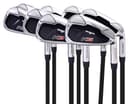
How we picked these sets
We own none of these clubs and we have not measured launch angles for anyone. We compare what each listing actually publishes — flex, shaft material, set makeup, sole design — against what a slower swing needs, and we say plainly where a set is more than you need. Three criteria did the work.
1. Factory senior flex, not a re-shaft
The single most important specification on this page is that the set ships in senior flex from the factory. Buying a regular-flex set and paying a shop to re-shaft it costs more than the difference between any two sets here, and plenty of value sets cannot be re-shafted economically at all. Every set below is listed in senior flex (sometimes labeled “A flex” — they are the same thing).
2. Launch, which mostly means the long clubs
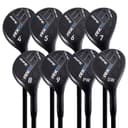
Short irons are rarely the problem. A pitching wedge has enough loft to get airborne at almost any speed. The trouble is the 4-, 5- and 6-irons, which is precisely why two of our five picks replace those clubs with hybrids entirely. That is not a gimmick — a hybrid head puts its weight low and back, which is the whole mechanism for launching a ball off the turf without speed.
3. Value proportionate to how much you play
A premium set is a genuine pleasure and a genuine waste if you play six times a year. We have included both ends and said which is which. There is no shame in the budget option; there is real waste in the premium one bought for the wrong reasons.
Should you switch to hybrid irons?
For most golfers over about sixty, yes — at least for the long clubs. The all-hybrid set looks unusual in the bag, and it is the most effective single change available to a slower swing.
The reasoning is simple. A long iron asks you to strike a small, thin-soled head with enough speed to compress the ball and enough precision to catch it before the turf. A hybrid does the same job with a wider sole that skids rather than digs, a lower center of gravity that launches the ball higher, and a shorter, more controllable shaft. There is nothing you lose except the ability to hit deliberate low shots, which very few amateurs use anyway.
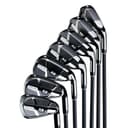
The honest counter-argument is feel and looks. Some golfers simply do not like standing over a hybrid, and a club you dislike is a club you swing badly. If that is you, the conventional Majek K6 set in senior flex is the sensible compromise: normal-looking irons with the right shaft in them.
What senior flex actually means
Shaft flex describes how much a shaft bends during the swing. Manufacturers use a rough ladder: L (ladies), A or senior, R (regular), S (stiff), X (extra stiff). Senior sits one step softer than regular.
A softer shaft loads — bends back — more during the downswing and then unloads through impact, which adds clubhead speed and helps the face present with more effective loft. In plain terms: the same effort produces a higher, longer shot. If you are swinging a stiff shaft with a slower speed, you are getting none of that benefit and the shaft is essentially a rigid stick.
There is no standard between manufacturers, which is worth knowing. One brand’s senior flex can be another’s regular. That is an argument for graphite in general rather than for chasing a specific letter, and it is why we favor sets that name their shaft.
Graphite or steel?
Graphite, almost without exception, at this stage. A graphite iron shaft is typically 30 to 50 grams lighter than steel, which means less total weight to move and more speed for the same effort. It also damps vibration, which matters genuinely if you have arthritic hands or a sore elbow — a thin strike with a steel shaft on a cold morning is unpleasant in a way graphite is not.
The trade-off is feedback: steel tells you more precisely where on the face you struck it. That is useful information for an improving player and largely irrelevant to someone whose priority is comfort and launch. Our steel versus graphite guide works through the whole comparison.
The upgrades that come first
Before a new set, two smaller purchases usually deliver more. The first is new grips: rubber hardens with age whether you play or not, and a hard grip makes you squeeze, which costs you speed and hurts your hands. The second is a lighter driver, because the driver is where lost speed costs you the most yards.
If your whole bag is due, a complete senior set is usually better value than assembling one club at a time. This page is for golfers replacing just the irons.