How to Hit a 3 Wood
Fifteen degrees of loft on a 43-inch shaft, played off the ground. It is the hardest shot in golf for a beginner - here is how to make it work, and when to stop trying.
How this is funded: we earn a commission if you buy through our links, at no extra cost to you. It never changes which product we recommend, and we’ll tell you when we’d skip one. Full disclosure.
Let us start with the thing that will make you feel better: the 3-wood is the hardest club in a beginner’s bag, and that is physics rather than a failing of yours. It has about fifteen degrees of loft — less than any club except the driver — on a shaft only a few inches shorter, and unlike the driver you play it off the ground with no tee to help you.
So there are two useful answers on this page. The first is how to hit it, because the setup changes are small and they work. The second is the one most sites will not give you: for a lot of beginners the right move is to replace it with a 5-wood or a 7-wood and stop fighting a club that gives you no margin.
The setup that makes a 3-wood possible
Ball just inside your lead heel. About a ball-width back from your driver position and clearly forward of an iron. This is the single most common error: a 3-wood played from the middle of the stance forces a descending strike, and a descending strike with fifteen degrees of loft produces a low screamer or a chunk.
Weight centred, chest tall. You want a shallow sweep through impact, and that comes from standing to your height with your arms hanging rather than from reaching or crouching.
Eighty percent effort.The long shaft is already supplying speed. Past about 80 percent of your maximum, almost all the extra energy turns into curve rather than distance — and a low-lofted club curves more than a lofted one for the same error.
Brush, do not dig. Take a bruise of turf, not a divot. Two rehearsal swings brushing the grass beside the ball before you set up is the most useful pre-shot routine there is for this club.
Do not try to lift it.The loft is the club’s job. Trying to help the ball up drops your lead shoulder, moves the low point behind the ball and produces exactly the thin and fat shots you are trying to avoid. If this is your pattern, how to stop topping the ball is the same fault with a different name.
Off the tee, it is a different club
Many golfers who cannot hit a 3-wood off the fairway hit it perfectly well off a tee, and that is not a contradiction — a tee removes the need to catch the ball at the exact bottom of the arc.
Tee it low, so the ball sits barely above the grass, and move it a touch further forward than your fairway position. Used this way the 3-wood becomes a genuinely useful club: a tee shot for tight holes where a driver brings trouble into play, which for a beginner with a slice is a lot of holes. How to hit a drivercovers the opposite strike — up on the ball rather than level with it.
When to leave it in the bag
A 3-wood off the deck wants a flat or slightly uphill lie with the ball sitting up on reasonable grass. Everything else is an argument for a different club.
- In rough, the big head and long shaft work against you. Grass grabs the hosel and shuts the face. Take a hybrid or an iron.
- On a downslope, you need loft you do not have. Hybrid or mid-iron.
- In a fairway bunker, you need a ball-first strike from unstable footing — our bunker guide covers that shot, and it is not a 3-wood shot.
- Within range of trouble, remember the arithmetic: a 3-wood that finds the trees twice costs more than a 7-iron that leaves you a wedge.
The easier clubs that do the same job
All three are from our fairway wood roundup, ordered here by how easy each is to get airborne off the ground. Lofts are quoted only where the listing publishes them — prices are live and carry the date they were checked.
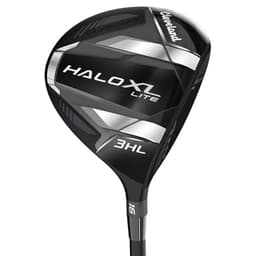
Cleveland Halo XL Lite 3-Wood
The best fairway wood here for a golfer who has decided to stick with the game. Cleveland's Halo family is engineered around launch from awkward lies, and a 3-wood you can actually hit off the deck is worth more strokes to a beginner than any driver. The Lite build makes the hardest club in the family easier to swing at beginner speeds.
- What it is
- 3-wood, regular-flex graphite, lightweight 'Lite' build
- Who it’s for
- Golfers committed to a 3-wood who want the lightest, most launch-friendly version of one.
Price as of October 16, 2026. #ad How we’re funded
Specs read from the product listing, on September 29, 2026.
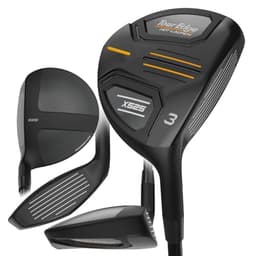
Tour Edge Hot Launch X525 5-Wood (20°)
The fairway wood most beginners should actually buy. Twenty degrees of loft off a shorter shaft is a far easier proposition than a 3-wood, and you give up less distance than you would think. If you only add one wood to a package set, make it this.
- What it is
- 5-wood, 20 degrees, UST Mamiya Helium regular-flex shaft
- Who it’s for
- Most beginners - five more degrees of loft and a shorter shaft than a 3-wood, for very little distance.
Price as of October 16, 2026. #ad How we’re funded
Specs read from the product listing, on August 11, 2026.
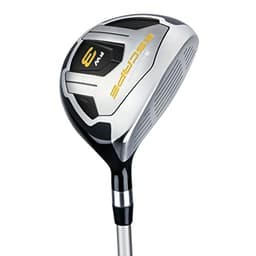
Orlimar Escape #7 Fairway Wood
The easiest club to get in the air on this whole page. A 7-wood is a beginner's secret weapon: it goes about as far as a 4-iron but launches like a wedge, and it works out of rough that would swallow a long iron. Underrated and cheap.
- What it is
- 7-wood, regular flex (the listing publishes no exact loft)
- Who it’s for
- Anyone who cannot launch a fairway wood at all - the easiest club here to get in the air.
Specs read from the product listing, on August 11, 2026.
| Pick | What it is | Who it’s for |
|---|---|---|
| Cleveland Halo XL Lite 3-Wood | 3-wood, regular-flex graphite, lightweight 'Lite' build | Golfers committed to a 3-wood who want the lightest, most launch-friendly version of one. |
| Tour Edge Hot Launch X525 5-Wood (20°) | 5-wood, 20 degrees, UST Mamiya Helium regular-flex shaft | Most beginners - five more degrees of loft and a shorter shaft than a 3-wood, for very little distance. |
| Orlimar Escape #7 Fairway Wood | 7-wood, regular flex (the listing publishes no exact loft) | Anyone who cannot launch a fairway wood at all - the easiest club here to get in the air. |
The honest set-building answer
The Rules let you carry any 14 conforming clubs you like, in any combination you like, and there is no orthodoxy to respect. That freedom is the point: a 3-wood is traditional rather than necessary, and swapping it for a 5-wood, a 7-wood or a hybrid is one of the highest-value changes a developing golfer can make.
Our suggested order of difficulty, easiest first: 7-wood, hybrid, 5-wood, 3-wood. Pick the first one on that list you can hit off the ground three times out of five, and carry that. You will lose a little distance and gain far more in shots that actually advance the ball — what clubs do I need works through the whole fourteen, and hybrid vs fairway wood settles the slot this club is competing for.
If you want to know your real distances rather than a chart’s averages, measure them: a rangefinder on the range, or a launch monitor if you practise indoors. The number worth knowing is the distance you can repeat, not your best strike of the season.
Friendly guidance, not coaching. Tee & Tempo is written by a golf enthusiast, not a teaching pro. Our picks come from published specs and honest buyer-fit reasoning — we compare the numbers so you don’t have to, but we haven’t hit every club ourselves. When in doubt, hitting a few at a shop or a lesson beats any article.
Frequently asked questions
How do you hit a 3 wood off the fairway?
Play the ball just inside your lead heel, keep your weight centred, stand tall, and sweep the ball off the turf with a smooth swing at about 80 percent effort. The strike should brush the grass rather than take a divot. Most 3-wood problems off the deck are caused by trying to help the ball into the air, which drops the shoulder and leads to a thin or fat strike.
Why can't I hit my 3 wood off the ground?
Three usual reasons. The ball is too far back, which steepens the strike; you are swinging too hard, because the club looks like it needs help; or you are trying to lift the ball, which lowers the lead shoulder and either thins it or digs. The club has about 15 degrees of loft and a long shaft, which is an unforgiving combination - it rewards a smooth sweep and punishes everything else.
Is a 3 wood easier off a tee?
Much easier, which is why many golfers who cannot hit it off the deck hit it fine off a tee. Tee it low - the ball barely above the grass - and play it a fraction forward of where you would on the fairway. If you only ever use a 3-wood off the tee on tight holes, that is a legitimate way to carry it.
Should a beginner carry a 3 wood at all?
Often not. A 3-wood has the least loft of any fairway wood and is the hardest to launch off the ground. A 5-wood at around 20 degrees, or a 7-wood, does the same job - a long shot from the fairway - with far more margin, and you give up less distance than you expect because you make clean contact more often.
How far should a beginner hit a 3 wood?
We do not publish distance charts, because the honest answer varies enormously with swing speed and strike quality, and an invented average would just make you swing harder. Measure your own with a rangefinder or a launch monitor over several shots and use your own number - the distance that matters is the one you can repeat, not your best ever.
What loft is a 3 wood?
Conventionally around 15 degrees, although many listings do not publish an exact figure and we do not state one where it is not published. For comparison, a 5-wood is usually around 20 degrees - the Tour Edge Hot Launch X525 5-wood publishes exactly that - and a 7-wood conventionally sits around 21 to 23.
3 wood or hybrid - which should I use?
A hybrid, for most beginners, from most lies. A hybrid has a shorter shaft and a more compact head, which makes it easier to control and far better from rough. A fairway wood has a bigger head and a lower centre of gravity, which gives more carry from a good lie. Our hybrid versus fairway wood comparison goes through the trade in detail.
Can I replace my 3 wood with something easier?
Yes, and the Rules make it trivial: you may carry any 14 conforming clubs you like, in any configuration. Swapping a 3-wood for a 5-wood or a hybrid is one of the most sensible changes a beginner can make, and nobody is going to check your set composition for orthodoxy.
Sources
- USGA — Rules Hub: Clubs — USGA overview of the 14-club limit and the freedom to carry any conforming club types (accessed July 23, 2026)
- R&A -- Rule 4: The Player's Equipment — Rule 4.1a(2) on adjustable clubs: a player 'must not make a stroke with a club when they have deliberately changed that club's playing characteristics during the round ... by using an adjustable feature or physically changing the club', with an exception where the club is restored to its original setting before being used; the penalty for making a stroke in breach of Rule 4.1a is disqualification. Rule 4.1b(1) sets the limit: a player must not start a round with more than 14 clubs or have more than 14 clubs during the round (accessed October 6, 2026)
Keep reading
Best Fairway Woods for Beginners
Five fairway woods with live prices, led by the lofts that are easiest to launch.
See the fairway woodsHybrid vs Fairway Wood
Head size, shaft length and rough performance - which club deserves the slot.
Read the comparisonBest Hybrids for Beginners
The easier alternative to a 3-wood, ranked for forgiveness and launch.
See the hybridsHow to Hit a Driver
The club a 3-wood is most often confused with, and why the strike is the opposite.
Read the guideWhat Clubs Do I Need?
How to spend your 14 slots - and why a 3-wood is rarely one of the first thirteen.
Read the guideDriver vs Hybrid for Beginners
The same argument one club further up the bag: control against raw distance.
Read the comparison