What Size Golf Tee Do I Need?
Two lengths cover every shot you will ever hit: 3 1/4 inches for the driver, 2 3/4 for everything else. The more useful question is how high you push it into the ground.
How this is funded: we earn a commission if you buy through our links, at no extra cost to you. It never changes which product we recommend, and we’ll tell you when we’d skip one. Full disclosure.
Carry two lengths and you are done. A 3 1/4-inch tee for the driver, a 2 3/4-inch tee for fairway woods, hybrids and irons. If you would rather carry one, make it the 2 3/4-inch and push it in less far when you need it higher.
The reason there are two lengths is simply the size of a modern driver head. A 460cc driver - the largest the Rules permit, and what almost every beginner driver is - is a tall piece of metal, and the ball has to sit high enough to be struck above the middle of that tall face. A 7-iron is a few inches of metal and wants the ball basically on the grass. One tee cannot comfortably do both jobs at full insertion, which is the whole explanation.
1. The two lengths, and what each is for
3 1/4 inches - the driver tee. This is the standard long tee and the one to reach for on any hole where you are hitting driver. Pushed into firm turf to roughly three-quarters of its length, it leaves the ball sitting where you want it against a big head.
2 3/4 inches - everything else. Fairway woods, hybrids, and irons on a par 3. It is also the sensible single-length choice if you want one tee in your pocket, because you can always push it in less to raise the ball but you cannot make a short tee longer.
4 inches - mostly unnecessary. They exist, they are legal, and golfers with very large heads and a sweeping swing sometimes like them. For a beginner they tend to produce shots struck off the top edge of the face, which fly high and short. Skip them until you have a reason.
2. Height matters more than length
Here is the part that actually affects your ball flight, and it gets almost no attention because tees are cheap and feel unimportant.
For a driver: about half the ball above the crown. Rest the driver on the ground behind the ball and look at the relationship. Roughly half the ball should sit above the top edge of the head. That height puts the ball at the point where the clubhead is already travelling slightly upward on its arc, which launches the ball higher with less spin - the combination that carries furthest. It is also the cheapest way to raise your launch if your drives never climb, which is why our driver loft guide lists it as the first thing to try before buying anything.
For a fairway wood or hybrid: just off the turf. Enough that the ball is sitting proud of the grass, no more. These clubs are designed to sweep the ball off the surface, and teeing one high leaves you striking the bottom of the ball with the top of the face.
For an iron: barely off the ground. An iron takes a divot after the ball - the strike is descending by design. Tee it up like a driver and you will hit it thin off the top of the face and watch it travel about half as far as it should. Our guide to how to hit irons explains the descending strike this follows from.
One honest caveat. Teeing too high with a driver produces its own miss - a sky, where the ball is struck on the crown and goes almost straight up, often with a scuff mark on the top of the club to prove it. If you are getting those, come down. Between “too low and running” and “skied” there is a range of about half an inch, and finding yours is the only tee-related practice worth doing.
3. Consistency is the real argument for a step-up tee
If height is what matters, then repeating the same height is what matters most - and that is harder than it sounds, because turf firmness changes from tee box to tee box and from February to August. A tee pushed into soft spring turf goes in further than the same tee in baked summer ground, so the same push produces a different height.
This is why step-up tees exist: a moulded collar or shoulder on the shaft of the tee stops it going in beyond a fixed point, so every tee shot starts from the same height regardless of the ground. It is the one tee design feature with a real mechanical argument behind it rather than a marketing one, and it is cheap.
The alternative, which costs nothing: mark your own tee. Push it to the height you like, draw a line on it with a marker at ground level, and from then on push to the line. It works just as well and you will lose the tee in two rounds, which is the only drawback.
4. Material: wood, plastic or bamboo
No material will change your score, so buy on cost and how often you want to replace them.
- Wood - cheapest in bulk, biodegradable, snaps most often. The sensible default while you are still losing them regularly.
- Plastic - lasts far longer and some designs reduce the contact area between tee and ball with prongs rather than a cup. Costs more per tee, far less per round.
- Bamboo - stronger than wood, still biodegradable. A reasonable middle ground if the plastic in the ground bothers you.
The low-friction prong designs claim less resistance at impact. Treat that as a plausible small effect rather than a reason to buy: a tee is in contact with the ball for an almost unmeasurably short time, and nothing we have read publishes a figure for it.
Three tees worth carrying
One of each approach, all from our golf tee roundup: the bulk wooden tee to put a dozen in your bag, a low-friction plastic design in driver length, and a step-up tee if repeating the same height appeals. Lengths below are as published on each listing, read on the date shown. Prices are live and carry the date they were checked.
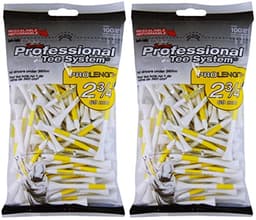
Pride Professional Tee System ProLength 2¾" (200)
The default. Pride's PTS tees are the ones most golf shops sell and most golfers use, the 2¾-inch length suits irons and most drivers, and 200 of them will last a beginner a very long time — which matters, because beginners break tees.
- What it is
- 2 3/4-inch wooden tees, 100 count, pack of 2
- Who it’s for
- Everyone - the bulk wooden tee for irons, hybrids and fairway woods
Price as of October 10, 2026. #ad How we’re funded
Specs read from the product listing, on August 11, 2026.
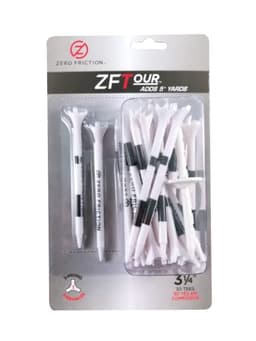
Zero Friction Tour 3-Prong Tees 3¼" (30)
The three-prong design reduces the contact area between tee and ball, which is a real and measurable idea rather than marketing noise. At this price it is worth trying, though we would not claim it will fix anything about your swing.
- What it is
- 3 1/4-inch plastic tees with a 3-prong top, 30-count pack
- Who it’s for
- Driver tee shots, in the longer length, if you want tees that last
Price as of October 10, 2026. #ad How we’re funded
Specs read from the product listing, on August 11, 2026.
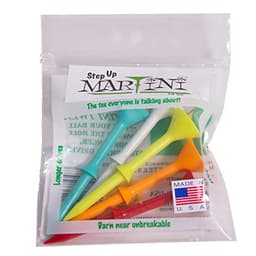
Martini Step-Up Durable Plastic Tees 3¼" (5)
The tee that solves the beginner's real tee problem: inconsistent height. The step stops the tee at the same depth every time, so your driver setup is the same on every hole. Five of them will outlast a hundred wooden tees.
- What it is
- 3 1/4-inch step-up plastic tees, 5-pack
- Who it’s for
- Golfers who want the same driver tee height on every tee box, all season
Price as of October 10, 2026. #ad How we’re funded
Specs read from the product listing, on August 11, 2026.
| Pick | What it is | Who it’s for |
|---|---|---|
| Pride Professional Tee System ProLength 2¾" (200) | 2 3/4-inch wooden tees, 100 count, pack of 2 | Everyone - the bulk wooden tee for irons, hybrids and fairway woods |
| Zero Friction Tour 3-Prong Tees 3¼" (30) | 3 1/4-inch plastic tees with a 3-prong top, 30-count pack | Driver tee shots, in the longer length, if you want tees that last |
| Martini Step-Up Durable Plastic Tees 3¼" (5) | 3 1/4-inch step-up plastic tees, 5-pack | Golfers who want the same driver tee height on every tee box, all season |
5. The rules bit, briefly
You will almost certainly never need this, but it is the question people ask. The Equipment Rules that sit behind Rule 4 set conditions on tees as well as clubs and balls: the commonly cited limit is a maximum length of four inches, and a tee must not be designed to indicate the line of play or to unduly influence the movement of the ball. Anything sold on a normal retail listing or in a pro shop complies.
One genuine rule worth knowing instead, because it comes up every round: you may only tee the ball on the teeing area of the hole you are playing. Everywhere else - fairway, rough, bunker - the ball is played as it lies. Beginners occasionally assume a tee is allowed on a par 3 fairway; it is not.
That is the whole subject. Carry a dozen tees in two lengths, aim for half a ball above the crown with the driver, and barely off the ground with an iron. If you are packing the bag for a first round, what to put in a golf bag has the rest of the list, and how to hit a driver covers the two levers that work alongside tee height.
Frequently asked questions
What size golf tee do I need?
Carry two lengths. A 3 1/4-inch tee is the right length for a modern driver, because a 460cc head is tall and needs the ball sitting high. A 2 3/4-inch tee covers fairway woods, hybrids and irons. If you only want one length, carry the 2 3/4-inch and push it in less far for the driver.
How high should you tee a golf ball for a driver?
High enough that about half the ball sits above the top edge of the driver's crown when the club is resting on the ground behind it. That is the standard reference point, and it puts the ball where the clubhead is already travelling slightly upward, which launches it higher with less spin.
How high should you tee the ball for an iron?
Barely off the ground - just enough that the ball is sitting on top of the grass rather than down in it. An iron is designed to strike the ball with a descending blow and take a divot after it, so a high tee leads to hitting the ball off the top of the face and losing distance.
Are longer golf tees better?
Only for the driver. A 4-inch tee exists and some golfers use it with very large driver heads, but for a beginner it mostly produces shots struck off the top of the face. Length only helps when it puts the ball in the right place relative to the club you are swinging - beyond that it is just a longer tee.
Wooden or plastic golf tees - which is better?
Wooden tees are cheaper, biodegradable and snap more often; plastic tees last far longer and some designs reduce the contact area between tee and ball. Neither will change your score. Buy wood in bulk if you lose tees, buy plastic or bamboo if you would rather replace them less often.
Do golf tees have to be a certain size by the rules?
Yes - the Equipment Rules set conditions on tees, and the commonly cited limit is a maximum length of four inches, along with requirements that a tee must not be designed to indicate the line of play or unduly influence the ball's movement. Every tee sold in a pro shop or on a normal retail listing complies, so it is not something a beginner needs to police.
How many golf tees should I carry?
At least a dozen. They snap, they fly into the rough and they weigh almost nothing, so there is no reason to be frugal. Carrying one or two is how golfers end up teeing off from a divot on the back nine.
Sources
- USGA — Rule 4: The Player's Equipment — The official Rule limiting a player to 14 clubs and governing conforming equipment (accessed July 23, 2026)
- USGA — Rules Hub: Clubs — USGA overview of the 14-club limit and the freedom to carry any conforming club types (accessed July 23, 2026)
Keep reading
Best Golf Tees
Wood, plastic, bamboo and the step-up designs compared, with live prices and published lengths.
See the teesHow to Hit a Driver
Tee height is one of three levers on a tee shot. Ball position and the upward strike are the others.
Read the guideWhat Loft Driver Should a Beginner Use?
The other number that decides your launch. Loft and tee height work on the same problem.
Read the guideWhat to Put in a Golf Bag
Tees are one of eleven things that belong in there. The full checklist for your first round.
Read the checklistHow to Hit Irons
Why an iron wants the ball almost on the ground, and the descending strike that explains it.
Read the guideBest Golf Balls for Beginners
The other thing you put on the tee. Soft, low-compression and cheap enough to lose.
See the balls