What slope does, in one paragraph
A plain laser gives you the straight-line distance to the flag. On an uphill approach that number is a lie by omission: the ball has to climb, so it flies shorter than the number says, and you come up short. Slope measures the elevation change and gives you a second, adjusted number — the distance you should actually play. Downhill works the same way in reverse. On a flat course slope is close to pointless. On a course with real elevation it is the difference between the right club and one club short every time the green sits above you.
Why the switch is the spec
Under the Rules, a device that measures elevation change is not conforming for use during a competition round, and a Committee can prohibit distance-measuring devices entirely by Local Rule. A unit whose slope cannot be disabled is therefore a practice tool. A unit whose slope can be disabled is a legal rangefinder that also helps you learn your real distances on a casual round. Same hardware, completely different usefulness.
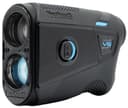
Bushnell’s own spec page for the Tour V6 Shift makes the point in its own words, describing Slope-Switch as giving “a USGA-conforming device that is legal for tournament play when you need it”. The reason to prefer an external toggle over a menu setting is social rather than technical: you can show it is off without handing your device to anyone.
If you only ever play casual golf with friends and no competition, none of this constrains you and you can buy on price and optics alone. If you intend to enter your club’s events, buy the toggle. Our beginner Rules guide covers the rest of the equipment basics, and golf vs hunting rangefinders explains the other Rules trap — a hunting laser reports the furthest target rather than the nearest, which is the wrong behaviour on a golf course.
What else to look at when slope is a given
Pin locking, and the confirmation. The hard part of using a rangefinder is knowing you read the flag and not the trees behind it. Every pick here prioritises the closest target and confirms with a pulse or a vibration. That confirmation matters more than any number on the box.
Stabilization. Holding a 6x optic steady enough to put a reticle on a flag 160 yards away is harder than it sounds, especially with cold hands or after a walk uphill. The TecTecTec ULT-S includes stabilization at a budget price, and it is the single feature most likely to turn a frustrating device into one you use every hole.
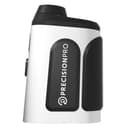
Mounting. If you ride, a magnetic unit that sticks to the cart frame gets used; one that lives in a pocket does not. The Precision Pro NX10 publishes magnetic mounting, and the Bushnell carries its BITE mount.
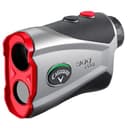
Battery type.Replaceable lithium cells (the Callaway and the Bushnell use a CR2-type cell) never leave you with a dead device you cannot fix at the course; rechargeable units are tidier but are one more thing to charge. Bushnell’s own support pages recommend replacing the CR2 at least every six months.
How this page differs from our main rangefinder roundup
Our main rangefinder roundupranks five units for a beginner buying their first laser, and its budget pick — the Gogogo Vpro GS24 — is deliberately a no-slope unit, because the cheapest way into laser ranging is to skip the feature. This page excludes it on purpose: every pick here reads slope and switches it off again. If you are not sure you want slope at all, read the parent roundup first; if you have decided you want it, this is the shortlist.
It is also worth knowing the alternative. A GPS watch gives you front, middle and back yardages without aiming at anything, which some golfers find far easier than holding a laser steady, and most golf watches do not read slope at all. Rangefinder vs GPS watch weighs that choice properly, and our watch roundup covers the models worth buying if the watch route suits you better.
One last honest note on the premium pick. The Tour V6 Shift has been replaced in Bushnell’s own lineup by the Tour V7 Shift, and the maker publishes the same optics, the same 5-1,300 yard range and the same one-yard accuracy for both. The V6 is the better buy while it is cheaper, and nothing about it stops working because a successor exists — we would simply rather you knew.