How we picked these drivers
We have not hit any of these on a launch monitor and we do not own test units, so you will find no swing-speed numbers or carry distances attributed to us on this page. What we have done is read what each listing publishes — head volume, loft, shaft, flex — and matched it against what a slower swing needs. Three criteria drove every pick.
1. Total weight, not just flex
Most advice for older golfers stops at “get a senior shaft,” which is only half the story. What you swing is the whole club: head, shaft and grip together. A lightweight head paired with a light shaft lets you move the club faster at the same physical effort, and speed is what produces distance.
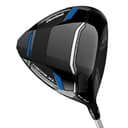
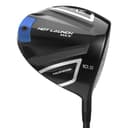
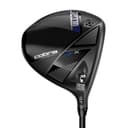
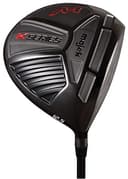
This is why the words “Lite” and “Max” appear in the names above. Those are the manufacturers’ lightweight lines, and they are engineered for exactly this buyer rather than aimed at them in an advert.
2. Loft, which most golfers under-buy
A slower swing produces less backspin, and backspin is part of what keeps a golf ball in the air. Less spin plus a low launch equals a drive that falls out of the sky. Extra loft fixes both at once, and it costs nothing.
If you currently play a 9 or 10.5 degree driver and your drives run out low, move up. Twelve degrees is not an admission of anything — it is the correct specification for a large proportion of golfers, and the fact that professionals play less loft is irrelevant to you, because they swing sixty percent faster.
3. A shaft you can identify
Where a listing names the shaft — an Aldila Ascent, a Mitsubishi Kai’li — you know what you are buying, because those shafts have published weights and profiles. An unnamed “graphite senior shaft” could be anything. We have favored named components where the price allows it, and said so where it does not.
How much distance can equipment actually give you?
We are going to be careful here, because this is the exact spot where golf marketing stops being honest. Nobody can tell you how many yards a driver will add, because it depends entirely on what you are playing now and how you strike it.
What we can say from the physics is directional. If you are currently swinging a stiff shaft in a heavy head with 9 degrees of loft, and you move to a light head with a senior shaft and 12 degrees, you will hit the ball higher and it will carry further. If you are already in a light senior-flex driver with plenty of loft, changing to another one will do very little, and anyone promising otherwise is selling.
The other honest point: strike quality matters more than any of this. A center-face strike with the wrong driver beats a toe strike with the right one, every single time. That is why our driver technique guide is worth reading before you spend anything.
Should you carry a driver at all?
A genuine question, and for some golfers the answer is no. If your driver goes sideways more often than forwards, a 3-wood or a hybrid off the tee will cost you twenty yards and save you far more than that in penalty shots and hacking out of trees.
There is no rule requiring a driver in the bag. Our driver versus hybrid guide works through the choice properly. The case for buying a good senior driver is strongest for golfers who hit the fairway reasonably often and are simply not getting the distance they used to.
What about adjustable drivers?
Adjustable hosels let you change loft and face angle by a degree or two with a wrench. They are genuinely useful in the hands of someone who understands what they are changing, and they add cost.
Our view for this buyer: skip it and put the money into getting the fixed loft right instead. An adjustable driver bought at 9 degrees and never adjusted is worse than a fixed 12-degree driver, and most adjustable drivers are never adjusted after the first week.
If you want the whole bag sorted rather than the driver alone, our senior complete sets page covers sets that arrive correctly specified from top to bottom, and the senior irons roundup handles the other end of the bag.