How to Break 100 in Golf
You do not need a better swing. You need to stop making double-digit holes, and that is a decision problem rather than a technique problem. Here is the arithmetic, then the five changes.
How this is funded: we earn a commission if you buy through our links, at no extra cost to you. It never changes which product we recommend, and we’ll tell you when we’d skip one. Full disclosure.
Breaking 100 on a par 72 is bogey golf with four or five doubles absorbed. You do not need a par. You need to stop making sevens and eights - and every one of those comes from a decision, not a swing.
Do the arithmetic once and the target changes shape. Ninety-nine on a par 72 is 27 over. If you bogey every hole you shoot 90. So you can bogey fourteen holes, double four of them, and still break 100 with a shot to spare. Nothing in that sentence requires you to hit a good shot. It requires you to not hit a catastrophic one.
Which is why this page is mostly not about technique. Golfers stuck in the low hundreds almost always have the swing to shoot in the nineties already; what they do not have is a round without three holes that cost four shots each.
1. Find out where the shots actually go
Before changing anything, play one round and mark two things on the card alongside your score: how many putts you took on each hole, and how many shots you played from trouble - trees, deep rough, a bunker you did not escape first time, a ball hit into water.
Add up both columns at the end and compare them to these reference points:
- 36 putts is two per green. Golfers around 100 typically take 40 or more.
- Trouble shots should be countable on one hand. If the number is ten or more, that is where your round is going.
Whichever column is worse is your project. For most people it is trouble shots, and the good news is that trouble shots are the cheapest thing in golf to fix, because the fix is a decision you make before you swing rather than a skill you have to build.
2. Stop attempting the shot that works one time in ten
This is the single biggest stroke saver available to you, and it is entirely free.
You are behind a tree, 150 yards from the green, with a gap you think you could thread. You have threaded it before - once. So you try it, catch a branch, move the ball twelve yards, and now you are playing your fourth shot from a worse spot than your third. That hole is a seven before you have made a single poor swing.
The alternative is to take the wedge, play it sideways to the middle of the fairway, and accept that the hole is now a bogey or a double. A triple becomes a bogey. Do that three times a round and you have found six shots without improving at golf at all.
The rule worth adopting: if the recovery needs to be good, it is the wrong shot. Play the one that only needs to be adequate.
3. Take the club that cannot reach the trouble
Beginners choose clubs based on their best ever strike with that club. Everybody does it and it is why so many approach shots finish in the bunker guarding the front of the green.
Two changes in club selection, and they both run the same direction:
Club up on approaches, and aim at the middle. The flag is often cut near a hazard precisely to tempt you. The fat middle of the green is the target that turns a slight mis-hit into a long putt instead of a bunker shot. A long putt costs you one stroke at worst; a greenside bunker you cannot yet escape reliably costs two or three.
Club down off the tee where the trouble is reachable. If your driver brings the water at 210 yards into play and your hybrid stops at 180, hit the hybrid. You are not giving up a birdie - you are giving up a thirty-yard advantage on a hole you were going to bogey anyway. Our guide to driver vs hybrid for beginners makes this case in more detail, and it is the most under-used idea in beginner golf.
4. Kill the three-putt
Putting is roughly forty percent of the strokes in a beginner’s round, and it is the only part of golf you can practise properly indoors. That combination makes it the highest-return practice available to you by a wide margin.
The three-putt is almost never a line problem. It is a distance problem: a 30-footer left eight feet short, then a missed eight-footer. So practise distance rather than direction. Put a ball down 30 feet from a hole and try to finish inside a three-foot circle around it, over and over. You are not trying to hole it. You are trying to never be eight feet away again.
Putting basics for beginners covers the setup and the stroke; a putting mat covers where to do it when the course is shut.
5. Learn one shot around the green, properly
You will miss most greens on the way to breaking 100, so the shot that saves you is the chip from just off the putting surface. Learn one version of it - a low, running chip with a single club, played with your weight forward and your hands quiet - and use it everywhere.
Beginners lose shots here by trying to lift the ball high with a lob wedge, which requires a precise strike and punishes you brutally when you catch it thin or fat. A running chip gets the ball on the ground early and lets it roll like a putt, which is far more forgiving of an imperfect strike. How to chip a golf ball walks through it.
Three things that actually help, if you are going to buy something
No equipment will remove a triple bogey, so take this as optional rather than required - the five changes above cost nothing. These three are picked because each one targets one of the specific leaks named on this page: three-putts, chunked chips, and aim that drifts without you noticing. All are from our existing training aid and wedge roundups. Prices are live and carry the date they were checked.
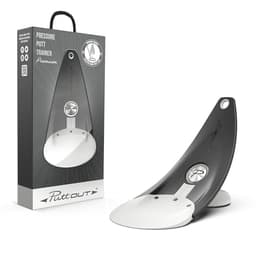
PuttOUT Premium Pressure Putt Trainer
A curved ramp that returns a well-struck putt back to you and rejects a bad one. Because you putt more than you do anything else, an aid you will actually use at home beats a better aid you will not.
- What it is
- Putting return trainer with pace feedback
- Who it’s for
- The three-putt problem - indoor distance-control practice, which is where the strokes are
Price as of October 10, 2026. #ad How we’re funded
Specs read from the product listing, on August 11, 2026.
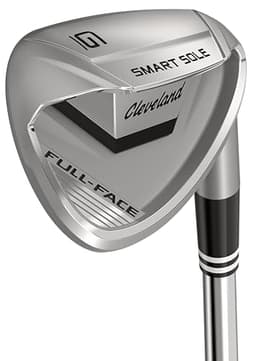
Cleveland Smart Sole Full-Face Wedge (50°)
The wedge built for people who chunk and thin wedges, which is every beginner. The extra-wide sole is designed to skid along the turf instead of digging in, so a slightly fat strike still gets the ball out. If you buy one wedge to stop the short-game disasters, buy a Smart Sole.
- What it is
- Wide-soled full-face wedge built for forgiving short shots
- Who it’s for
- Golfers who chunk or thin chips from just off the green
Price as of October 10, 2026. #ad How we’re funded
Specs read from the product listing, on August 28, 2026.
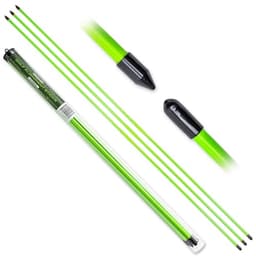
GoSports Golf Alignment Training Sticks (3-Pack, 48")
The cheapest and most useful thing on this page. Two sticks on the ground tell you where you are actually aiming, and most beginners discover they have been aimed thirty yards right of the target for years.
- What it is
- 48-inch alignment rods, 3-pack
- Who it’s for
- Anyone whose aim has quietly drifted - the cheapest useful practice tool there is
Price as of October 10, 2026. #ad How we’re funded
Specs read from the product listing, on August 11, 2026.
| Pick | What it is | Who it’s for |
|---|---|---|
| PuttOUT Premium Pressure Putt Trainer | Putting return trainer with pace feedback | The three-putt problem - indoor distance-control practice, which is where the strokes are |
| Cleveland Smart Sole Full-Face Wedge (50°) | Wide-soled full-face wedge built for forgiving short shots | Golfers who chunk or thin chips from just off the green |
| GoSports Golf Alignment Training Sticks (3-Pack, 48") | 48-inch alignment rods, 3-pack | Anyone whose aim has quietly drifted - the cheapest useful practice tool there is |
6. What not to do on the way to 99
Do not rebuild your swing. A swing change makes you worse before it makes you better, and you do not need better to break 100. Fix your grip and your setup if they are wrong - those are free and immediate - and fix a slice if it is putting you in the trees every hole. Leave everything else alone until you are shooting in the eighties.
Do not buy clubs to fix this. If your set is twenty years old or badly the wrong length, address it. Otherwise your clubs are not what is keeping you above 100.
Do not keep score on the next few rounds. Play them making only the decisions above - safest club, middle of the green, sideways out of trouble, two-putt and move on - and count the trouble shots rather than the strokes. The score follows.
Do not slow down.Playing carefully is not the same as playing slowly. The USGA’s pace guidance - be ready when it is your turn, take something like twenty seconds over the shot - is entirely compatible with everything on this page, and deliberating over every club is how a sensible round becomes an unwelcome one for the group behind.
One last thing about the milestone itself. Your first sub-100 round will probably be messy and will almost certainly include one hole you want to forget. That is the point: breaking 100 is not about playing well, it is about not playing terribly for four hours in a row. Once you have it, the scores you want to record officially become worth tracking - golf handicap explained covers how the Handicap Index is built from your best eight differentials out of twenty, and that is a better long-term measure than any single round.
Friendly guidance, not coaching. Tee & Tempo is written by a golf enthusiast, not a teaching pro. Our picks come from published specs and honest buyer-fit reasoning — we compare the numbers so you don’t have to, but we haven’t hit every club ourselves. When in doubt, hitting a few at a shop or a lesson beats any article.
Frequently asked questions
How do you break 100 in golf?
Stop making disaster holes rather than trying to make birdies. Breaking 100 on a par 72 means averaging bogey with room for four or five doubles, so the route is to eliminate the triples and quadruples: take the club that cannot reach the hazard, aim at the fat middle of the green rather than the flag, play out of trouble sideways instead of heroically, and two-putt from everywhere.
What score is breaking 100?
Shooting 99 or lower for 18 holes. On a par 72 course that is 27 over par, which works out at bogey golf - one over par per hole - with four or five doubles absorbed along the way. Framed like that it is a far less intimidating target than it first sounds, because it does not require a single par.
How long does it take a beginner to break 100?
There is no honest universal answer, and anyone quoting you a number of rounds is guessing. It depends on how often you play, whether you practise with any structure, and whether you have had any coaching. What is reliable is the order: scores drop first from better decisions, then from better putting, and only later from a better swing.
What is the fastest way to lower your golf score?
Count your three-putts and your double-hits out of trouble for one round, then fix whichever is larger. For most golfers approaching 100 it is trouble shots - attempting a recovery that only works one time in ten. Taking the sideways chip back to the fairway converts a likely triple bogey into a bogey, and that trade alone is often five or six shots a round.
Should I take lessons to break 100?
One or two lessons help more at this stage than ten would later, because the faults are big and obvious and a coach can see them in five swings. But the scoring gains below 100 come mostly from course management and putting, which a lesson cannot install for you. Get a lesson for the grip, the setup and the worst miss; get the rest from how you play.
How many putts should I take to break 100?
Aim to average two, which is 36 putts for a round. Golfers around the 100 mark commonly take 40 or more, mostly through three-putts from long range caused by poor distance control rather than bad aim. Practising lag putting - getting a 30-footer inside three feet rather than trying to hole it - is the highest-return practice available to you.
Do I need better clubs to break 100?
No. Equipment is not what keeps a golfer above 100 - decisions are. Clubs matter at the margins, and if your set is twenty years old or badly the wrong length then fixing that helps, but no club in a shop will remove a triple bogey caused by trying to carry a bunker you cannot carry.
Sources
- USGA — The Handicap Index Calculation (World Handicap System) — Official method: average of the best 8 Score Differentials from your most recent 20 scores (accessed July 23, 2026)
- USGA — Tips and Suggestions for Improving Pace of Play — USGA practical pace-of-play guidance, including the ~20-second shot suggestion (accessed July 23, 2026)
Keep reading
What Is a Good Golf Score for a Beginner?
Where 100 sits in the real distribution of beginner scores, and what to expect in your first season.
Read the guidePutting Basics for Beginners
Around 40 percent of your strokes. Setup, stroke, and the lag putting that kills three-putts.
Read the guideHow to Chip a Golf Ball
The shot that converts a missed green into a one-putt instead of a disaster.
Read the guideGolf Handicap Explained
What your scores add up to officially, and how the Handicap Index is actually calculated.
Read the guideHow to Fix a Slice
The one swing fault worth fixing on the way to 100, because it is what puts you in the trees.
Read the guideBest Golf Training Aids
The aids that give real feedback, and the ones that just take up space in the garage.
See the training aids