How we picked these
Every pick was assessed from its published listing specification — piece count, shaft material and flex, bag type, head construction — against what genuinely changes at this stage of a golfer’s development. We have not hit these clubs on a launch monitor and we do not invent numbers. Three criteria set the order.
1. Shaft quality, because that is the real upgrade
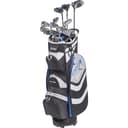
The Tour Edge TE-400 is at the top of this page mainly because it ships with proper graphite shafts throughout — irons included, which is unusual at any price. That consistency is what makes distances repeat, and repeatable distances are what let you start aiming at flags rather than at greens.
2. Set composition with no gaps left
At this stage you should stop having distance holes in your bag. Sets and iron sets that include a gap or approach wedge scored higher, because the alternative is another purchase. Our wedges roundup covers what filling that gap separately costs.
3. Forgiveness that has not been traded for looks
The temptation at this level is to buy something that looks like what better players carry. Every pick here remains a game-improvement design, because you still miss the middle of the face regularly and the forgiveness is worth more than the workability. Our game-improvement versus players irons comparison explains that trade in full.
Are you actually at this stage?
Three honest tests. If you answer yes to at least two, upgrading will probably return something. If you answer no to all three, keep your clubs and spend the money on green fees — you will improve faster.
- Do your distances repeat? If you know your 7-iron goes roughly the same distance most times you hit it well, you are ready for equipment that rewards that consistency. If every 7-iron is a different distance, the problem is still your strike.
- Are you avoiding specific clubs?If there are three clubs in your bag you never take out, you do not need a new set — you need to replace those three clubs, probably with hybrids.
- Is your set physically worn? Grips harden, grooves round off, and starter-set components wear faster than premium ones. This is the most legitimate upgrade trigger and the least glamorous.
Our fuller guide on when to upgrade your golf clubs takes this further, including the uncomfortable cases where the answer is “not yet”.
Complete set or individual clubs?
This is the real fork in the road at this stage, and the answer depends on what you already own.
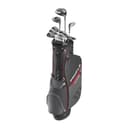
Buy another complete set if your current set is a genuine budget kit and you want one purchase to solve everything. You get matched clubs, a better bag and no decisions. The efficiency is real, and it is why the Tour Edge and Wilson Platinum sets are here.
Buy individual clubs if your current set is decent and only parts of it are letting you down. Irons first, because that is where the shaft inconsistency lives; then a fairway wood or hybrid to replace the long clubs you avoid; then wedges. This route costs more in total but every dollar goes somewhere useful.
Our full breakdown of that decision, including the honest arithmetic, is in complete set versus buying individually.
What not to buy at this stage
Three things reliably waste money for a golfer moving from beginner to intermediate.
A tour-level driver. The most expensive driver on the market is designed for a swing speed and consistency you do not have yet, and its lower loft will actively cost you distance. Our drivers roundup covers what actually helps.
Blades or compact players irons. Tempting, and wrong. You will hit them worse and enjoy golf less.
A lob wedge you cannot use. A 60-degree wedge in the hands of a mid-90s golfer produces more disasters than saves. Learn the sand wedge first.
What is worth buying at this stage, cheaply: a rangefinder, so you stop guessing yardages and start learning your real distances. It costs less than an iron set and teaches you more.